Related: How to Stop a Yoga Mat From Sliding on a Wood Floor
I have taught vinyasa in Portland for twelve years, and before that I spent eight years installing sprung floors and gym rubber in studios and theaters. That second job is why I own calipers and a luggage scale, and why I am suspicious of every thickness number printed on a mat box.
Most people overthink yoga mats for home practice. They buy the thickest thing on the shelf because cushion sounds like comfort, then they wobble through a standing balance and blame their ankles. Thickness is not grip, and grip is the only spec that matters once your palms get wet.
Some links in this piece are affiliate links. If you buy through one, I earn a small commission and it costs you nothing extra. I only link mats I would hand to a student in class, and there are no paid placements in this list.
These four cover almost every reason someone ends up shopping. A bulk pack for a studio, a school, or a family with three kids. A natural rubber mat for grip. A wider, longer mat for tall bodies and pilates work. And a small knee cushion that fixes the one problem no mat fixes by itself.
Best for Studios and Groups: Bulk Yoga Mats, 12 Pack, With Strap, 68x24in, 4mm
Twelve mats, 68 by 24 inches, 4mm thick, with a strap. If you run a class, a community center program, a church basement series, or a household where four people argue about whose mat is whose, this is the package that ends the argument. The per-mat cost works out low enough that you stop guarding them.
Sixty-eight inches is the standard length, and it is enough mat for most adults under about five foot ten. If you are taller than that, skip to the 72-inch option below, because a mat that ends at your heels is a mat you will fight all class.
Four millimeters is the middle of the road, and that is the right call for a shared mat. It takes the edge off a hardwood floor without turning standing poses into a balance drill. What you are not getting at this price is a top layer engineered for sweat. Entry-level mats feel tacky under a dry hand in the store, and that tack is texture, not chemistry. Texture wears off. Wet grip comes from what the top layer is made of, and this is not that kind of mat. Do not buy these for your own hot class. Do buy them for beginners who are still learning where their hands go.
The strap matters more than it sounds. Twelve unstrapped mats become a pile of loose tubes in the corner of a storage room within a month. Strapped, they hang on a hook and they stay rolled.
Best Natural Rubber Pick: JadeYoga Mushroom Yoga Mat
Natural rubber is the material I point to when someone asks what actually grips. Tree rubber has a tack that PVC imitates but does not hold, and it comes with no break-in tax. You roll it out and it grips on class one, which is not something I can say about every premium mat on the market.
This one is thick, and thick is a trade rather than a straight upgrade. Extra cushion helps knees, hips, forearms, and the long floor sequences in a restorative class. It also makes every standing balance slightly harder, because each millimeter of foam under your palm is another millimeter your wrist has to stabilize. If your practice is mostly vinyasa with long holds, a thinner mat will feel steadier underfoot. If your practice is mostly floor work, kneeling, and savasana, thicker wins and this is the pick.
Two honest caveats about rubber. First, it is a sweat sponge. JadeYoga's rubber has the best dry grip I have handled, and in a hot room it gets overwhelmed. Mine have smelled like a wet dog by month eight, and I clean my mats obsessively. Second, rubber is heavy and it does not love heat, so keep it out of a parked car in July.
What you get for the money is a mat made from tree rubber instead of petroleum, with a grip that does not depend on a coating that will flake off in year two.
Best for Tall Practitioners: Scalloped Edge Yoga Mat, 72" x 27" Pink Rubber Pilates Mat
Seventy-two inches long and 27 inches wide is roughly four inches longer and three inches wider than a standard mat. If you are over five foot ten, or you have ever put a hand down in a lunge and found bare floor instead of mat, that extra real estate is the entire point. It is also the reason I recommend this one for pilates, where you spend a lot of time on your back with legs extended and arms reaching.
The material is rubber, so you get rubber grip rather than a sprayed-on texture, and the scalloped edge is mostly cosmetic. It does help you line your mat up with the person next to you in a crowded class, which matters more than it should.
A wider mat quietly changes your habits. When your hands have room, you stop creeping inward as you flow, and your alignment stops drifting over a 60-minute class. The pink is loud, and I say that as someone who owns exactly one yoga outfit bought at full price.
The trade is bulk. A 72 by 27 rubber mat is heavier and more awkward to carry than a standard mat, and it will not fit neatly into every studio cubby. Rubber also wants cleaning after sweaty sessions. If you walk or bike to class, factor that in before you buy the biggest mat in the room.
Best Cheap Fix for Knees: Yoga Knee Pad Cushion, 0.6 Inch (15mm) Mini Yoga Mat
Fifteen millimeters of foam, small enough to disappear in a tote bag, and cheap enough that I keep two in my studio bag. This is the product I hand to anyone whose knees complain in tabletop, camel, kneeling lunges, or any of the long kneeling holds in a restorative sequence.
Here is the problem it solves. A 4mm mat is not enough padding for a kneecap on a concrete-backed floor, and no mat thick enough to fix that is a mat you want under your hands. A pad lets you keep the thin mat that grips and balances well, then add cushion exactly where you need it.
Placement is the whole trick. Put it under the knee that is down, not centered under your body, and shift it before you transition rather than after. If your wrists also complain, a second one under the heel of the hand in tabletop takes the sting out. Plenty of people buy two for exactly that reason.
It will not fix hip pain, it will not fix a bad floor, and it will slide if you set it on top of a slick mat instead of a grippy one. It is a small tool, not a cure. For the price, it is the highest-value item on this list for anyone with a knee history.
How I test mats
The spreadsheet has a row for every class I teach on every mat: grip at minute 40, corner curl, sink under my palms in downdog, and how it smells after a month. Two hundred classes per mat before it earns a spot in a ranking. That is not a marketing number, it is just how long it takes for a mat to tell you the truth.
The two measurements I trust most are boring. First, caliper thickness at six points, including the thinnest edge, because a mat is only as thick as its worst spot and the box number is usually the best spot. Anything over a millimeter of difference between the label and the thinnest edge is a character test the brand failed. Second, the angle test: a weighted board, raised until the weight slides, dry and then wet. Grip is a number in degrees, not a feeling.
I also weigh each mat on a luggage scale, because the mat you leave at home is the mat you do not use, and then I do the least glamorous test of all. I roll it, strap it, and leave it in a hot car for a week to see whether the corners stay down. Mat drag is what makes a mat dangerous on a smooth studio floor. Corner curl catches a heel.
What the four picks actually cover
Notice what this list is not. It is not four versions of the same mat at four prices. Each one solves a different problem, and buying the wrong one for your situation is how people end up with a $120 mat gathering dust in a closet.
The bulk pack is about volume and sharing. It is the only one here that makes sense if the mats are not really yours. The natural rubber mat is about grip and material, and it is the one to buy if you sweat and you hate slipping. The 72 by 27 mat is about fit, for tall bodies and pilates and anyone who feels cramped on a standard mat. The knee cushion is about one joint, and it is the cheapest way to make a mat you already own work better.
If you are a beginner with no knee history and no height problem, buy the mat that grips and forget the rest. If you have bad knees, buy a thin grippy mat and a knee pad rather than one thick mat that ruins your balance. If you teach, buy the twelve pack and keep your own mat in your bag.
The yoga mat reference table
| Mat | Best for | Size on the label | What to know |
|---|---|---|---|
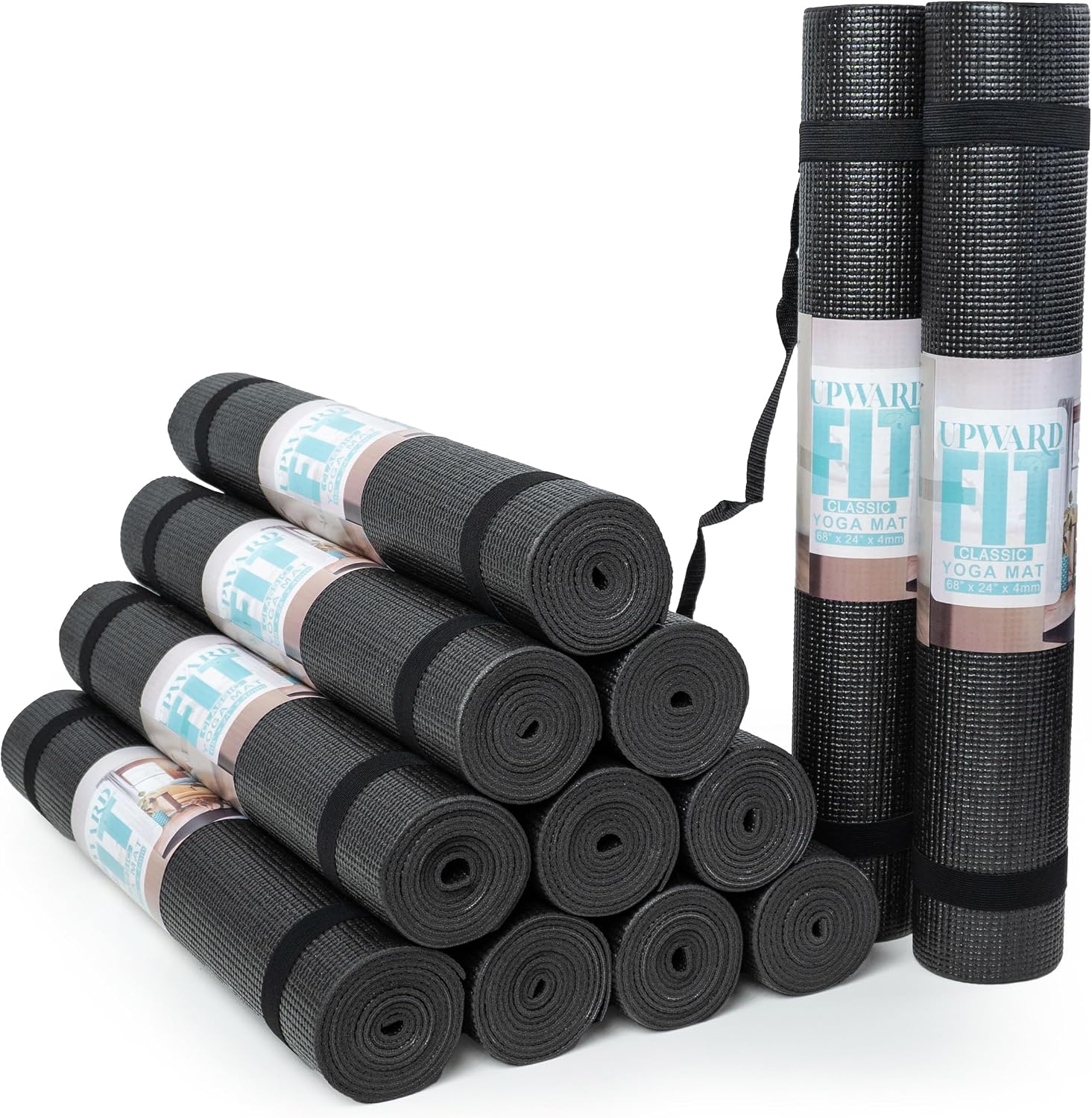 Visit on Amazon → Bulk Yoga Mats, 12 Pack |
Studios, schools, families | 68 x 24 in, 4mm | Twelve mats plus a strap; entry-level grip, keep out of hot classes |
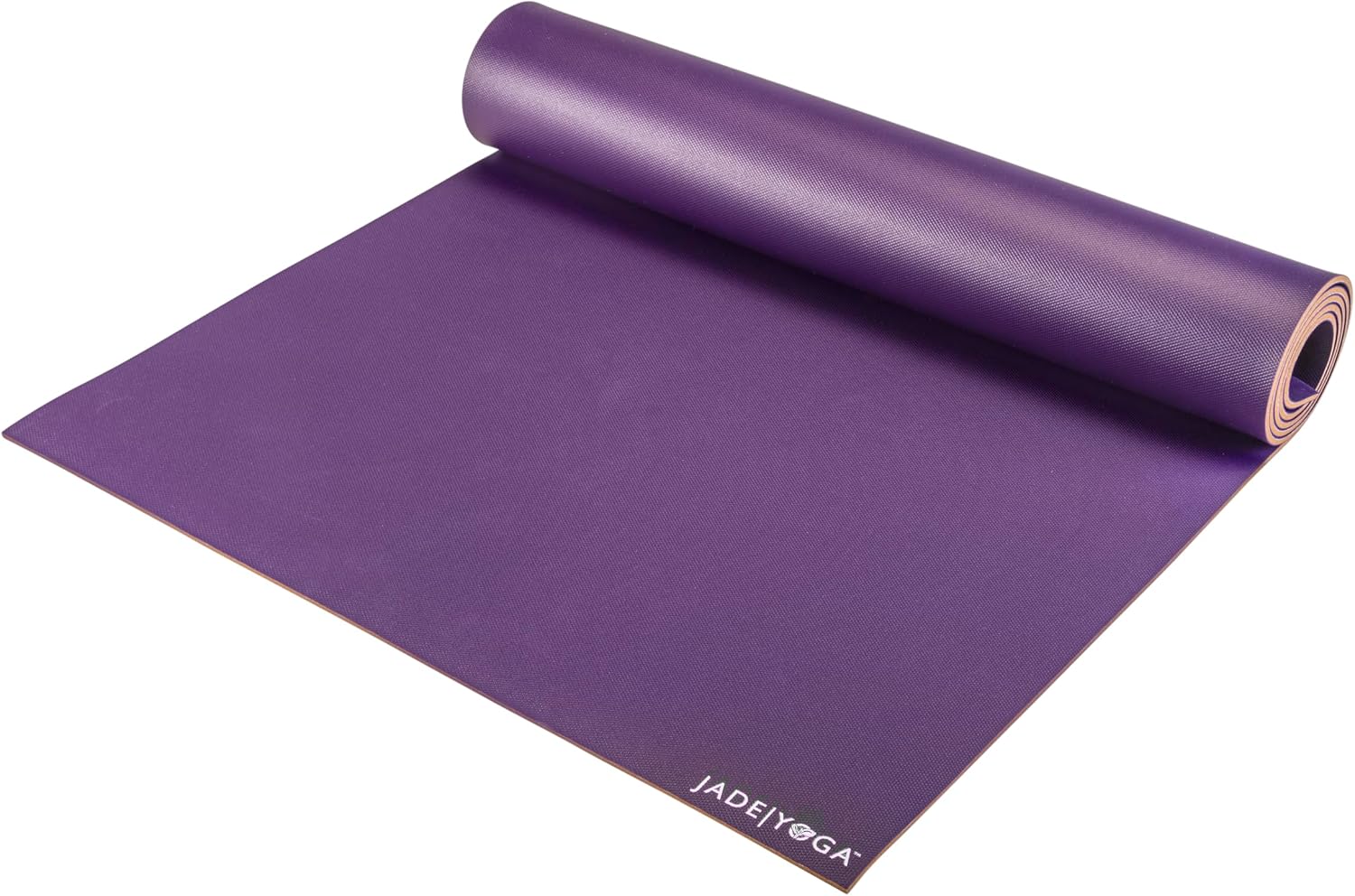 Visit on Amazon → JadeYoga Mushroom Yoga Mat |
Grip and material quality | Thick, natural rubber | Best dry grip here; soaks up sweat, so clean it often |
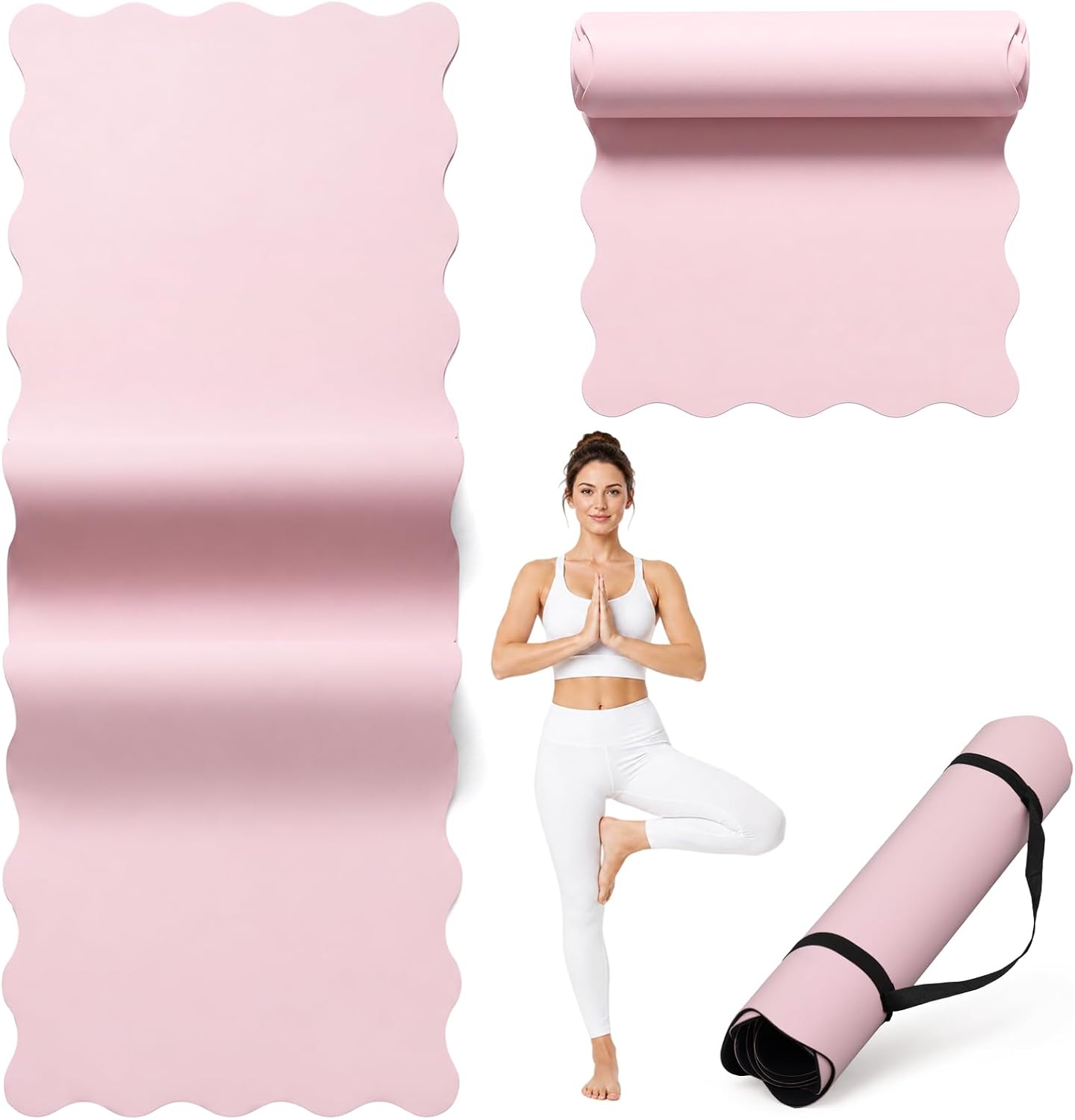 Visit on Amazon → Scalloped Edge Yoga Mat |
Tall practitioners, pilates | 72 x 27 in, rubber | Four inches more length; heavier to carry |
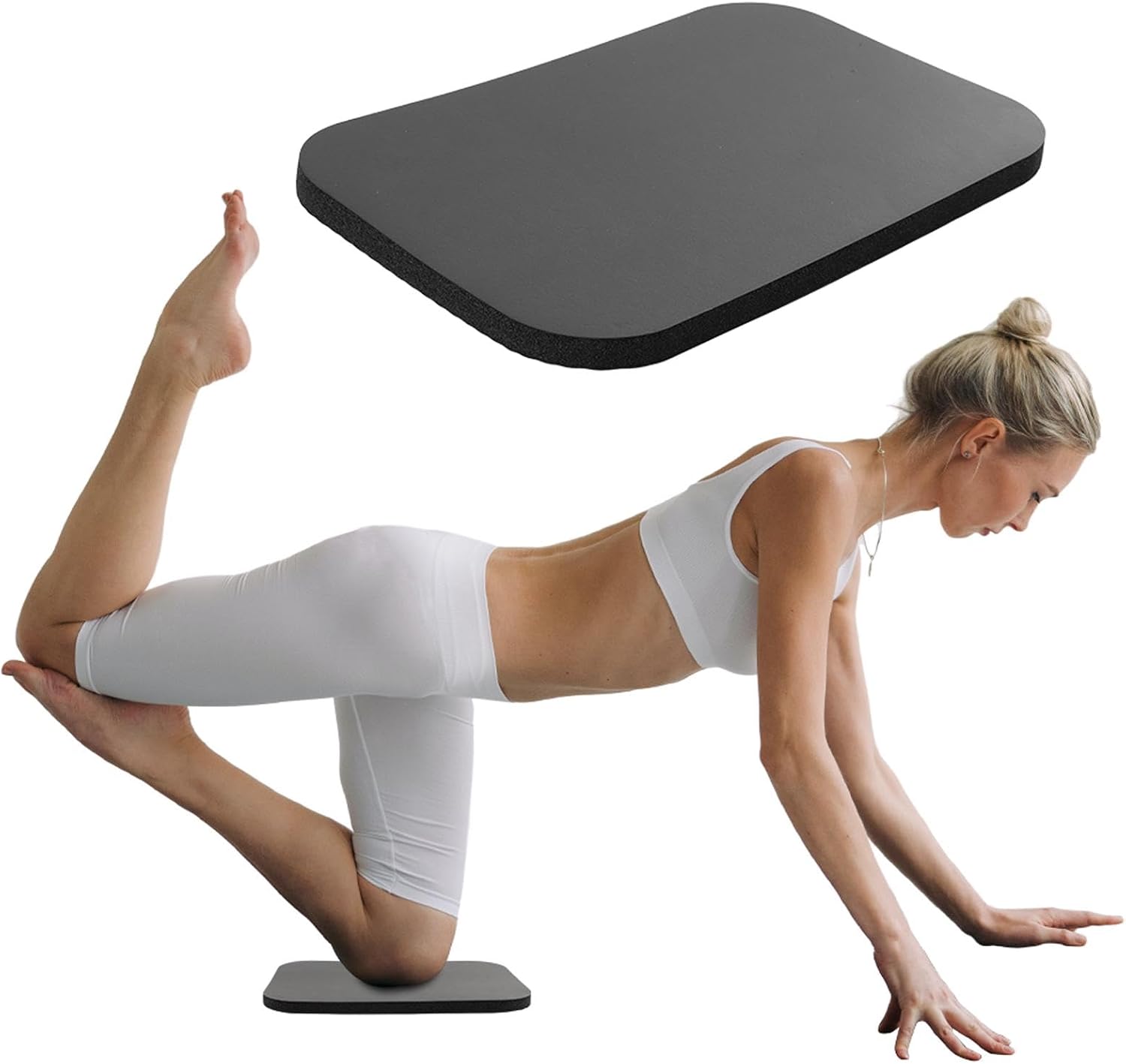 Visit on Amazon → Yoga Knee Pad Cushion |
Knees, wrists, restorative work | 0.6 in (15mm) | Buy two, one for the knee and one for the wrist |
Should you buy the bulk 12 pack?
Yes, if you are buying for a group rather than for yourself. Twelve mats and a strap solve the sharing and storage problem in one purchase, and at 68 by 24 inches and 4mm they are honest, standard, serviceable mats.
Just be clear about what they are not. They are not wet-grip mats, and they are not the mat you want for your own hot class. Buy them for the room, keep your good mat in your bag.
Should you buy the JadeYoga Mushroom Yoga Mat?
Yes, if grip and material matter more to you than weight and maintenance. Natural rubber grips without a break-in period, it is made from tree rubber rather than petroleum, and the thicker build is kind to knees and hips in floor work.
The costs are real: rubber holds sweat, it needs cleaning after every hot session, and the cushion that helps your knees slightly hurts your standing balance. If you sweat heavily and hate maintenance, look elsewhere. Otherwise this is the mat I would tell a student to spend on.
Should you buy the knee pad cushion?
Yes, and it is the easiest yes on this list. If your knees talk to you in kneeling poses, a 15mm pad is the cheapest fix in yoga, and it lets you keep the thin mat that grips and balances properly.
Buy two if your wrists also complain in tabletop. Set them under the joint that is loaded, on top of a grippy mat, not a slick one.
Should you buy the 72 by 27 inch scalloped mat?
Yes, if you are tall or you practice pilates. The extra length and width are the difference between a hand on the mat and a hand on the floor, and the rubber top layer grips like rubber should.
The trade is weight and bulk. If you carry your mat on a bike or on foot, a standard mat plus a good strap may serve you better than the biggest mat in the studio.