I have taught vinyasa in Portland since 2012, and before that I spent eight years installing sprung floors and gym rubber in studios across the Midwest. That combination means I look at a mat the way a flooring contractor looks at a subfloor: what does it do under a body, and what does it do after two hundred classes. The question I get after almost every class has nothing to do with alignment. It is some version of "which one should I buy?" Sometimes the person asking runs a rental program and needs twelve mats that will survive a year of strangers. Sometimes it is a six-foot-four runner whose heels hang off the end of every mat in the room. That split is exactly why this comparison of bulk yoga mats and oversized single mats exists, because the two solve completely different problems, and buying the wrong one wastes money either way.
Related: How Thick Should a Yoga Mat Be
If you are outfitting a studio, a school, or a teacher training, a bulk pack is the right answer. If you are one person with a long torso, wide shoulders, or cranky knees, buy one mat that actually fits you.
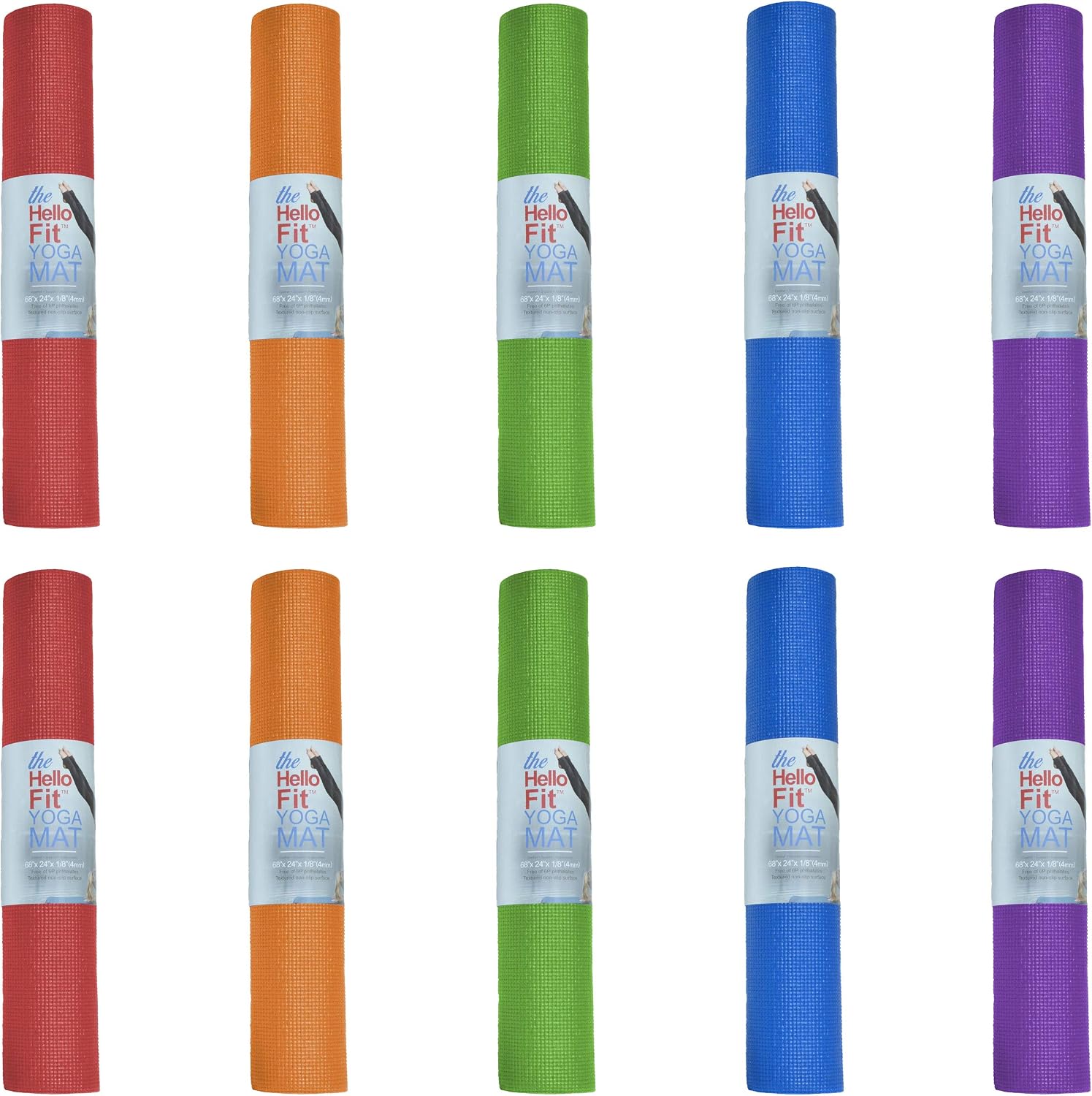
Bulk Yoga Mats, 10 Pack, 4mm Thick, 68x24in
Ten standard mats in one order, so a rental shelf or a training weekend is covered in a single purchase
4mm on a hardwood floor is thin under knees and wrists, and the 24 inch width is snug for broad shoulders
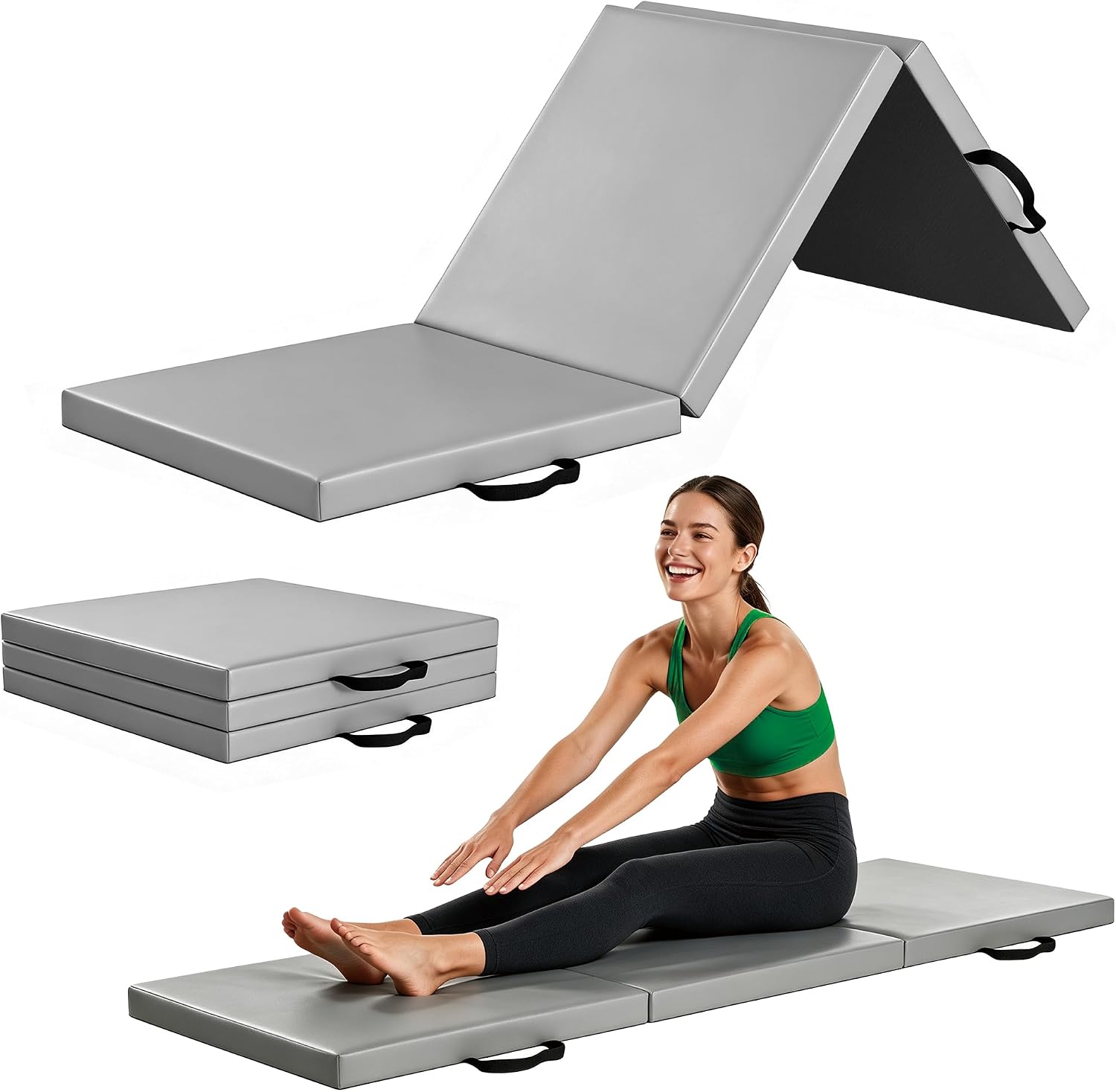
3 Inch Extra Thick Yoga Mat, 72 x 32 x 3 Inch Folding Exercise Mat Thick
The most cushion here by a wide margin, and it folds instead of rolling, which matters in small apartments
Three inches of foam is a standing balance problem, not a comfort upgrade
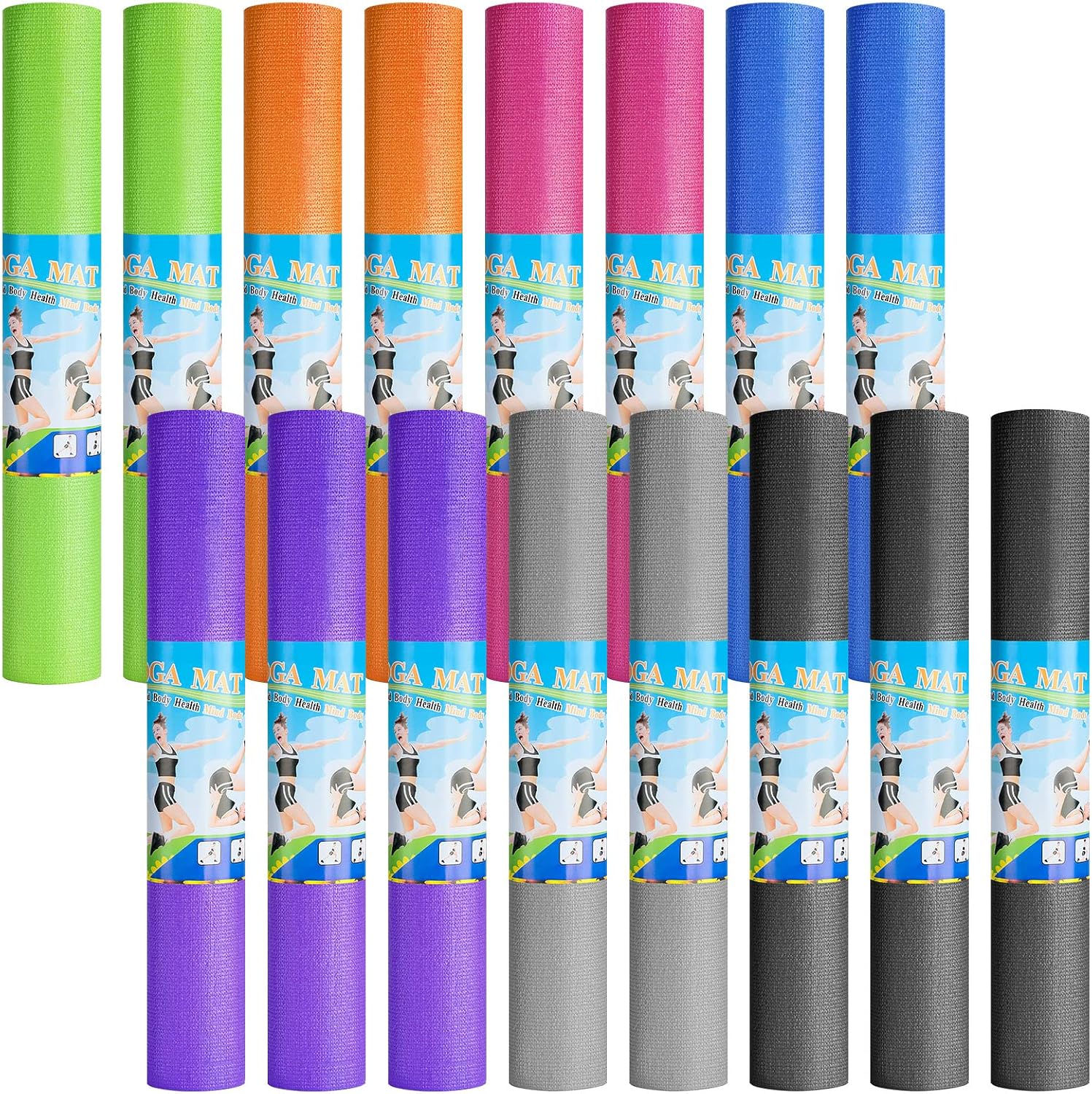
Funtery 3 mm Thin Yoga Mats Bulk, 68 x 24 in
Thin mats stack, travel, and give honest ground feedback for balance work
3mm is unforgiving on tile or concrete, and savasana turns into a negotiation
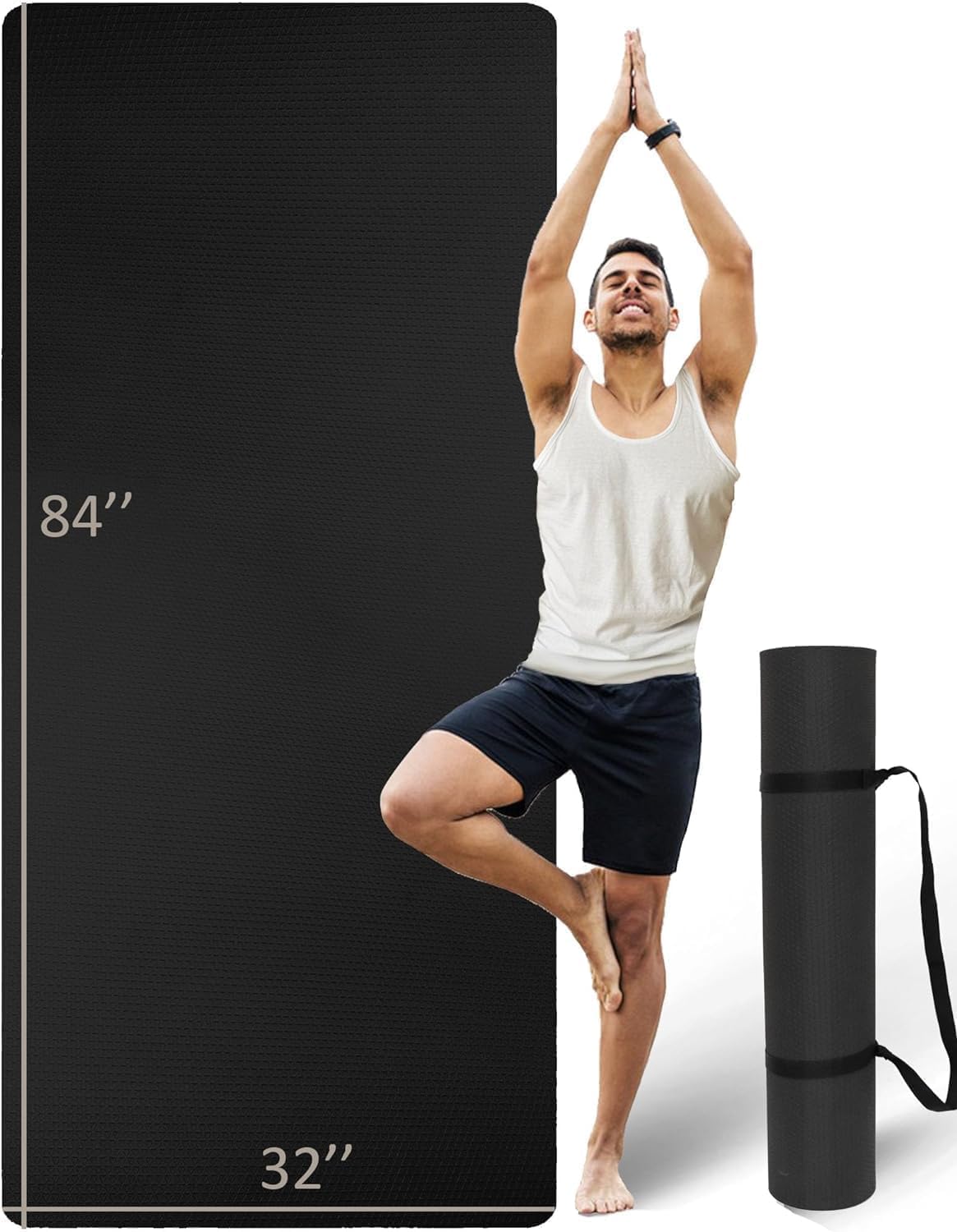
Extra Long & Wide Thick Yoga Mat for Tall Men & Women, 84'' x 32'' x 7mm Oversized Yoga Mat Double-Sided Non Slip, Pro TPE Yoga Mats with Strap
Real length for tall bodies and real width for broad shoulders, plus a strap so it leaves the house
TPE is lighter and less durable than natural rubber, and 7mm sinks under standing balances
Prices and availability were captured from Amazon Creators API and may change.
What these four mats actually are
Strip the marketing language off and the lineup is simple. Two of them are bulk packs in the standard 68 by 24 inch footprint: a 4mm ten pack, and a 3mm set from Funtery. One is an oversized single mat at 84 by 32 inches and 7mm thick, made from TPE with a double-sided non-slip claim and a carry strap included. The last is a 72 by 32 inch folding mat that is three inches thick, which puts it in a different category entirely, closer to a gymnastics or physical therapy pad than to a vinyasa mat.
That is the whole field. Two mats for sharing, one mat for a large body, one mat for a floor you plan to lie on.
How I evaluate a mat before I recommend it
I do not trust the number on the box. Thickness gets measured at six points with calipers, because the caliper gap between advertised and actual is usually the most honest thing a brand tells you without meaning to. Anything over a millimeter of difference is a lie with a spec sheet.
Then there is grip, which is chemistry, not texture. A pebbled top layer sells well in photos and does nothing for a sweaty palm. What matters is whether the surface holds when your hands are wet, which is why I run an inclined plane test dry and again with a spray bottle. I log the angle where a weighted block starts to slide. A mat that only claims "non-slip" without the words "when dry" is telling you something.
After that comes what I call mat drag: corner curl and edge lift. On a studio floor, a curling corner is a trip hazard, and I have watched a student catch a toe on one. Finally, smell. A mat that still smells like a tire at week six is going to spend its life in a closet.
You can run most of this yourself the day a mat arrives, and you should, because the return window is your leverage.
Bulk mats: the studio, school, and training case
The ten pack is the workhorse answer for anyone buying for other people. Rental shelves, community classes, teacher trainings, school programs, retreats, and the stack of loaners a studio keeps by the door all burn through mats faster than any individual ever will. Buying ten identical mats in one order means the shelf looks consistent, replacements match, and nobody argues about who got the good one.
Four millimeters is a sensible middle. It is thick enough to protect a knee in a lunge and thin enough that you still feel the floor in a standing pose, which is what keeps balance honest. The trade-off is that 4mm over hardwood is not a cushion, and 24 inches of width is snug for anyone with a swimmer's frame. If your students are mostly kneeling on concrete, plan on adding a blanket under the knees.
The thin bulk pack, and who should own one
The Funtery set runs 3mm thin, and thin is a feature, not a defect, in the right room. Thin mats stack in a closet without the tower of foam that thick mats create. They travel, they layer under a nicer mat when you want extra cushion, and they give the most honest proprioceptive feedback of anything in this comparison, which makes them genuinely useful for balance work and for teachers who want students to feel their own wobble.
The cost is comfort. On tile, concrete, or a suspended wood floor, 3mm is close to nothing under a kneecap, and a long savasana on 3mm is a test of patience. If you run a hot class, thin mats also dry faster and curl less at the corners, which is the quiet advantage nobody advertises.
The oversized mat for tall and broad bodies
This is the one I would hand to the six-foot-four runner. At 84 by 32 inches it is both longer and wider than anything else here, and if you have ever done a supine twist with your shoulder hanging off the edge of a 24 inch mat, you already know why width matters as much as length. The 7mm thickness gives real cushion for knees, hips, and wrists, and it ships with a strap, which sounds trivial until you carry a mat across town without one.
Two honest caveats. TPE is a lighter, less dense material than natural rubber, so I would expect a shorter service life under heavy daily use, especially in a hot room where the top layer takes a beating. And 7mm has a sink factor: press your palms into it in downward dog and the foam compresses, which costs you stability in standing balances. If your practice is mostly balance and arm balances, thinner is better. If it is mostly floor work, stretching, and long holds, the cushion wins.
The three inch folding mat, and why cushion is not grip
I need to be direct about this one. Three inches of foam is a wonderful thing to lie on and a terrible thing to stand on. Cushion and stability are opposites, and every millimeter of soft foam makes a warrior or a tree pose harder, because your foot has to find a level surface that keeps moving. I have watched students wobble through a whole standing series on a thick foam pad and blame themselves for it.
Where the folding design earns its place: floor work, stretching, Pilates-style mat work, physical therapy exercises, core work, and any practice that spends most of its time on the back, hips, or knees. Folding instead of rolling also means it stores flat under a bed, which is a real advantage in a small apartment. Just do not buy it expecting a vinyasa mat, and do not expect it to fold small enough to carry comfortably.
The trade-offs nobody prints on the box
Thickness versus balance. Every extra millimeter of foam is comfort for your knees and instability for your ankles. There is no thickness that gives you both, which is why a serious practitioner often ends up with two mats and a reason for each.
Quantity versus tailoring. A ten pack gets a room full of people onto a floor for less than the cost of a single premium mat, and that is a genuine win. But none of those ten mats was designed for a specific body. If you are buying for yourself, you are paying for a mat that fits nobody in particular.
Size versus portability. The oversized mat is the most comfortable thing here for a tall person and also the most annoying to carry into a crowded class, where floor space is measured in inches between neighbors.
Material versus lifespan. Natural rubber grips better and lasts longer, but it costs more and it smells like rubber for a while. TPE is lighter and often more affordable, and it usually gives up sooner. PVC is cheap and durable and the worst thing for the planet. A mat you keep for five years beats a biodegradable one you replace every other spring.
Dry grip versus wet grip. Nearly every mat in this price range is fine when your hands are dry. Hot rooms and sweaty palms are where the cheap ones separate from the good ones, and where a towel over the top of your mat stops being optional.
Which one I would hand to which student
For a studio owner, a school, or anyone running teacher training: the ten pack, without hesitation. Uniform, replaceable, and priced so that losing one to a mystery stain does not ruin your month.
For a retreat, a travel bag, or a community shelf that needs to stack flat: the thin 3mm set. Thin is a tool.
For one tall or broad person buying a single mat that fits: the 84 by 32 inch TPE mat with the strap. Length and width are the two specs tall yogis cannot fake, and this is the only option here that solves both.
For knees, hips, a bad low back, or a practice that lives on the floor: the three inch folding mat. Just keep a thinner mat next to it for standing work.
What I am testing next
The 2026 wave of eco mats is on my bench now: cork-topped, algae-foam, and recycled-rubber blends. Cork is the interesting one, because it grips wet better than almost anything except polyurethane, though it stains and it smells like a wine cellar for the first month. I am also tracking how quickly the algae foams compress, since a mat that loses its rebound in a year is not eco-friendly, it is just a slower landfill.
None of those verdicts are ready yet. Two hundred classes per mat is the bar, and I am not close on any of them. When the logs fill up, I will write it down, including the mats I did not like.