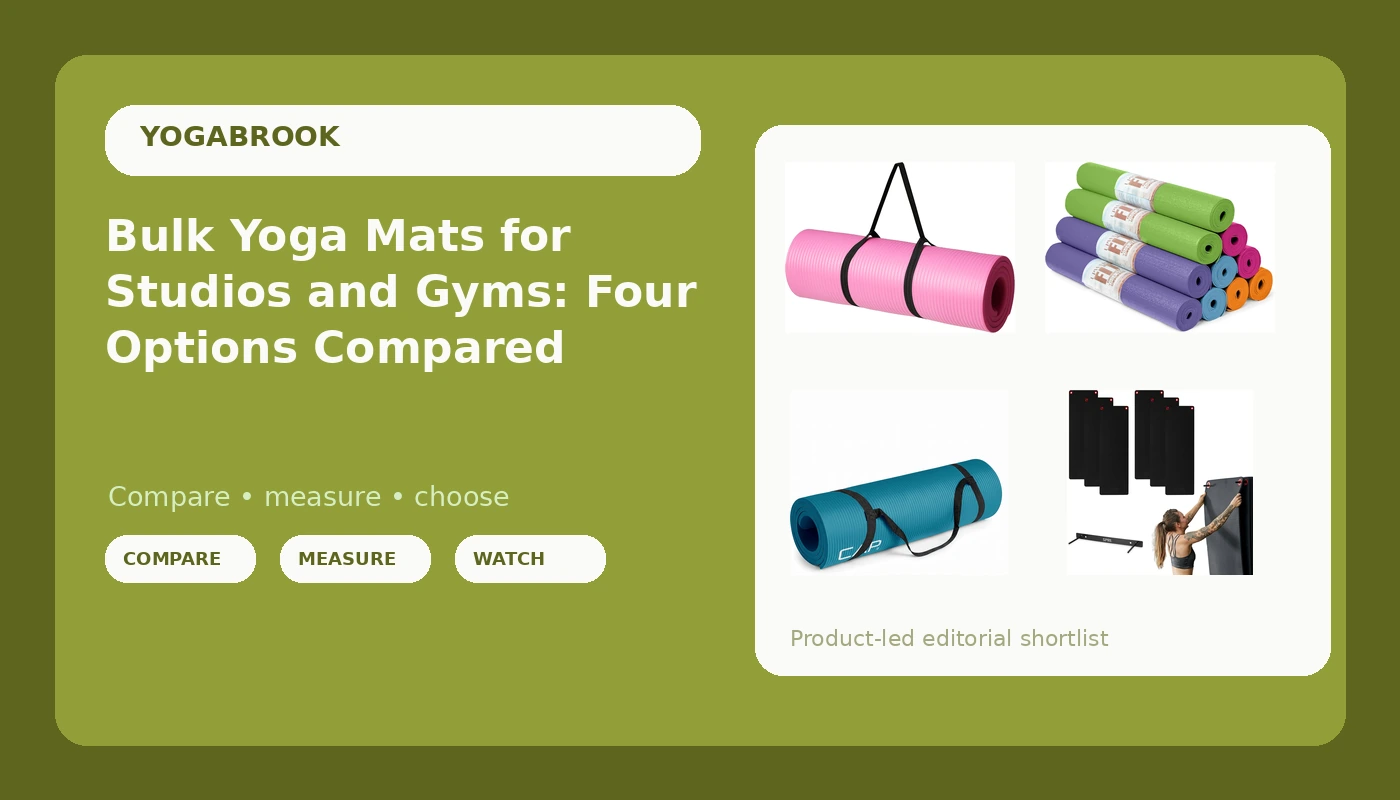
I teach vinyasa and a Thursday-night recovery class in Portland, and before I taught I spent eight years installing gym rubber and sprung dance floors in studios and theaters across the Midwest. That combination makes me the person studio owners call when they need mats for a room instead of a mat for a person. Buying in volume is a different problem: you are buying for bodies you have never met, for a storage closet with three feet of wall space, and for a 6 p.m. class where twenty people walk in and nobody wants to think about a mat. This comparison of bulk yoga mats for studios and gyms covers the four options I would actually put in front of a studio owner, a teacher running trainings, or a home practitioner who wants one mat that survives.
Affiliate disclosure, and I put it in the first paragraph on purpose: the links below are Amazon affiliate links and I earn a commission if you buy through them. Nothing here is sponsored, no brand paid for a placement, and every product in this table is something I would hand a student.
The short answer: for a shared room, the SPRI hanging closed-cell mats are the right tool. For a loaner pile, the Economy 3mm 10-pack is the right tool. For one person, the CAP Barbell 1/2-inch high density mat is the better daily mat and the Amazon Basics Extra Thick mat is the better first mat.
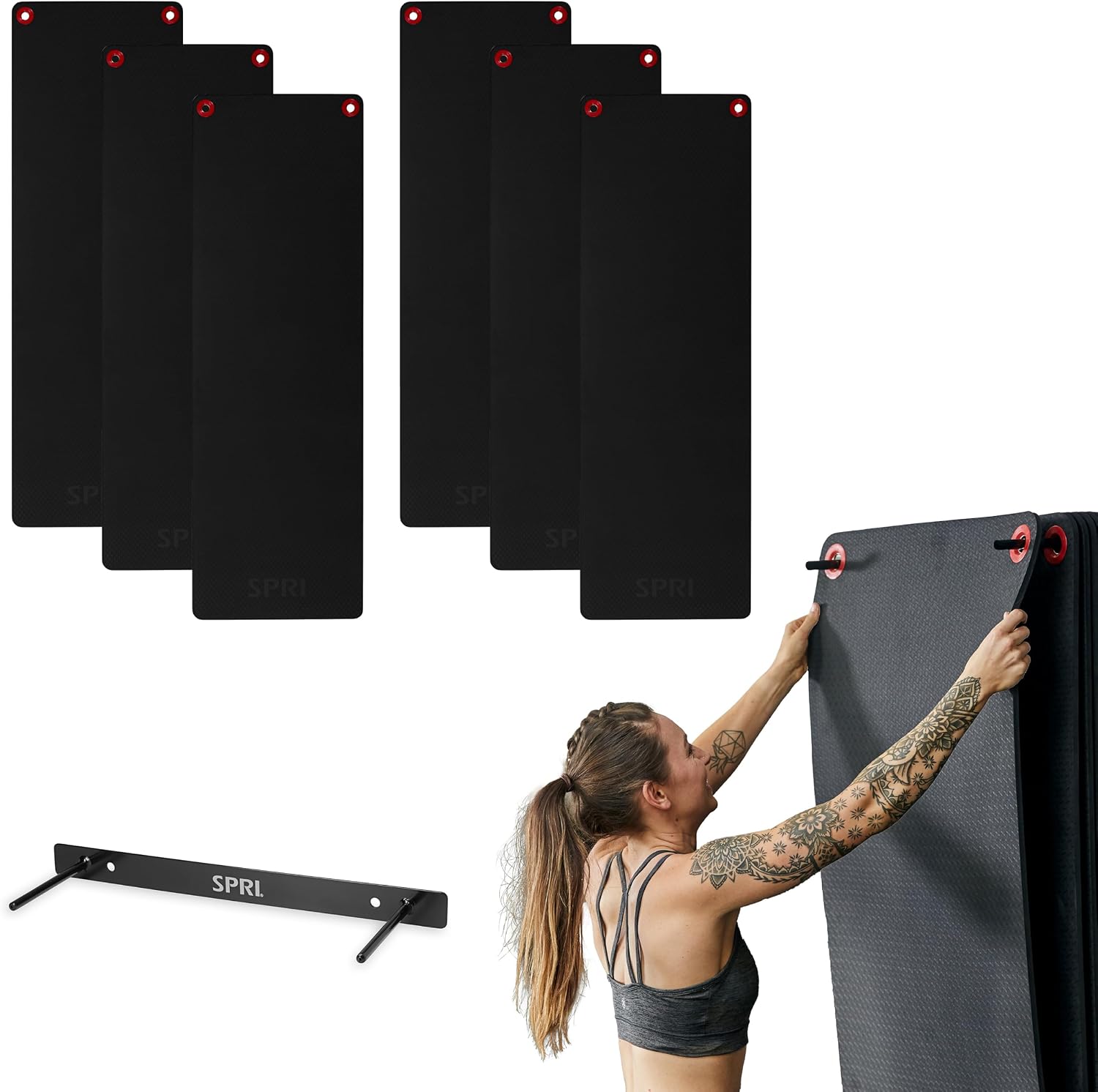
SPRI Hanging Exercise Mats for Gyms, Closed-Cell Foam Yoga & Fitness Mats with Grommets
Built for shared use, closed-cell foam wipes down, grommets hang flat
Overkill for one person, and hanging storage needs wall or rack space
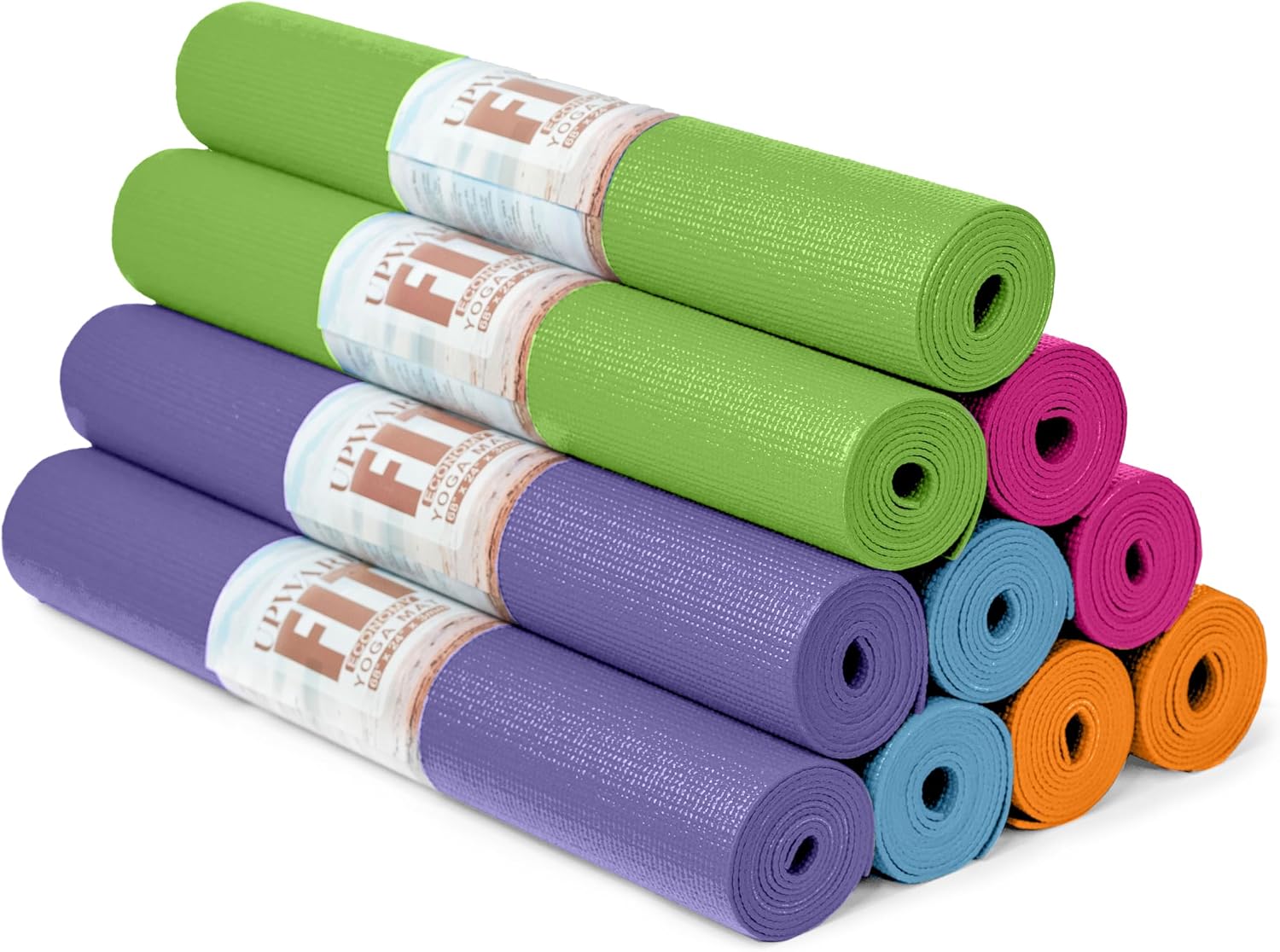
Economy 3mm Bulk Yoga Mats, 10 Pack, 68x24in
Outfits a whole class at once, stacks and travels, stable underfoot
3mm gives knees almost nothing, and 68 inches runs short for tall students
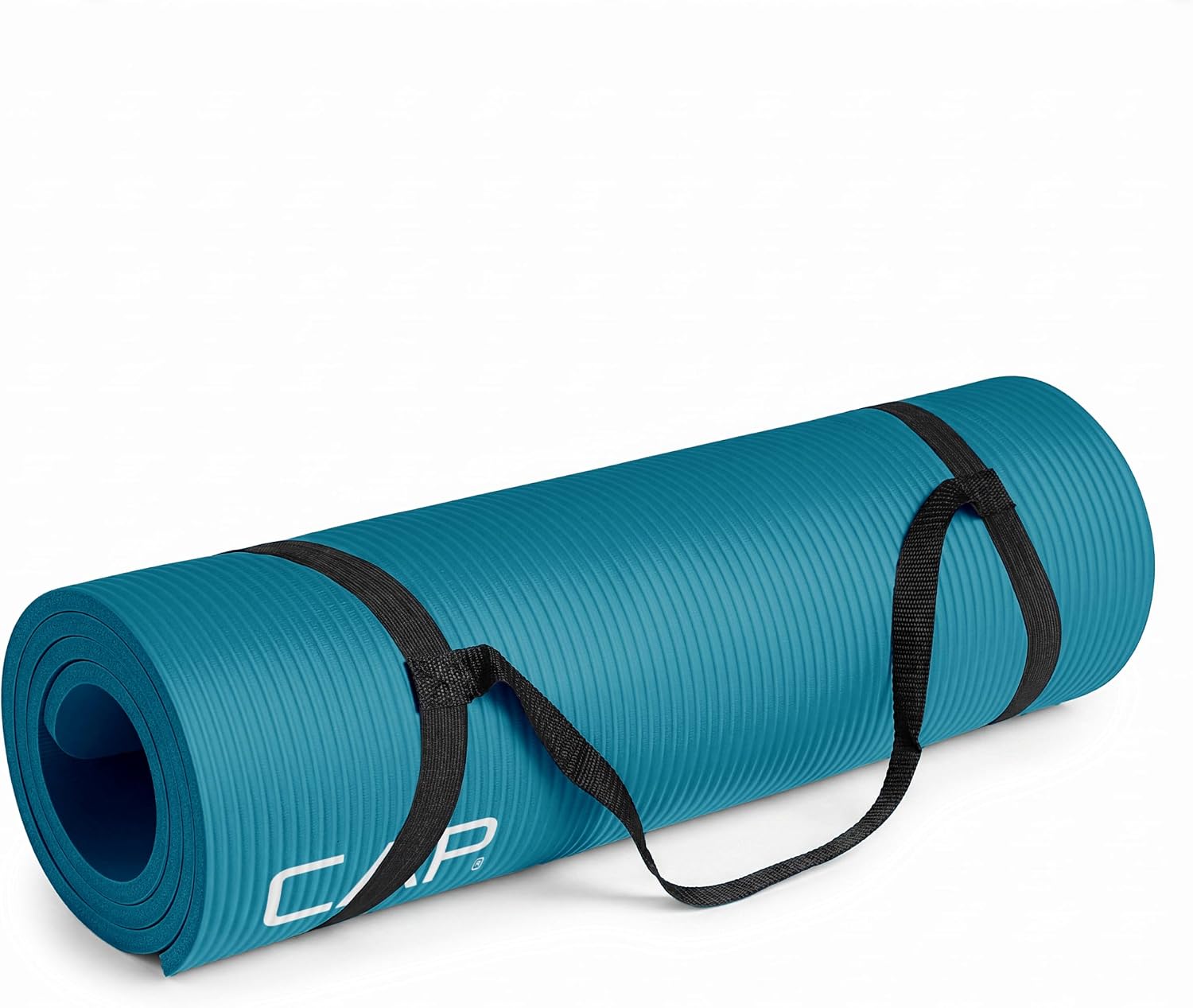
CAP Barbell 1/2-Inch High Density Exercise Yoga Mat with Strap
Dense half-inch foam holds up under standing poses, strap included
Still thick for balances, and the variant options mean checking the length
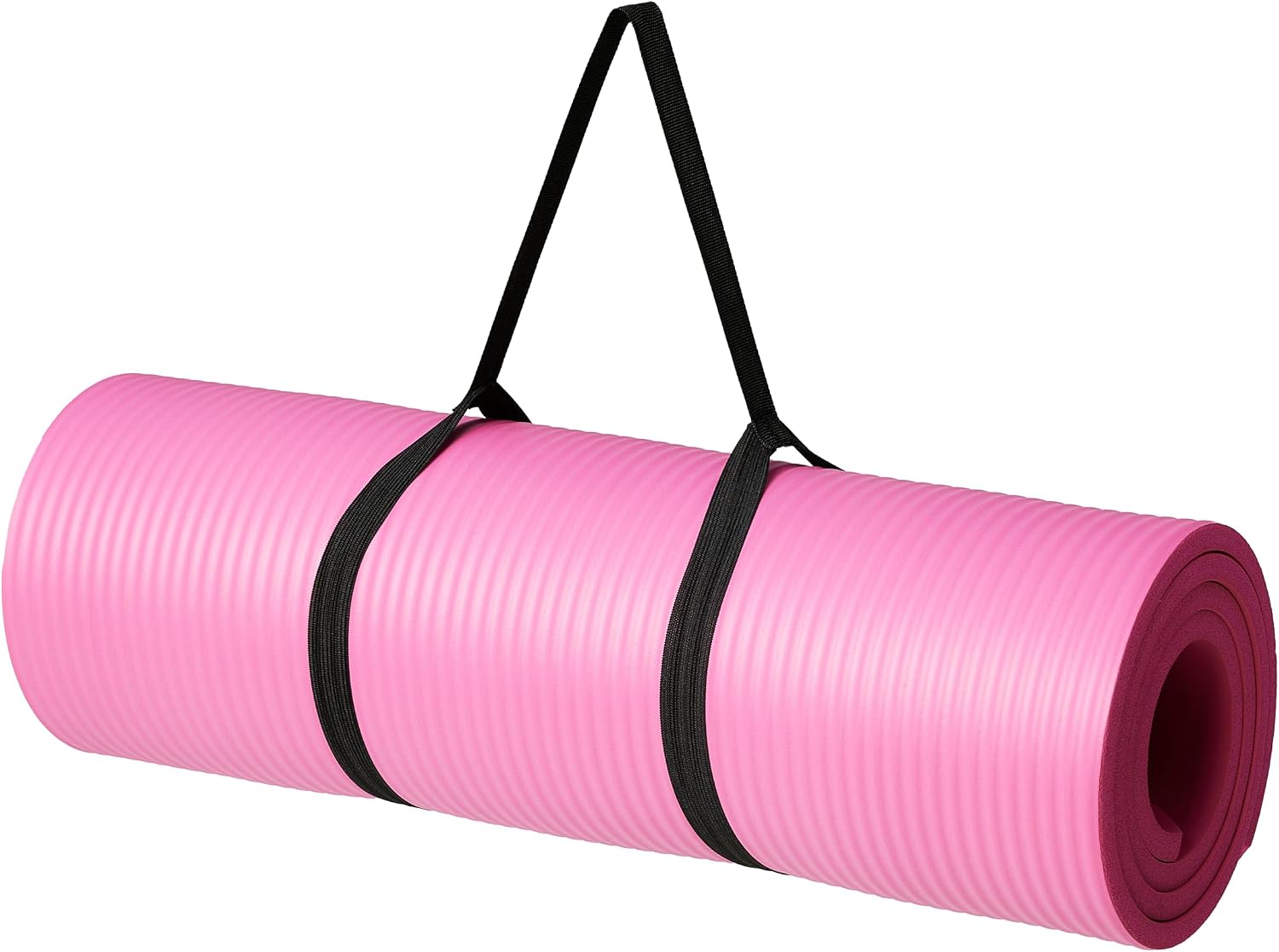
Amazon Basics Extra Thick Exercise Yoga Mat with Carrying Strap
Cushions knees and hard floors, strap included, easiest first purchase
Soft foam sinks under your palms, and it is not a hot-room mat
Prices and availability were captured from Amazon Creators API and may change.
What actually decides a volume purchase
Six things decide whether a stack of mats works in a real room, and none of them are printed on the box in language you can trust.
Thickness is the first and the most oversold. A thin mat puts your body closer to the floor, which is stable but unforgiving on knees and wrists. A thick mat cushions joints but compresses under your hands, and every millimeter of sink costs you in a standing balance. I measure thickness with calipers at six points because the number on the label is a marketing number, not a measurement.
Grip is a chemistry problem, not a texture problem. A pebbled surface sells mats. What decides whether you slide at minute 40 of a warm class is what the top layer is made of. PVC foam, which is what most budget mats use, grips fine when dry and turns slick once your palms get damp. Closed-cell foam, which is what gym and studio mats use, does not soak up sweat, which is why it wipes clean, and it also tends to feel firmer and a little more slippery than rubber when a room gets humid.
Storage is the difference between a mat that lasts three years and a mat that lasts one. Mats that live rolled up in a bin develop corner curl, and curled corners on a studio floor are a trip hazard. Mats with grommets hang flat on a wall, which solves the problem completely.
Length and width matter more than most buyers admit. A 68-inch mat is fine for most people and short for anyone over about six feet. A 24-inch width is standard and tight for a wide-shouldered practitioner.
Hygiene is the reason studios do not buy open-cell natural rubber for a loaner pile. Rubber grips beautifully and drinks sweat like a sponge. For shared mats, closed-cell foam and a spray bottle win.
Replacement math is the last one, and it is the one that bites. A cheap mat you replace twice a year is not cheap. A mat you keep for five years is, and the boring middle of the market is usually where the value sits.
One honest note before the sections: I have not logged two hundred classes on all four of these. A studio purchase and a bulk loaner order are not that kind of product. What I can tell you is what the materials do, what the specs mean, and which of these I would hand a student on a Tuesday night.
SPRI hanging exercise mats: the group-class workhorse
This is the one product here that was designed for exactly the problem a studio has. The SPRI mats are closed-cell foam with grommets, built for gyms, studios, and group fitness classes, and the grommets are the feature that matters most. Hang them on a wall rack and the edges stay flat. No corner curl, no stack of mats in a closet growing a smell, no unrolling a mat that looks like a scroll.
Closed-cell foam is the correct choice for shared use. It does not absorb sweat, so a wipe with a diluted cleaner between classes is genuinely enough, and it does not hold odor the way open-cell foam does. If you run boot camps, group fitness, or a studio with a loaner rack, this is the category that survives it.
The trade-offs are real. Hanging storage needs wall space or a rack, and if your room is a rented space with bare walls you may not have either. A thick studio mat is not a travel mat and it is not the mat you carry across town. And because these are built for a gym floor rather than a home practice, check the dimensions before you order, especially if your class includes shorter practitioners. For a single person practicing at home, this is more mat than you need.
Economy 3mm bulk mats, 10 pack: the loaner pile
Ten mats, 3mm thick, 68 by 24 inches. This is the pack I would order for a teacher training, a retreat, a corporate class, or a donation-based studio that wants a mat under every student without building a storage problem. Ten thin mats stack into a footprint smaller than two thick ones, and they travel, which matters if you fly to teach.
Three millimeters is not a cushion. That is the whole trade-off. If your students have knee histories or you teach a lot of kneeling and floor work, 3mm on a hardwood floor is going to hurt, and no amount of good intention fixes that. What 3mm does give you is stability: a thin mat puts you close to the floor, and standing balances are easier on it than on anything plush. Thin mats also handle better in a hot room, where a thick foam mat squirms under a sweaty foot.
The other things to know: 68 inches is short for tall students, thin PVC foam can slide on a slick studio floor, and thin mats stored rolled tight will curl at the corners, so store them flat or hang them. There are no straps in the pack, which is fine for a rack and annoying for a retreat.
For a studio that needs one mat per student and a budget that has to cover everything else, this pack is the sensible answer. For a personal practice, buy one better mat instead.
CAP Barbell 1/2-inch high density mat: dense beats plush
The CAP Barbell mat is a half inch of high density foam with a strap, and the words that matter are high density. Most cheap thick mats are soft foam, which is why they feel wonderful in the store and terrible in warrior two. Soft foam compresses under your palms in downward dog and squishes under your standing foot, and that squish is what makes you wobble.
High density foam resists that compression. It is not as firm as a 5mm rubber mat, and it is not as stable as a thin studio mat, but it is the compromise that makes sense for a home practitioner with knees that complain on a hardwood floor and a budget that does not stretch to a premium mat. The included strap is the difference between a mat you carry and a mat you leave in the car.
Two caveats. First, the listing comes in multiple options, so check the length and the color you are actually getting before you order, because variant listings are where buyers get surprised. Second, foam is foam. In a hot room with sweaty palms, this mat will get slicker than a rubber mat will, and if you practice 26&2 or a heated vinyasa class, that matters more than the cushion.
Amazon Basics Extra Thick mat: the beginner default
The Amazon Basics Extra Thick mat is the one I point beginners to when they are not sure they will still be practicing in three months. It is extra thick, which cushions knees and wrists on hard floors, it comes with a carrying strap, and it is the least intimidating purchase in this comparison. If your practice is restorative, yin, or a gentle class on a concrete floor, the cushion is doing exactly what you want it to do.
The trade-offs are the same trade-offs every thick foam mat has, and they are worth saying plainly. Extra thickness means extra sink, and sink costs you stability in standing poses. The top layer is foam, so grip fades as you sweat. And thick foam mats are the ones that end up gathering dust in a closet, because the person who bought them for the cushion discovered that the cushion was not the problem.
My honest advice to a beginner: this mat is a fine first mat, and it is not the last mat you will buy. If you already know you will practice three times a week, spend once and get something denser.
The trade-offs nobody prints on the box
Thickness and stability fight each other, and the box never tells you. Every millimeter of foam between your palm and the floor is a millimeter of wobble in a balance pose. The people who need cushion most, students with knee and hip histories, are also the people who need to stand on something firm. That is why density matters more than thickness, and why the CAP Barbell mat is a better compromise than a soft one-inch pillow.
Grip is not a texture. A pebbled top layer feels grippy and is not. What decides whether you slide is the material: PVC foam for budget mats, closed-cell foam for shared studio mats, natural rubber or polyurethane for premium grip. If a box says non-slip without the words "when dry" anywhere on it, that is a claim, not a spec.
Closed-cell versus open-cell is a hygiene decision as much as a comfort decision. Closed-cell foam does not drink sweat, which makes it the only sane choice for a loaner pile and for a hot room. Open-cell foam and natural rubber grip better and absorb everything.
Mat drag is the quiet safety issue. A mat that curls at the corners catches feet. Hanging storage with grommets solves it, storing flat solves it, and rolling mats tightly and leaving them in a hot car makes it worse.
Length is the most common regret. A 68-inch mat is standard and short for tall practitioners. If you are over six feet, look for longer, and if you are outfitting a room, know that a percentage of every class will be cramped.
Finally, durability. A cheap mat replaced twice a year costs more than a good mat kept for five, and a mat that spends its life in a closet costs the most of all, because it bought nothing. Whatever you choose here, choose the one you will actually roll out on a Tuesday.
How I would choose
If you run a studio or a gym with a shared rack, order the SPRI hanging mats and put a wall rack above them. The grommets and the closed-cell foam are the two features that solve shared use, and nothing else in this comparison does both.
If you run teacher trainings, retreats, corporate classes, or a donation-based room where you need a mat per student, the Economy 3mm 10-pack is the practical order. Buy a rack for them, store them flat, and warn your taller students.
If you practice at home on a hard floor and want one mat to live on, the CAP Barbell 1/2-inch high density mat is the pick, because density beats plush for anything standing. Check the variant before you order.
If you are brand new, unsure, and practicing restorative or gentle classes, the Amazon Basics Extra Thick mat is a reasonable, low-risk start. Just know that if you fall in love with a hot class, you will outgrow it.
The bottom line
Studios should buy for hygiene and storage, not for feel, and that points at the SPRI hanging mats. Bulk loaner piles should buy for stacking and stability, which points at the Economy 3mm 10-pack. Individuals should buy for density first and cushion second, which is why the CAP Barbell mat edges out the softer Amazon Basics mat for anyone past the beginner stage. None of these four is a mat I would tell a student to avoid, and each of them is the wrong buy for somebody. Pick the one that matches the room you actually teach or practice in, then stop shopping and go practice.