Related: How to Clean a Yoga Mat Without Ruining the Top Layer
Every link in this post is an affiliate link, which means I earn a small commission if you buy through one, and I would rather say that in the first sentence than bury it in a footer. I teach vinyasa in Portland, Oregon, and I spend a lot of my year thinking about bulk yoga mats: the stack in the corner of the studio, the loaner rack, the bin of mats that a church basement class borrows every Wednesday. Buying one mat for yourself is a simple decision. Buying a stack for a room is a different problem, and the two most common mistakes are buying the cheapest mat on the pallet and buying the thickest one.
I keep a spreadsheet with a row for every class I teach on every mat I own, and I have opinions about the caliper gap, the sink factor, and what a mat does at minute 40 of a hot room. But this post is not a lab report on four mats. It is a buying guide: here is what each of these four options is for, what the numbers in the names actually mean, and how I would decide if I were spending my own money on a studio rack tomorrow.
The short version: one Gaiam for one person, a Timgle six pack for a small class, and the ten pack of 3 mm mats for a big room. The long version is below.
Best Overall: Gaiam Thick Yoga Mat
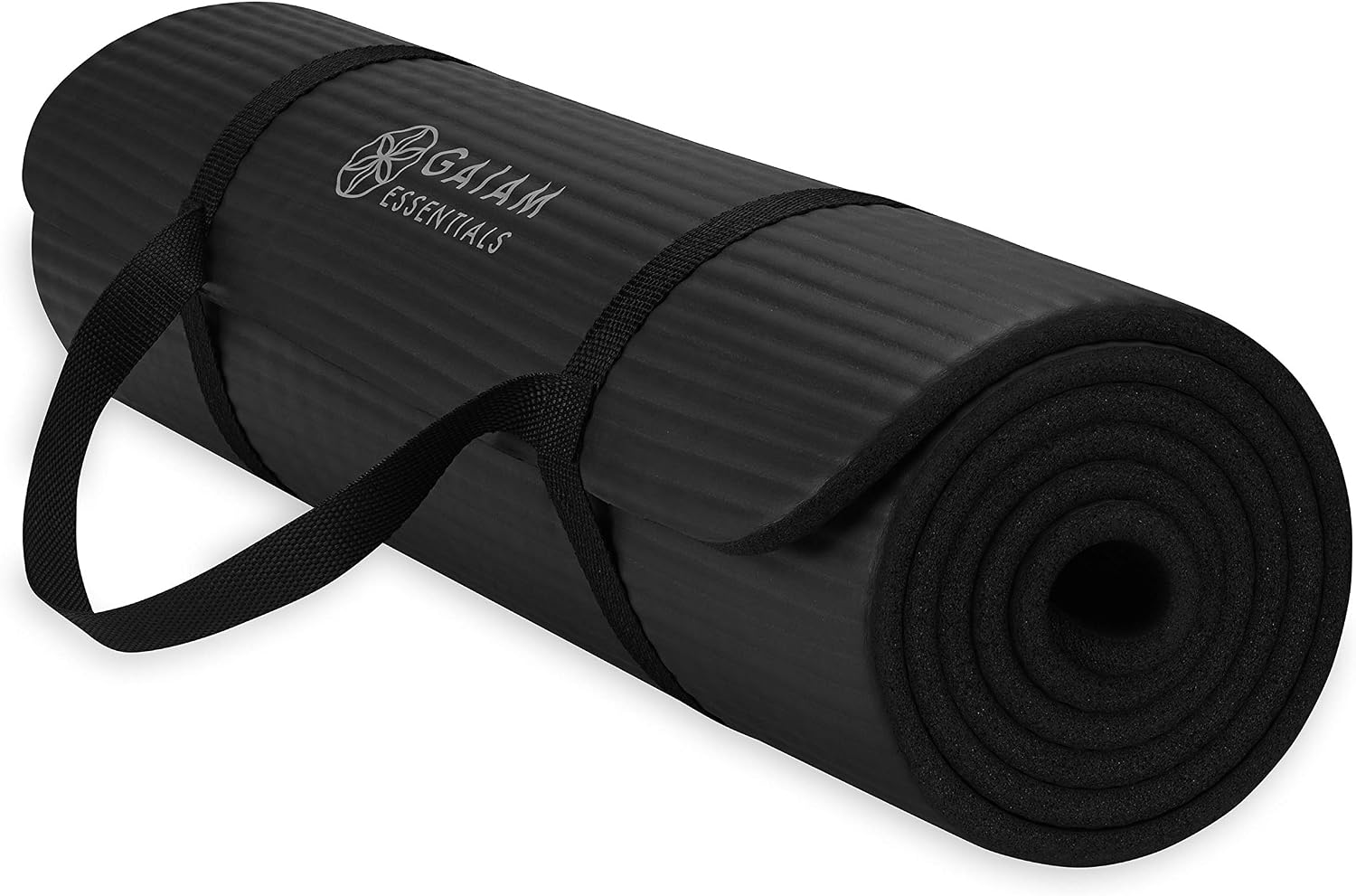
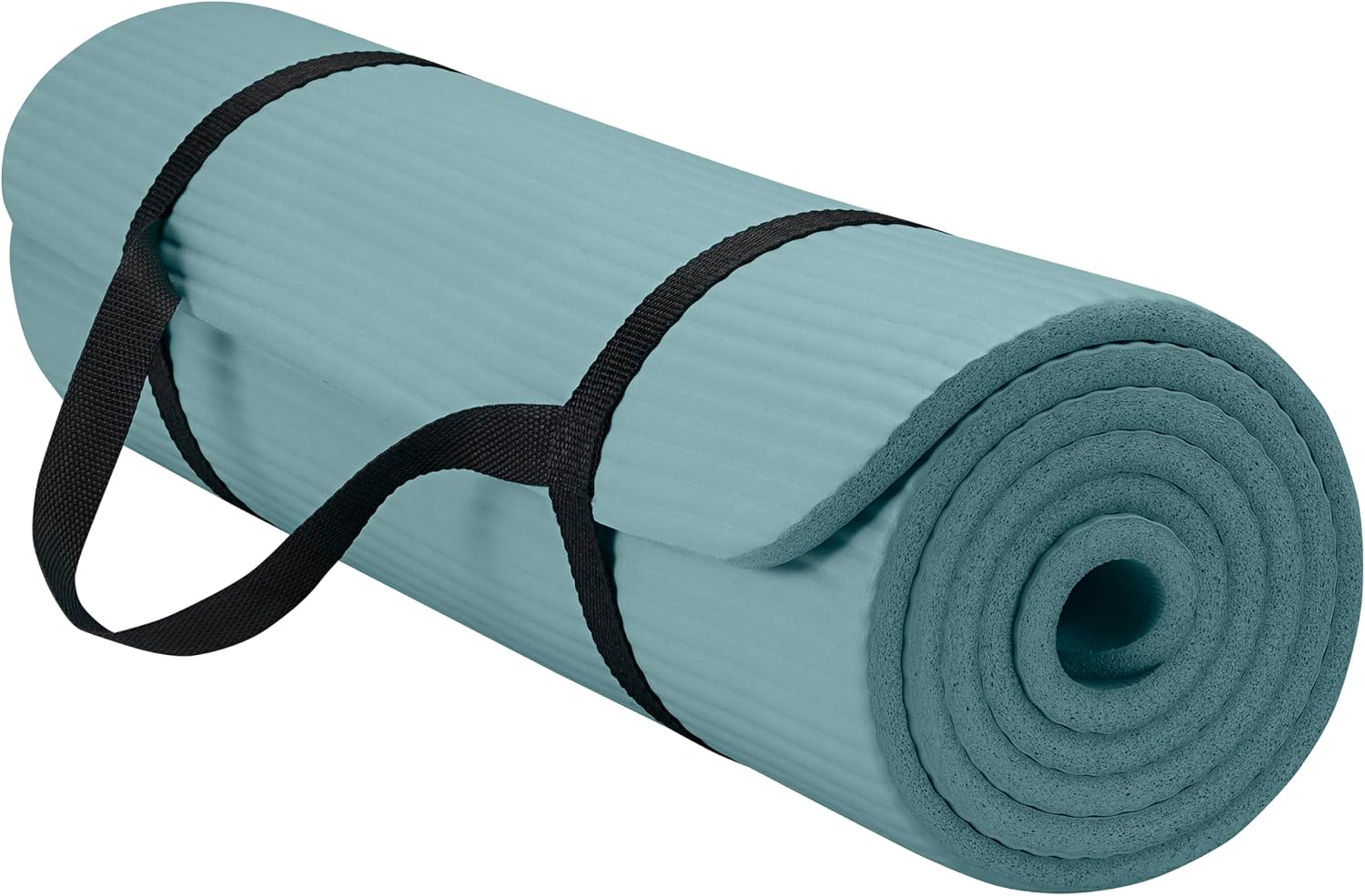
If you are buying exactly one mat, this is the one I point at first. Gaiam has been the default of the yoga world for as long as I have been teaching, and the reason is not romance. It is a 68 by 24 inch mat with a cushion that forgives a beginner's knees, it costs roughly what a decent dinner costs, and it ships with an easy-cinch carrying strap. That strap matters more than people think. A mat with a strap goes to class. A mat without one lives behind the couch.
The word "thick" is where you have to slow down. Thick is a cushion spec, not a stability spec, and those two things fight each other in every standing pose you will ever do. The foam that saves your knees in a low lunge is the same foam your palms sink into in downward dog, and sink is what makes wrists ache and balance wobble. My rule of thumb after years of measuring mats with calipers: a little compression under the heel is comfort, a lot of compression under the palm is a problem. If your hands disappear into a mat in downward dog, you have bought a nap pad, not a yoga mat.
This one is PVC, which is the material I complain about most and still recommend constantly, because PVC is cheap, durable, and easy to clean. It grips well when your hands are dry and gets vague once you are genuinely sweating, which is why I tell hot yogis to put a towel down and stop expecting a thirty dollar mat to behave like polyurethane. The easy-cinch strap, the standard footprint, and the forgiving cushion make it the best single mat in this group. Check current Amazon price before you buy, and check whether the listing you are looking at is the one with the strap.
Best Value for a Small Studio: Timgle 6 Pack Yoga Mats, 4 mm
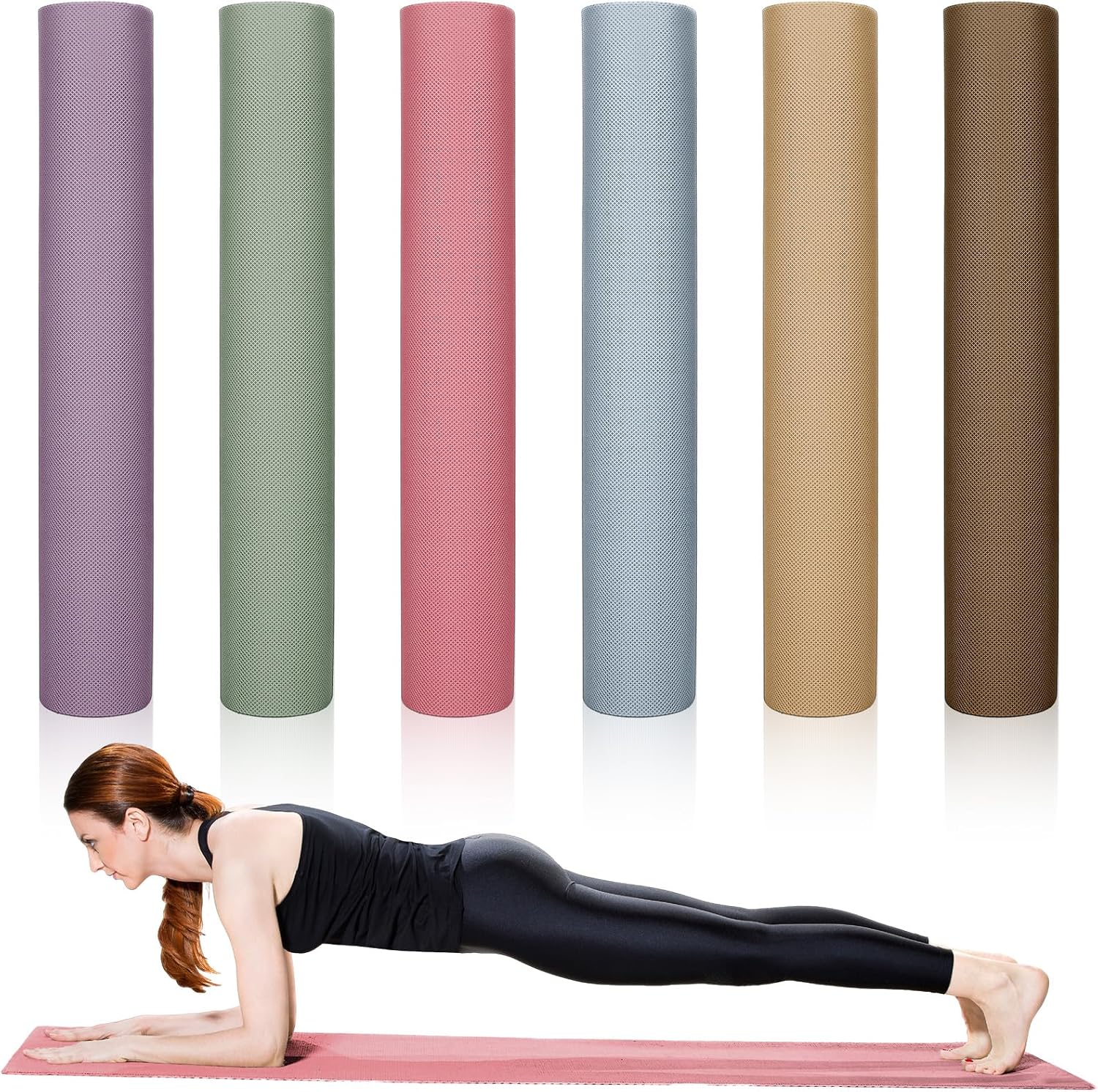
Six mats, 68 by 24 inches, 4 mm thick, sold as non slip. For a teacher running a small class, this is the shape of the purchase that makes sense, and 4 mm is the number I would circle in red. Four millimeters is the studio sweet spot: thin enough that your standing leg still knows where the floor is, thick enough that a kneeling pose does not feel like penance. If I were equipping a six-student class in a rented room, this is the pack I would buy, and I would buy it before I bought anything thicker.
Two things to know. First, "non slip" on a mat box almost always means non slip when dry. I have said this until I am hoarse: grip is a chemistry problem, not a texture problem, and the texture on top of a budget mat sells the idea of grip without delivering it once your palms are wet. If your class runs warm, budget for towels or expect the slick-sweat threshold to arrive around minute 35. Second, a six pack is a count, not a guarantee. Six mats covers six students with nothing left over, so if your room holds eight, buy two packs or buy ten.
The practical argument for a pack like this is logistics. Matching mats stack evenly, they store in one bin, they clean the same way, and when one finally dies you replace it from the same listing instead of hunting for a discontinued color. Mismatched loaner mats are how a studio rack turns into a pile. Check current Amazon price, then do the division: the number that matters is cost per mat, not cost per pack.
Best for Big Rooms: Economy 3mm Bulk Yoga Mats, 10 Pack
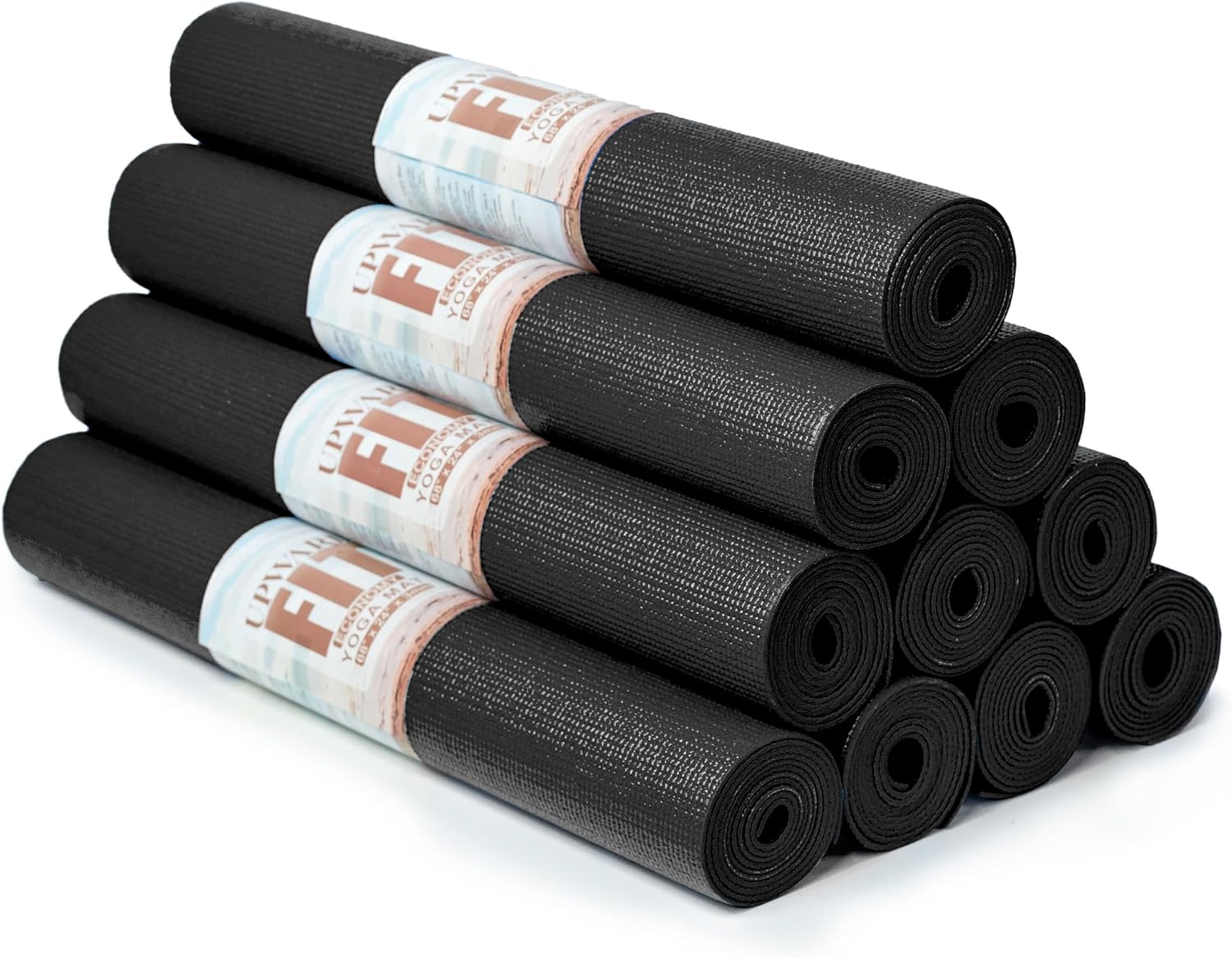
Ten mats, 68 by 24 inches, 3 mm thick, and the name says economy out loud, which I respect. Three millimeters is thin. Thin is not automatically bad. Thin is stable, thin stacks flat in a closet, thin is what a lot of experienced practitioners actually prefer once their joints stop needing babysitting, and thin is the only way you are getting ten mats for the price of one nice one.
This is a program purchase, not a personal one. I would buy this pack for a large class, a corporate lunchtime session, a chair yoga group, a kids program, or the kind of community class where twelve people show up and eight of them forgot a mat. It is also the right answer for a loaner rack, because the mat that walks out the door and comes back two weeks later should not be the expensive one.
What it is not is a cushion. On a concrete floor, 3 mm under a student with bad knees is a bad afternoon, and I would rather hand that student a folded blanket or a thicker mat than pretend the economy mat will do. Thin mats also show their age in the corners first: watch for mat drag, the edge lift that turns a flat mat into a trip hazard on a smooth studio floor. And check the smell. Cheap PVC needs airing out, and a stack of ten needs more airing out than one. Unroll them in a garage or on a porch for a few days before they go into a closed bin. Check current Amazon price and count the room before you count the pack.
The same Gaiam mat, second listing
Amazon carries this Gaiam mat under more than one listing, and this is the other one. Same mat, same name, same cinch strap, different page. If the first link shows a color you do not want or a shipping estimate that makes you sigh, try this one. It happens constantly with mats, and there is no reason to pay more for the same piece of foam because one listing is out of stock. Check current Amazon price on both before you commit.
How I evaluate a mat before it earns a spot on the rack
The calipers come out before the mat comes out of the tube. I measure thickness at six points, because the thinnest edge is the number that matters and the middle of the mat is the number brands like to print. Anything more than a millimeter off the claim is a character test the brand failed. Then I weigh it, because a mat you will not carry is a mat you will not use.
Grip gets tested on an inclined plane, dry and wet, and I record the angle at which a weighted brick starts to slide. Dry numbers are easy and almost every mat passes. Wet numbers are where the category separates, and where the phrase "non slip" quietly stops meaning anything. I also log the slick-sweat threshold, which is the class minute when grip gives out in a hot room. The good mats do not have one.
Then the body test: sink factor in downward dog, corner curl after a week rolled up, and how the mat smells after a month of use and cleaning. That last one is unglamorous and it is the reason I stopped buying certain natural rubber mats for studio use. A mat that smells like a wet dog at month eight does not get handed to a student.
What the specs actually tell you
Thickness is the only spec on the box most people read, and it is the least useful one on its own. Three millimeters, four millimeters, and thick are three different tools. Three is for stability and stacking. Four is the compromise most studios should live at. Thick is for comfort and home practice, and it costs you something in balance. If your class is mostly standing work, buy thinner than you think. If your class is mostly floor work, restorative, or yin, buy thicker than you think.
Material is the second spec, and it is a trade, not a ranking. PVC is petroleum based, it offgasses when it is new, and it is the least eco friendly mat material there is, which is why I get irritated when I see a leaf icon printed on one. It is also cheap, tough, and easy to clean, and a PVC mat you keep for five years beats a biodegradable mat you replace every two. Natural rubber grips better and comes from trees, and it also degrades faster and holds sweat in its pores. Neither one is a moral position. They are just different tools.
Bulk changes the math in one direction only: cost per mat falls, and everything else stays the same. You are not getting a better mat because you bought ten. You are getting ten of the same mat, which is exactly what a studio needs and exactly what a single yogi does not. Count your room, count your spares, and buy the count. The one number I would never optimize is grip. A cheap mat that slides is not a bargain at any price, because the injury it causes costs more than the rack it saved.
The bulk yoga mat comparison table
| Mat | Stated thickness | Best for | Price |
|---|---|---|---|
 Visit on Amazon → Gaiam Thick Yoga Mat |
Thick, cushion forward | One person, beginners, home practice | $21.25 |
 Visit on Amazon → Timgle 6 Pack Yoga Mats |
4 mm | Small studios, six student classes | Check current Amazon price |
 Visit on Amazon → Economy 3mm Bulk Yoga Mats, 10 Pack |
3 mm | Large rooms, loaner racks, floor work | $89.99 |
 Visit on Amazon → Gaiam Thick Yoga Mat, second listing |
Thick, cushion forward | Same mat, alternate listing | $24.98 |
Read the table by column, not by row. Find your thickness first, then check the count, then check the price. If two rows both fit your room, buy the one with the count that matches your class size, because a spare mat in a closet is cheaper than a student on a bare floor.
Should you buy the Gaiam Thick Yoga Mat?
Yes, if you are buying for one person and you want a mat that survives a beginner year without a fuss. It is the sensible default, it comes with the strap, and the cushion is kind to knees. Just go in knowing what it is: a PVC mat with a comfort first cushion that will get vague under wet palms. Treat thick as a cushion spec, not a stability spec, and if you are doing hot yoga, budget for a towel. Check current Amazon price, and if the listing you land on is out of stock, try the second listing above.
Should you buy the Timgle 6 Pack Yoga Mats?
Yes, for a small studio or a teacher with six students and a rented room. Four millimeters is the number I would pick for a mixed class, the count is honest, and the mats stack and clean like a set instead of a pile. Buy two packs if your room holds more than six. And do not take the non slip claim as a promise for a hot room, because no budget mat on the market earns that.
Should you buy the Economy 3mm Bulk Yoga Mats, 10 Pack?
Yes, if the job is outfitting a large room, a loaner rack, or a program where mats come and go. Three millimeters is thin, stable, and stackable, and ten of them solve a whole class at once. Air them out before they go in a bin, watch the corners for edge lift, and hand the students with knee trouble something with cushion instead. For a big room on a real budget, this is the pack that does the work.