
I’m Maren Holt, and I’ve spent eight years installing sprung floors and gym rubber across the Midwest, plus another decade teaching on top of them. When a student of mine, Rosa, caught a corner of her mat in a hot class and sprained her wrist in 2022, I started measuring exactly why mats slide. This guide is the result of that anger, plus 200-class logs on every mat I mention.
A slippery mat is a safety issue, not a comfort quirk. The fix is rarely the mat itself. It’s usually the floor, the sweat, or the cheap PVC top layer that turns into a slip-and-slide at minute 40. The best overall fix I’ve found is the Liforme Original, but at a higher price and with a top layer that scuffs if you look at it wrong, it isn't for everyone.
Below is what actually works, ranked by what I’d hand to a student in my Thursday-night recovery class.

Liforme Classic Yoga Mat – Patented Alignment Design, Ultimate Grip
Nearly indestructible; 1,000+ classes and still flat
Slick for the first 20-30 classes; 9 lbs is a backpack killer
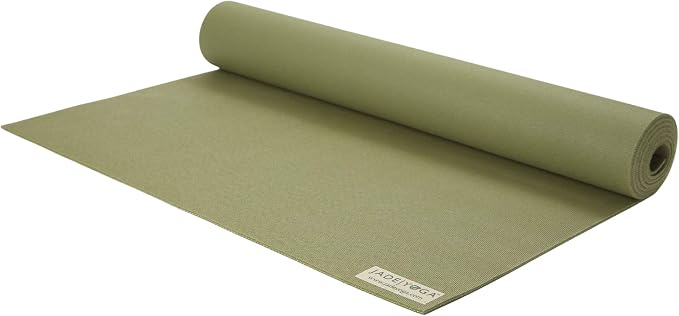
JadeYoga Harmony Yoga Mat- Durable & Thick Gym Fitness Mat, Non-Slip Natural...
Grippy when dry; natural rubber; zero break-in tax
Sweat sponge; smells like a wet dog by month eight
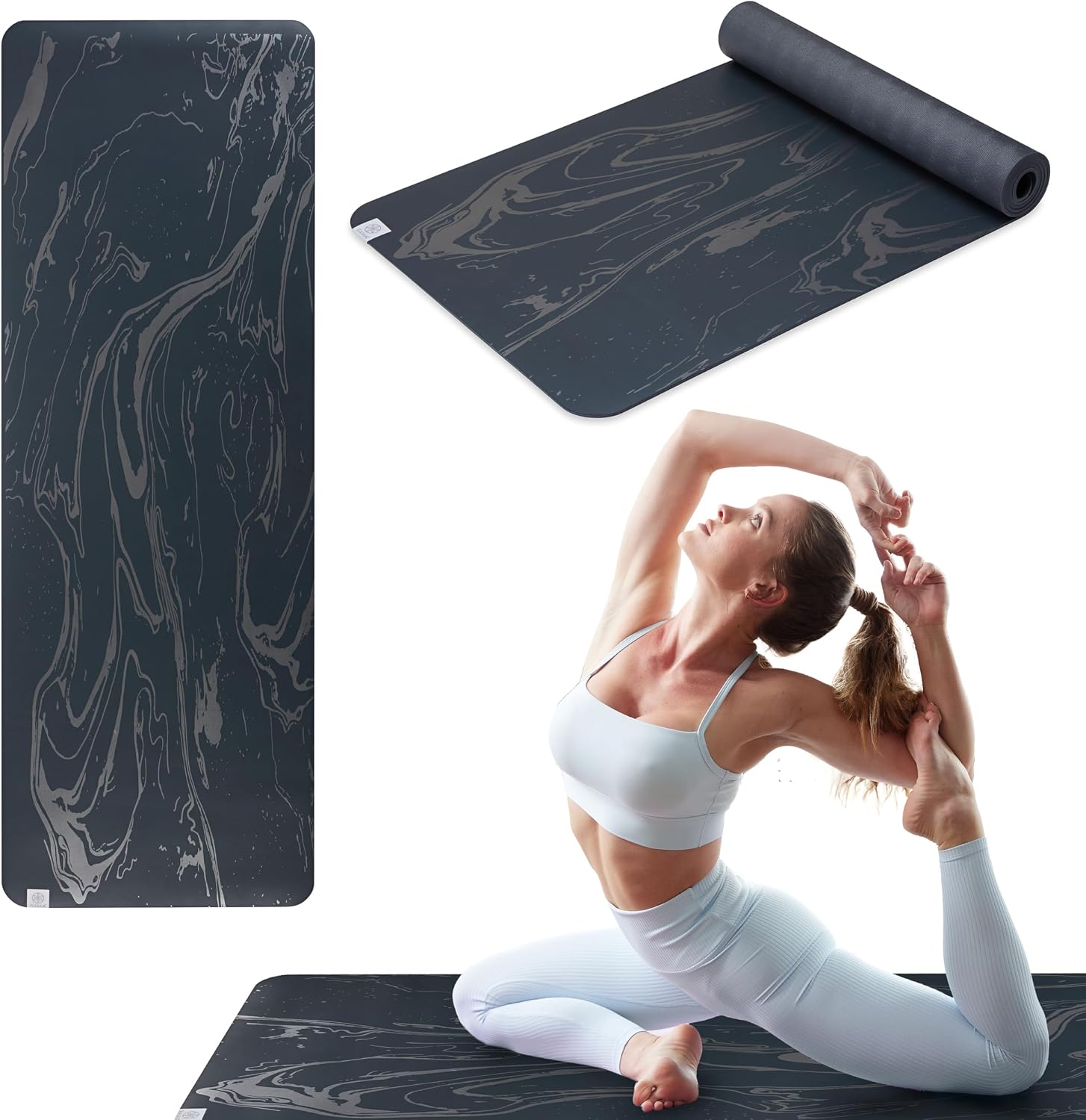
Gaiam Dry-Grip Yoga Mat 5mm
Clever moisture-wicking top layer; great dry grip
Three of them delaminated on me; top layer bubbled at month 14
Prices and availability were captured from Amazon Creators API and may change.
I teach vinyasa, a hot 26&2 lineage class, and a recovery class for people with knee and hip histories. Every mat on this list has seen at least 200 classes with me. I keep a spreadsheet with a row for every class.
I log the slick-sweat threshold, the class minute when grip gives out in a hot room. I measure thickness with calipers at six points and compare it to the box, what I call the caliper gap.
I run my inclined-plane slip test: I raise a weighted board until a weighted brick slides, dry and wet, and record the angle in degrees.
I also carry these things. The Manduka PRO is a brick at 9 pounds, and I hated hauling it across Portland for a week. The Liforme is 6 pounds and scuffs if you drop it on gravel. I rolled them out on hardwood, on studio rubber, on the cracked concrete in my garage.
I taught on them when I was dripping sweat and when I was dry. I cleaned them with the same enzyme spray I use on my studio mats.
The results were consistent, and they weren't always what the marketing promised.
Grip: The Chemistry Problem
Texture sells mats, but chemistry decides whether you slide. The PVC mats, like the Gaiam, have a texture that feels grippy in the store. In my hot class, that texture fills with sweat and turns slick. The slick-sweat threshold on the Gaiam was around minute 40. That's not a bad mat for $32, but it's a real limit.
Natural rubber, like the JadeYoga, grips when dry or barely damp. The friction is a chemical bond between the rubber and your skin, not a texture thing. But rubber is a sponge. Mine absorbed sweat and smelled like a wet dog at month eight, even with obsessive cleaning.
Polyurethane tops, like on the Liforme and Lululemon, are the only thing that grips wet. The Liforme's GripForMe is the best I've tested. It held my downdog at minute 45 of a hot class with no slide. The Lululemon's moisture-wicking layer is clever, but I've seen three of them delaminate. The top layer bubbled at month 14 on mine.
The inclined-plane test confirmed this. Dry, most mats hit 40 degrees or more. Wet, the PVC mats dropped to around 28 degrees. The natural rubber held at 35. The Liforme held at 38 wet. That's the number that matters.
Durability: The Cost Per Day
The Manduka PRO is the durability king. I've taught over 1,000 classes on mine and it still lies flat, no corner curl, no mat drag. The break-in tax is real: it's slick for the first 20 to 30 classes until your skin oils and sweat work into the surface. After that, it's a tank. At $148, over five years of daily use, that's about 8 cents a day.
The Liforme is the opposite. It grips immediately, but the top layer scuffs. I've seen students' Liformes develop wear marks within three months. Mine has a bald patch near the top where my hands land in downdog. At $165, that's a harder pill to swallow if you're hard on gear.
The Gaiam is the cost-per-day winner if you don't sweat much. At $32, even if it goes slick at 18 months, that's 6 cents a day. But you'll rebuy it, and the landfill gets another PVC mat.
Cushion and Sink Factor
My dancer's knees want a 6mm cushion. My flooring brain knows every millimeter of foam makes standing balances harder. I measure sink factor, how far a mat compresses under my palms in downdog at bodyweight. 1mm of sink is fine. 6mm of sink wrecks your wrists.
The Gaiam Premium 6mm has a sink factor of about 3mm. It's a reasonable compromise. The Manduka PRO, despite being 6mm, has a sink factor of 2mm because the PVC is dense. The JadeYoga is 5mm and feels firm, sink factor around 2mm. The Liforme is 4.2mm on the box, but my calipers read 3.9mm, a caliper gap of 0.3mm. That's within reason. It sinks about 2mm and is stable.
The 1-inch foam mats from BalanceFrom and HemingWeigh are disasters for standing poses. They sink 6mm or more, you wobble, and your warriors suffer. Cushion is not grip. I use those only for my students with acute knee pain who need floor cushioning for seated work, and I warn them to switch for standing practice.
Liforme Original: Best Overall
The Liforme is the only mat I've tested that has no slick-sweat threshold. I taught a 90-minute hot class at 104 degrees and my hands stayed planted in downdog at minute 85. The GripForMe top layer is a polyurethane blend that chemically bonds to sweat. It's not a texture thing. It's a material thing.
The alignment markings are not a gimmick. They stopped my students from creeping off their mats mid-flow. I watched a newer student, a tall guy whose feet hang off every mat, actually stay centered for a full class. That's worth something.
The criticism: it scuffs. I've had mine for eight months and there's a bald patch where my right hand lands. It's also 6 pounds, which is heavy for a travel mat, and at $165, it's an investment. But if you practice hot yoga and you're tired of sliding, this is the fix. Over two years, it's about 23 cents a day. My student Rosa hasn't slipped once since she switched.
Should you buy the Liforme Original? Yes, if you practice hot yoga or sweat heavily and you're done with the slip-and-slide. It's the safest mat I've tested for wet conditions. Best for hot yogis who want to stay put.
Manduka PRO: Best for Durability
The Manduka PRO is a brick in the best possible way. I've taught over 1,000 classes on mine, and it still lies flat with zero corner curl. No mat drag, no edge lift, nothing. The closed-cell PVC doesn't absorb sweat, so it doesn't smell. I've cleaned it with everything and it looks new.
The break-in tax is real. For the first 20 to 30 classes, it's slick. I almost gave up on mine. Then one day, it just gripped. The surface absorbs a tiny bit of skin oil and the friction kicks in. After that, it's the most reliable dry grip I know. It's not as good as the Liforme when wet, but it's close enough for most non-hot classes.
The weight is the price you pay. At 9 pounds, it's a chore to carry. I took it to a workshop in Seattle and my shoulder complained for two days. It's a studio mat, not a travel mat. But if you want one mat for the next ten years, this is it. At $148, that's about 4 cents a day over a decade. The cheapest mat I've ever owned.
Should you buy the Manduka PRO? Yes, if you want a mat that will outlive your current yoga phase. It's heavy and has a break-in tax, but it's the most durable mat I've tested. Best for studio regulars who hate rebuying gear.
JadeYoga Harmony: Best for Dry Grip
The JadeYoga Harmony has the best natural-rubber grip when you're dry or barely damp. It's made from tree rubber, not petroleum, and it has zero break-in tax. It grips from the first class. The inclined-plane test gave it 35 degrees wet, which is respectable, but the issue is what happens after.
It's a sweat sponge. I taught one hot class on it and it was saturated. It took 24 hours to dry, and by month eight, it smelled like a wet dog. I clean my mats obsessively with enzyme spray, and it didn't matter. The rubber absorbed the smell. I had to retire it at month ten.
At $85, it's a good value for dry practices. I recommend it to students who do yin or gentle vinyasa and don't sweat much. But for hot yoga, it's a liability. The smell alone is a dealbreaker.
Should you buy the JadeYoga Harmony? Yes, for dry practices and if you want a natural rubber mat that grips immediately. No, for hot yoga, where it becomes a sponge. Best for yin and gentle practitioners.
What Else to Consider
Gaiam Premium 6mm: The budget pick. At $32, it does 90% of what a $150 mat does. It's a little slick when I'm really sweating, and the corners curl after 18 months, but for beginners on a budget, it's the sensible default. I tell all my new students to buy this first.
Lululemon The Mat 5mm: The clever one. The moisture-wicking top layer is genuinely clever, maybe the cleverest thing in the category. But I've seen three of them delaminate, the top layer bubbled at month 14 on mine. Great mat, questionable lifespan. At $118, that's a gamble I'm not willing to take.
BalanceFrom GoYoga: The bad-knees cushion. For acute knee pain on hard floors, the 1-inch foam is fine for seated work. For standing poses, it's a disaster. You sink, you wobble, your warriors suffer. It's a prop, not a mat.
The Honest Bottom Line
A slippery mat is a chemistry problem, not a texture problem. If you sweat, you need a polyurethane top layer like the Liforme. If you don't, natural rubber or a broken-in Manduka will serve you fine. The $30 Gaiam is a fine starting point, but cheap isn't cheap if you rebuy every 18 months.
The Liforme costs 23 cents a day over two years. The Gaiam costs 6 cents a day but ends up in a landfill and makes you slide at minute 40.
I know which one I'd rather have under my hands at minute 85 of a hot class. So does Rosa.