Related: How to Break In a Slick New Yoga Mat
I have taught vinyasa in Portland for more than a decade, and before that I spent eight years on a crew that installed sprung dance floors and gym rubber in theaters and studios across the Midwest. That second job is what ruined me for marketing copy. When a box says extra thick, I want to know thick where. When it says non-slip, I want to know non-slip at which minute of which class, because those are two very different claims.
This is my guide to non-slip yoga mats for home practice, and it is built the way I buy them: by what the top layer is made of, how much cushion a pose actually needs, and whether the thing will still lie flat on the floor after a year of Tuesdays. I make money from the links on this page, so I say it in the first paragraph. I only link mats I would hand to a student in my own class, and each of the four products below earns its spot on grip, cushion, or both.
Here is the framework. Thickness numbers on the box are marketing until my calipers agree with them. Grip is a chemistry problem, not a texture problem, and texture is what sells. And cushion is not grip: a mat can be soft enough to save your knees and still useless in a hot room.
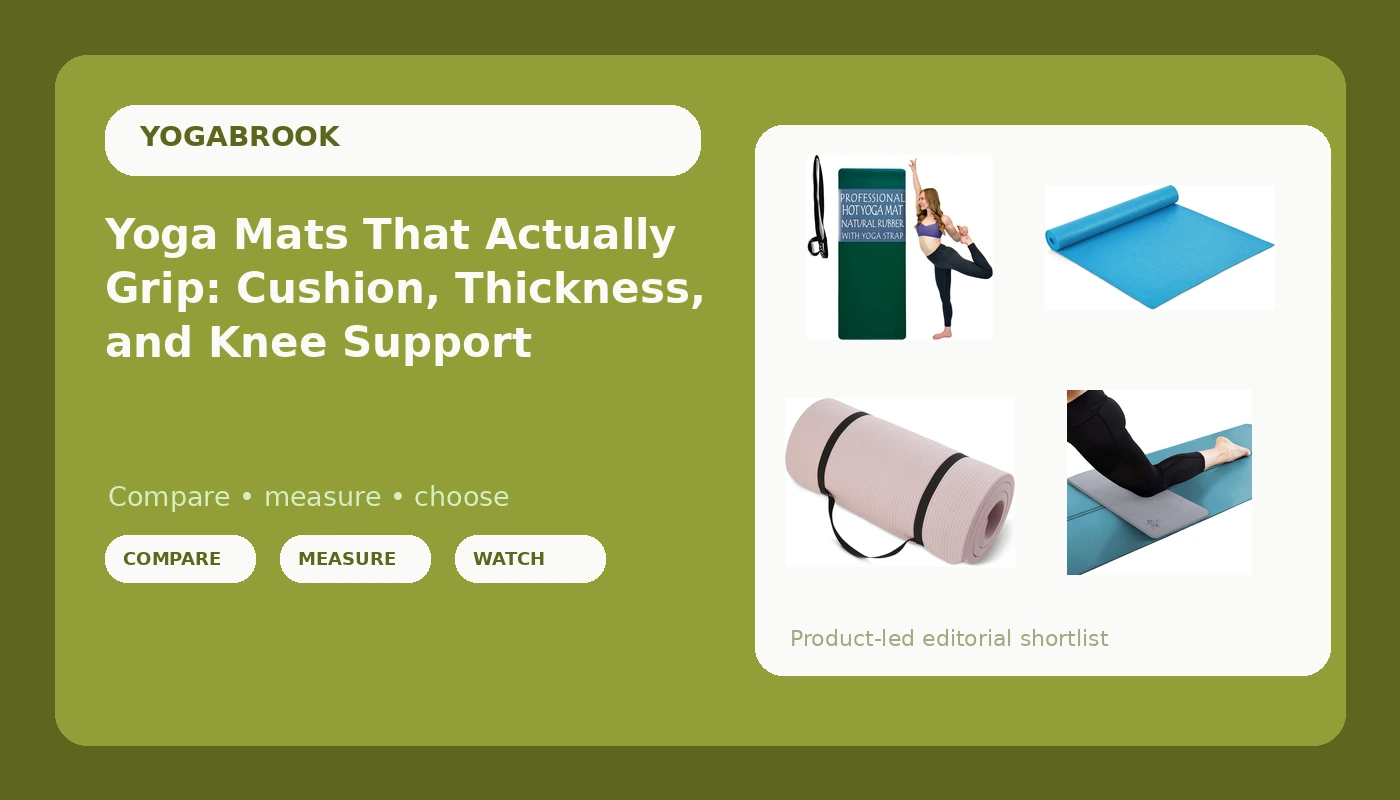
Best Overall for Grip: Tatago Hot Yoga Mat
This is the mat I would put in your hands first if your palms sweat, and it is the one I would take into a heated room. The top layer is natural rubber, and that single fact decides most of the grip argument. Polyurethane and rubber hold on when they are wet. PVC and most closed-cell foams hold on when they are dry and give up the moment you are not. That is what I mean by a slick-sweat threshold, and rubber is the material that mostly does not have one.
It is sold as a professional grade mat, and the accessories match the intent: the included strap does double duty for carrying and for stretching, which is the only mat accessory I actually use. There is also no break-in tax here. A dense PVC mat can be slick for its first month and only settle in after a few dozen classes. Rubber starts grippy and stays that way.
The honest costs are weight, and rubber being rubber. It is heavier across town than a foam mat, it smells like a tire for the first weeks, and it wants a damp cloth wiped across it rather than a soak in the tub. Keep it out of a hot car and out of direct sun between classes.
Best Value: CAP Non-Slip Yoga Mat
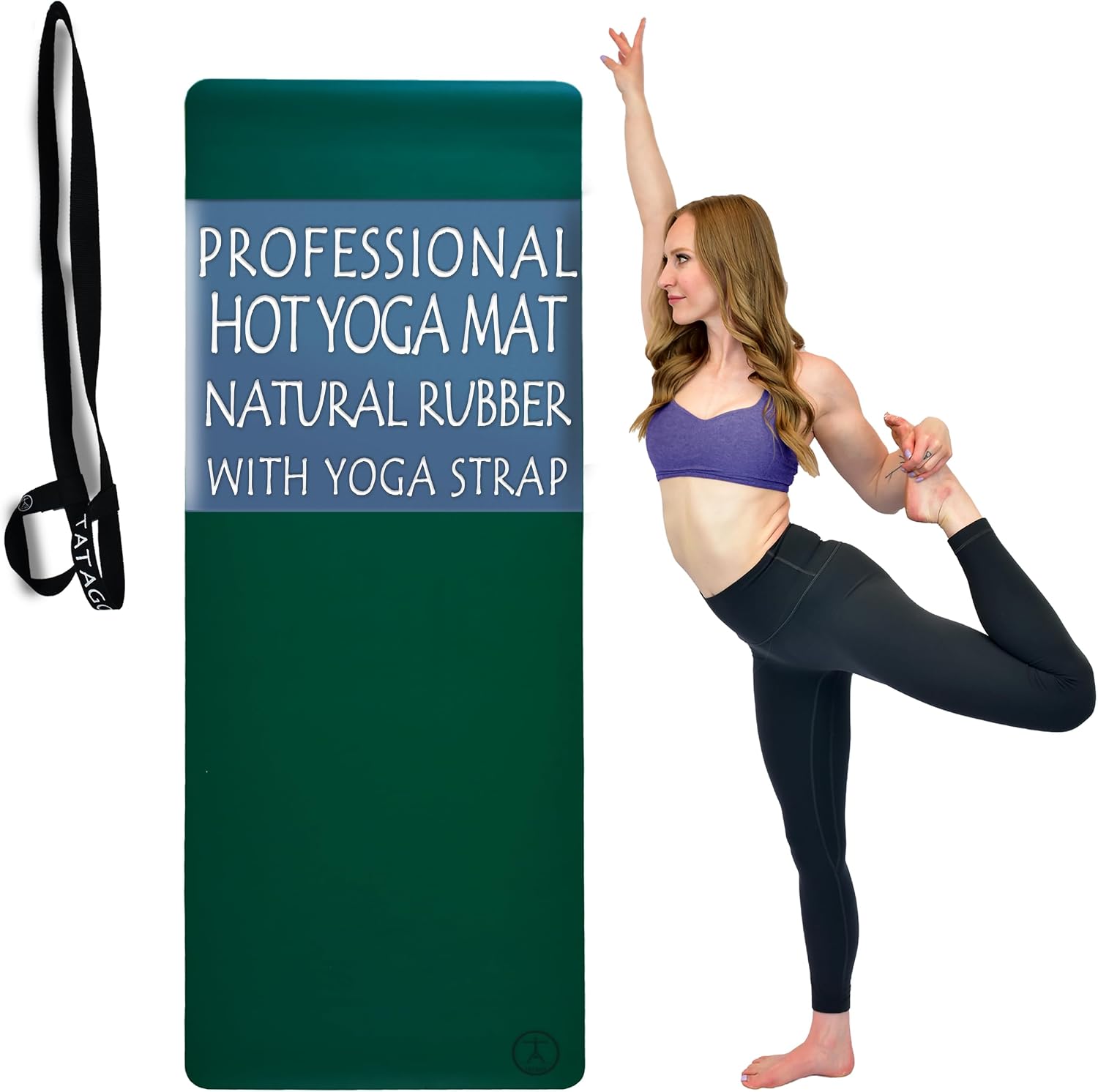
This is the light, portable, roll-it-up-and-go mat, and I want to be precise about what it is good at, because the category gets dismissed too fast. The surface is textured rather than chemical, so it does its best work with dry hands: Pilates, stretching, a beginner class where nobody is dripping yet, a home session in front of a video. Because the surface does not absorb sweat, it also wipes clean in seconds, which matters more than people admit.
Where it falls down is the same place every mat in this price band falls down. Texture sells, chemistry decides. Once your hands are wet, a textured closed-cell surface loses traction, and no amount of scrubbing brings it back mid-class. It is also thin, which means your knees and wrists get the full report from a hardwood floor.
So buy it as the second mat, the travel mat, the one that lives in the car or the studio locker. It is the mat you can leave somewhere without worrying about it, and that is a real job. For a daily practice on a hard floor with sweaty hands, it is not the one. Check current Amazon price.
Best Cushion for Cranky Knees: Amazon Basics Extra Thick Exercise Yoga Mat
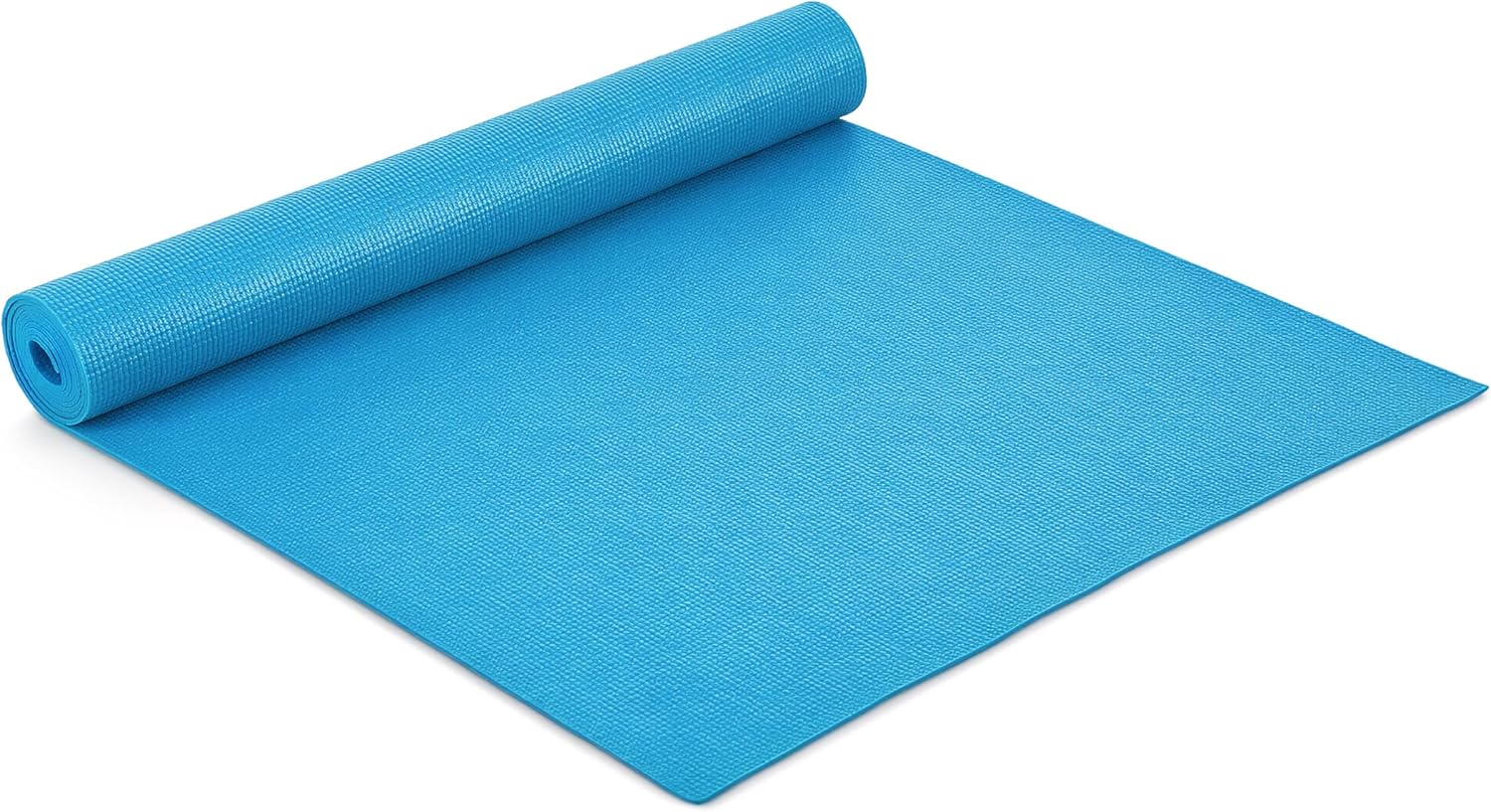
My dancer's knees want cushion, and my flooring brain knows what cushion costs you. This mat is the clearest example of that fight. It is genuinely thick, it ships with a carrying strap, and for restorative sequences, supine work, savasana, and any kneeling on a bare floor it is the comfortable choice on this page.
The trade is the sink factor. The more a mat compresses under your palms in downward dog, the more your wrists have to work to hold the shape, and the more a standing balance wobbles. Cushion is not grip, and it is not stability either. If your practice is mostly floor-based or you are working around knee and hip histories, that trade is worth making every time. If you are chasing a long one-legged hold, a thick foam mat is working against you.
The carrying strap is the right accessory for a mat this size, because this is a leave-it-at-home mat. It also is not a hot-room mat: thick foam plus sweat is the slickest combination in the category. Check current Amazon price.
The Knee Saver: Heathyoga Yoga Knee Pads
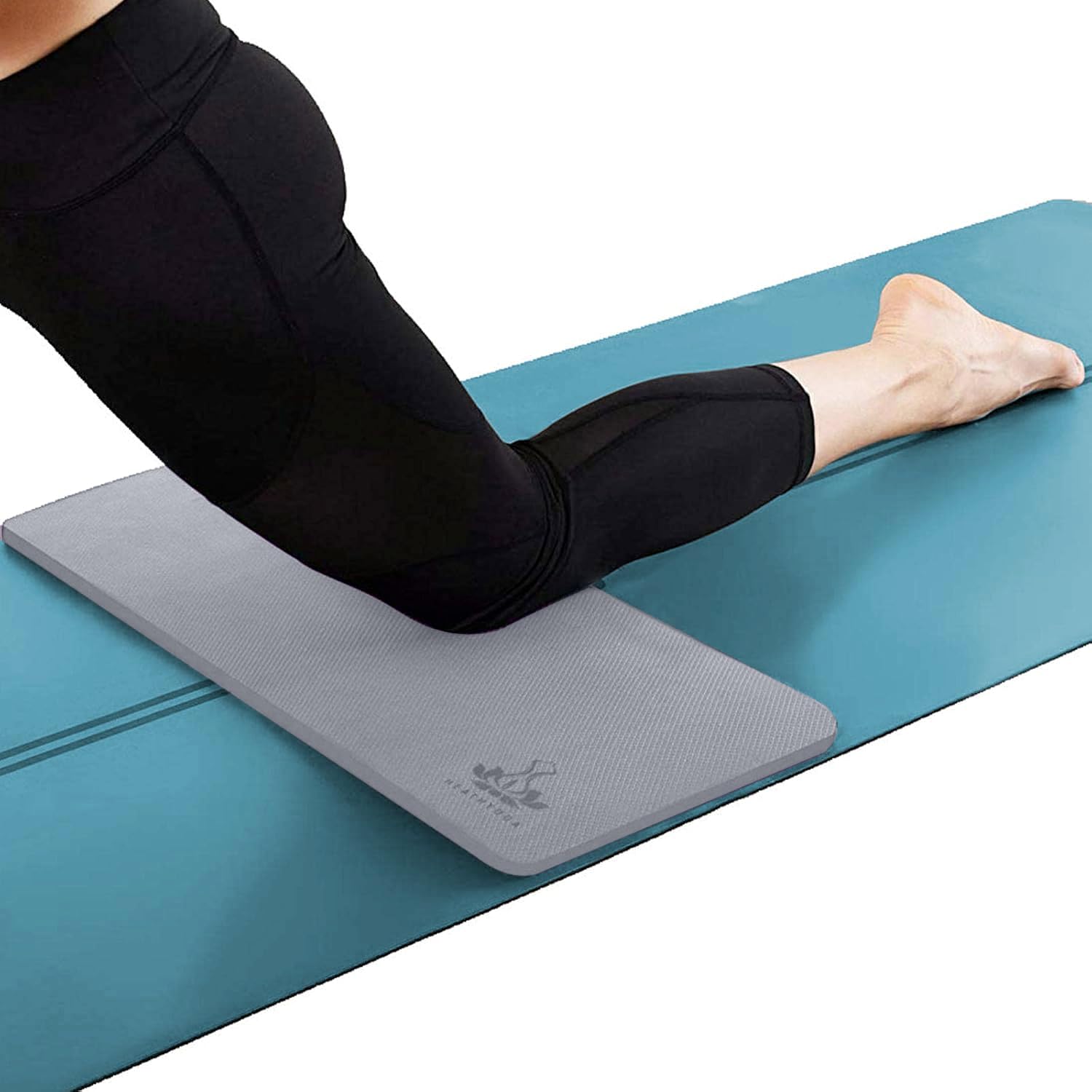
Not a mat, and that is the point. These are kneeling pads, listed at 26 by 10 inches and half an inch thick, with a non-slip cushion underside. The reason I keep them in the conversation is that most people who think they need a new mat actually need half an inch under two specific contact points.
Put them on top of a thin mat you otherwise like and the kneeling problem mostly disappears: cat-cow, lunges, long low sequences, any class where your knee is the thing counting down the seconds. They also work under the heels of the hands in plank or arm balances if your wrists complain. Two pads, one under each knee, or one under a knee and one under a wrist.
They are portable, they wipe clean, and they do not change how your standing poses feel, which is more than I can say for buying a thicker mat. If the rest of your mat grips fine and only your knees are unhappy, this is the cheapest honest fix on the page. Check current Amazon price.
How I tested
Every mat that comes through my studio gets the same protocol, and I keep a row in a spreadsheet for every class I teach on it. Out come the calipers first: six points around the mat, and I compare the thinnest edge against whatever the box claimed. Anything over about a millimeter of difference is a character test, and plenty of mats fail it. Then the luggage scale, because weight is the real price of durability and nobody puts it on the label.
The grip test is an inclined plane. I weight a board, raise it in small increments, and log the angle at which the weight slides, once with a dry surface and once with a wet one. That wet number is the only one I care about, because dry grip is easy and wet grip is the product. Then the mat gets rolled out and lived on: does it curl at the corners, does it creep across a smooth floor, does it still lie flat after a week in a bag. Mat drag is the quiet safety problem in this category, and it shows up in week two, not in the product photo.
Analysis and test results
Three things separate the mats on this page, and none of them is the number printed on the box.
The first is top-layer chemistry. Rubber, the material in the Tatago mat, holds when damp. Textured closed-cell surfaces, the material in the CAP mat, hold when dry and quit when wet. Cushioned foam, the Amazon Basics construction, is built for comfort rather than traction. That is the entire grip story, and it explains why a cheap mat can feel great in a stretching class and terrifying in a heated one.
The second is the caliper gap, and it cuts both ways. A mat advertised as extra thick usually is, and that is exactly why it sinks under your hands in downward dog. A thin mat is honest about the floor, which is fine until your knee meets hardwood. I have never met a mat that was both maximally cushioned and maximally stable, and I have stopped expecting one.
The third is what I would call the portability tax. Durability and portability pull in opposite directions, and every mat picks a side. The rubber mat is the grippiest and the heaviest. The lightweight mat is the easiest to carry and the least planted. The thick mat is the kindest to joints and the worst to balance on. The knee pads sidestep the argument entirely, which is why I keep recommending them to people who are about to spend more than they need to.
And one more thing worth saying out loud: a mat you keep for five years beats a mat you replace every eighteen months, even if the second one has a leaf icon on the box. Cheap PVC goes slick and stays slick, and the rebuy is the real cost.
The reference table
This is the table I keep for the mats in this guide. Materials and construction come from the product listings; the rankings are mine.
| Mat | Best for | Top layer | Carrying strap | Price |
|---|---|---|---|---|
 Visit on Amazon → Visit on Amazon →Tatago Hot Yoga Mat |
Hot and sweaty classes, strong grip | Natural rubber | Yes, doubles as a stretching strap | Check current Amazon price |
 Visit on Amazon → Visit on Amazon →CAP Non-Slip Yoga Mat |
Beginners, Pilates, travel, a second mat | Textured grip surface | Rolls up small, no strap | Check current Amazon price |
 Visit on Amazon → Visit on Amazon →Amazon Basics Extra Thick Exercise Yoga Mat |
Knees, hard floors, restorative work | Cushioned foam | Yes, included | Check current Amazon price |
 Visit on Amazon → Visit on Amazon →Heathyoga Yoga Knee Pads |
Kneeling poses, thin mats, wrists | Non-slip cushion | Two pads, portable | Check current Amazon price |
If you already own a mat you like
Do not replace it. Add the knee pads. That is the single most common mistake I see in my classes: someone with a perfectly good rubber mat and two aching knees goes shopping for a whole new mat, when half an inch of cushion under the knee solves it for a fraction of the money.
If you are buying your first mat
Start with grip, not thickness. A thin mat that holds your hands is safer than a thick mat that does not, and you can always add cushion later. Most people who tell me their mat is fine have never practiced on one that was actually grippy.
Should you buy the Tatago Hot Yoga Mat?
Yes, if you sweat. The natural rubber top layer is the reason, and it is the closest thing in this category to a mat with no slick-sweat threshold. The strap that comes with it earns its place in your bag, and there is no break-in period to survive. Just accept the weight and the rubber smell, and wipe it down with a damp cloth instead of soaking it.
Should you buy the CAP Non-Slip Yoga Mat?
It depends on how honest you are about your hands. For dry-hand Pilates, stretching, travel, and a mat to leave in the car, it is a sensible, light, easy-to-clean pick. For a daily vinyasa practice in a warm room, the textured surface will give out exactly when you need it, and you will be back here shopping again.
Should you buy the Amazon Basics Extra Thick Exercise Yoga Mat?
Yes, if your knees are the boss of your practice. It is the most comfortable mat on this page for floor work and kneeling, the carrying strap is included, and the cushion is the real thing. Just know that thick foam and sweaty palms do not mix, and that standing balances will ask more of you than they would on a thinner mat.
Should you buy the Heathyoga Yoga Knee Pads?
Yes, and they are the purchase I would make first if your only complaint is kneeling. The listed 26 by 10 inch size and half-inch cushion cover the contact points that actually hurt, the underside grips, and they travel in a bag pocket. Fix the knees, keep the mat.