Related: Best Yoga Mat for Bad Knees: Cushion, Grip, and What Actually Helps
I have taught vinyasa in Portland for more than a decade, and I keep a spreadsheet with a row for every class I teach on every mat. That log is why I am so picky about the phrase "non slip yoga mats." Every box says it. Very few of them mean it once your hands are wet.
Here is what nobody tells you at the register: the mat that suits a 6am home practice is not the mat that survives a 9pm hot class, and the mat that saves your knees in a restorative class will make your standing balances worse. Four mats cover almost everyone I teach, and they sit at very different price points. Two of them I hand to beginners. One is a studio purchase. One is for students with knee and hip histories who need the floor to feel softer than it is.
This guide is about matching the mat to the room, the sweat, and the joints. Every link here is an affiliate link, so I make money if you buy. I only link mats I would tell a student to buy, and I would rather say that in the first paragraph than bury it at the bottom.
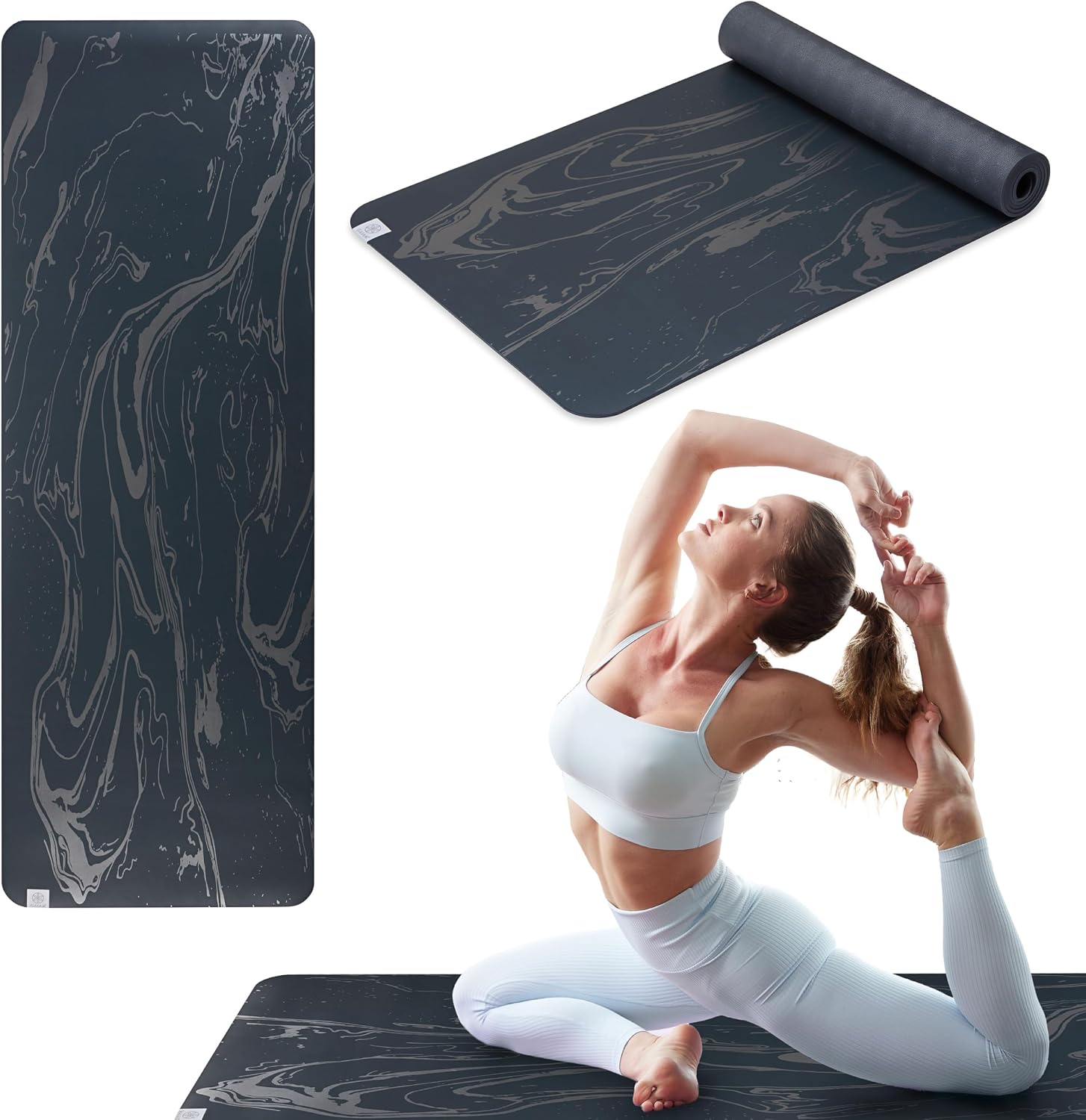
Best for Hot Class: Gaiam Dry-Grip Yoga Mat
If you sweat hard, this is where I would start. The name is doing the marketing for a reason: dry-grip is a claim about the top layer, not about the texture, and in my experience the mats that survive a hot room are the ones built for moisture rather than for a pattern of bumps. A pebbled surface feels reassuring in the store and turns into a slip-and-slide at minute 40 of a 26&2 class. Grip is chemistry. Texture sells.
The honest caveat is care. Any mat that promises grip when wet is asking you to keep it clean, because oils from hands and feet sit on the surface and kill the tack long before the mat wears out. Wipe it down after class, roll it loose, and skip heavy cleaners that leave a film behind.
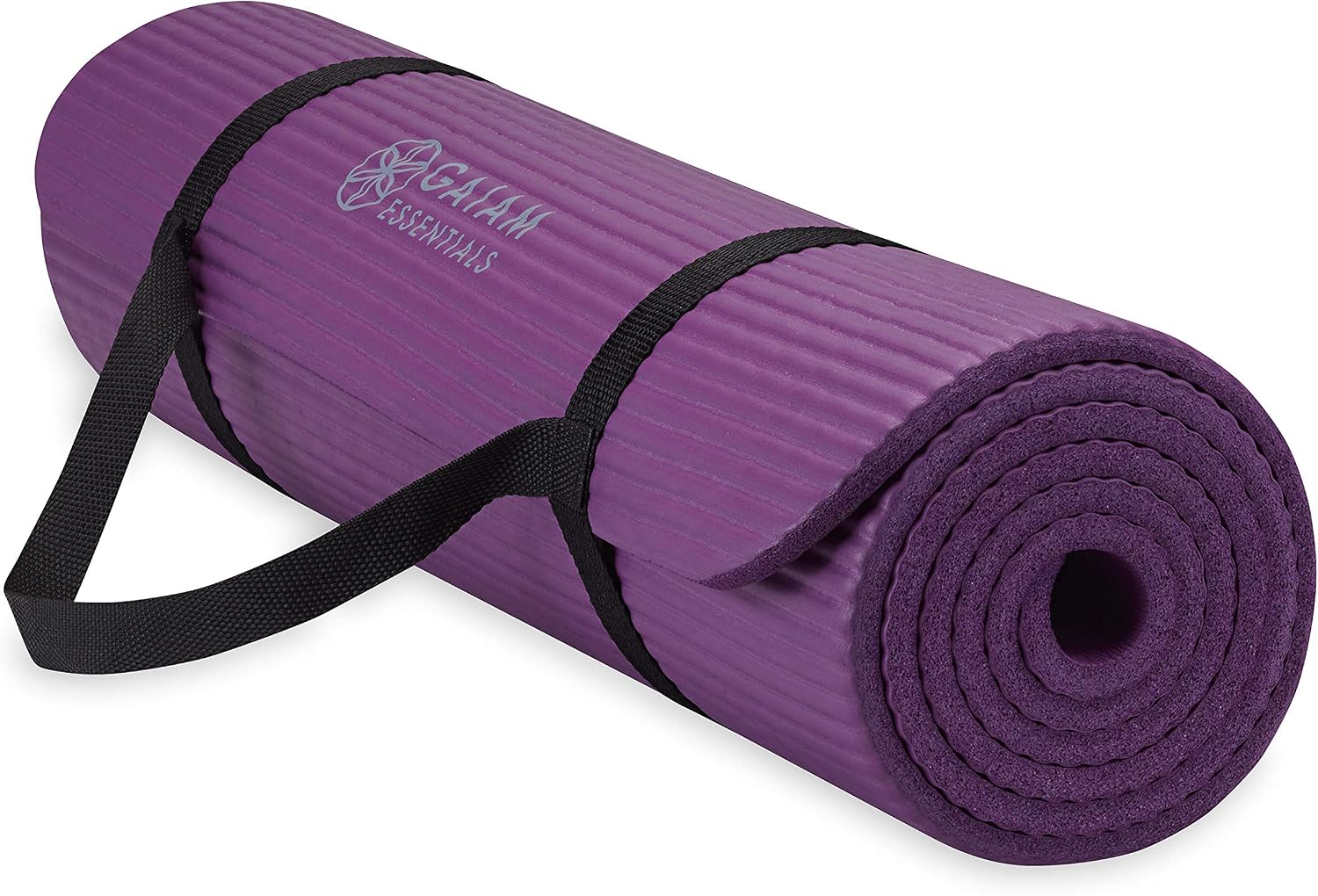
Best First Mat: Gaiam Thick Yoga Mat with Carrying Strap
This is the mat I tell beginners to buy, and I do not say that to be nice. It is a thick cushion with an easy-cinch strap, and for the first year of a home practice it does most of what a mat three times the cost does. If your practice is two or three classes a week on a living room rug, this is the sensible default.
Where it shows its limits is sweat. Soft foam and heavy sweat are not friends, and a thick mat with a smooth surface gets slicker as class goes on. The fix is a towel over the top for hot rooms, or a grippier mat once you know you are going to keep going.
The strap matters more than people think. A mat you can carry easily is a mat you will actually take to class, and the best mat in the world is the one you roll out on a Tuesday.
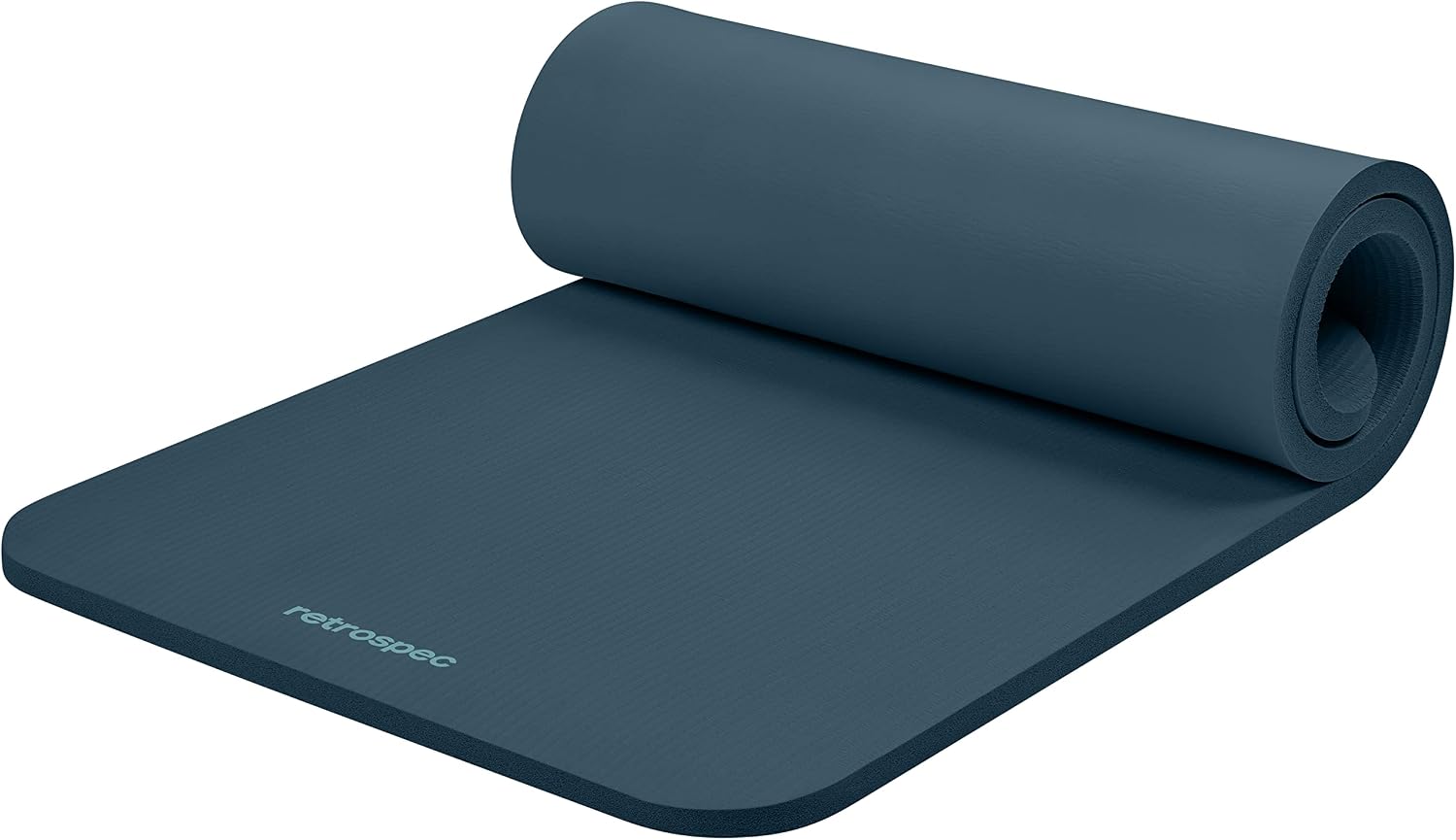
Best Cushion for Bad Knees: Retrospec Solana Yoga Mat
One inch of foam, a nylon strap, and a surface marketed for home yoga, Pilates, stretching, and floor work as much as for a flow class. If kneeling on a hardwood floor is the thing that ends your practice, this is the mat that fixes it. My Thursday recovery class is full of students with knee and hip histories, and a thick mat is often the difference between a practice that continues and one that quietly stops.
The tradeoff is what I call the sink factor. Every millimeter of foam compresses under your palms in downdog and under your feet in a standing balance, and at an inch you will feel the floor move under you. That is fine for stretching and floor work and genuinely bad for tree pose. Cushion is not grip, and it is not stability either.
It is also bulky. If it lives on your floor, that is fine. If it has to travel in a bag three times a week, think about that before you buy.
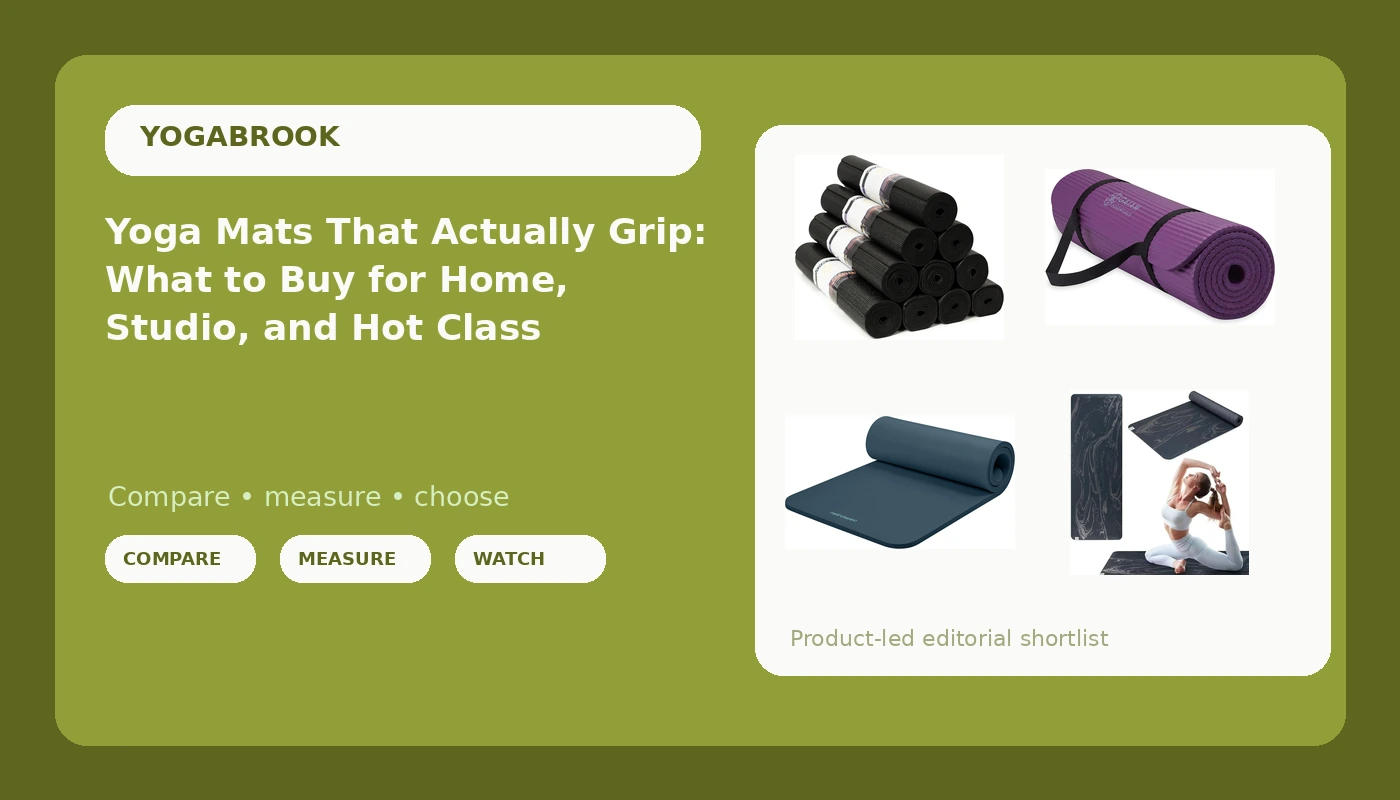
Best for Studios and Teachers: Voyage 5mm Studio Yoga Mats, 10 Pack
This one is not really a personal purchase. Ten mats, 5 mm thick, 72 by 24 inches, which is the standard studio footprint and long enough for most bodies. If you teach, run a community class, or outfit a small gym, buying a case beats buying mats one at a time. And 5 mm is the compromise thickness most students can live with: enough cushion for knees, not so much that standing balances turn to jelly.
Two practical notes from someone who has watched a lot of borrowed mats get abused. First, a studio mat gets cleaned far more often than a home mat, so test whatever you clean with and make sure it does not leave a slippery residue. Second, 72 inches is standard, not generous. If you teach a lot of tall students, tell them to bring their own.
How I tested
I measure before I judge. Calipers at six points around a mat, because the thickness on the box and the thickness at the thin edge are rarely the same number, and a gap of more than a millimeter tells you what a brand thinks of its own spec sheet. Then the inclined plane: a weighted board, raised until the weight slides, once dry and once wet. That gives me a grip reading in degrees instead of a feeling in my palms.
After the bench work, a mat goes into rotation in my classes and stays there. I log corner curl, edge lift, how the surface behaves at minute 40 in a hot room, and whether the thing still smells like a mat after a month. Corner curl is not a cosmetic problem. It is the reason mats slide out from under students on studio floors.
What I will not do is rank a mat by one score. A studio pack and a personal hot-class mat answer different questions, and the mat that wins on cushion loses on balance every time. The picks here are matched to a room and a body, not sorted into a top ten.
What the specs actually mean
Thickness is the number everyone shops by and the one that lies most often. Two mats can both say 5 mm and feel nothing alike, because density does the work. A dense 5 mm mat supports your wrists in plank; a spongy 5 mm mat sinks under them. The number tells you how much material there is, not how it behaves.
Grip is the second lie. If a box says non-slip without the words when dry anywhere on it, treat the claim as decoration. The mats that hold in a hot room are the ones with a top layer engineered for moisture, and that layer is also the part that wears out first, which is why care matters more than brand loyalty.
Care decides lifespan more than price does. Wipe after class, dry before you roll, store it loose rather than cinched tight in a hot car, and almost any mat lasts years. Store it rolled tight in a trunk and even an expensive mat will curl at the corners by month six.
Finally, material. Natural rubber beats PVC for the planet, and I will say that plainly. But a PVC mat you keep for five years is a better environmental decision than a "biodegradable" mat you replace every two, and a mat that is used daily beats a fancy one that never leaves the closet.
The yoga mat comparison table
This is the short version, sorted by what each mat is actually for. Thickness is listed as the product name states it, because that is the only number I can quote without a caliper on that specific mat in front of me.
| Mat | Best for | Thickness as listed | Watch out for | Price |
|---|---|---|---|---|
 Visit on Amazon → Gaiam Dry-Grip Yoga Mat |
Hot classes, sweaty hands | Not listed in the name | Grip fades if you let oils build up on the top layer | $34.96 |
 Visit on Amazon → Gaiam Thick Yoga Mat |
A first home practice, general fitness | Not listed in the name; marketed as thick | Soft foam can feel vague in standing balances | $21.23 |
 Visit on Amazon → Retrospec Solana Yoga Mat |
Bad knees, restorative, floor work | 1 inch | High sink factor; bulky to carry | $39.99 |
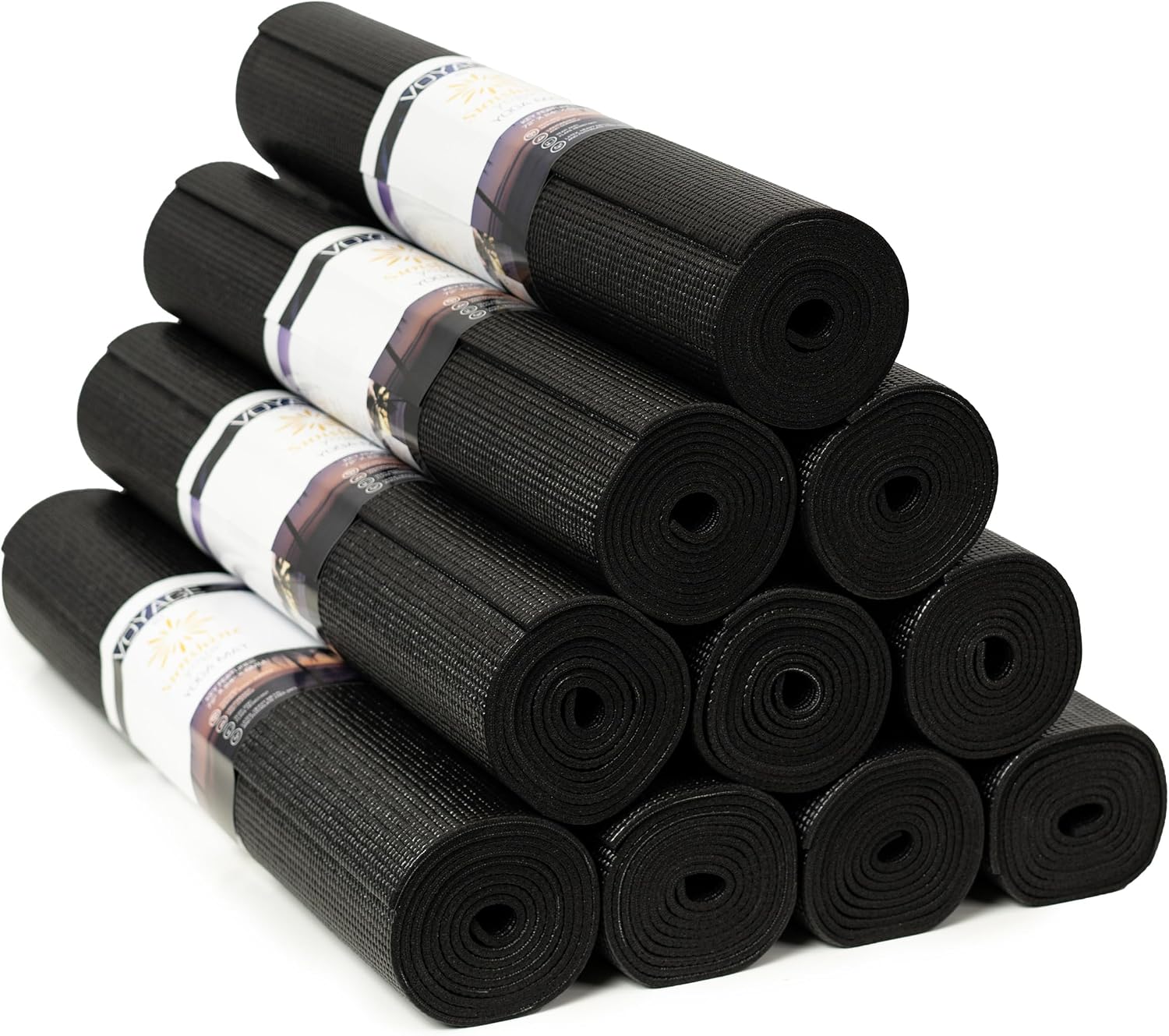 Visit on Amazon → Voyage 5mm Studio Yoga Mats, 10 Pack |
Studios, teachers, group classes | 5 mm | A case purchase, not a personal one | $149.99 |
Should you buy the Gaiam Dry-Grip Yoga Mat?
If you sweat in class, yes. It is the pick for hot yoga and for anyone whose palms go slick by the second sun salutation, and a moisture-focused top layer is the reason. Keep it wiped down and it holds grip far longer than a bumpy textured mat will. If your practice is slow, cool, and mostly floor-based, spend less and get more cushion instead.
Should you buy the Gaiam Thick Yoga Mat?
Yes, if you are starting out. It is the mat I would hand a brand-new student: thick enough for tender knees, inexpensive enough that you are not betting on a hobby you have not begun, and it comes with a strap so it can leave the house. Upgrade later, once you know how much you actually sweat.
Should you buy the Voyage 10-pack?
If you are outfitting a studio or a community class, yes. Ten mats at a standard 72 by 24 inches and 5 mm thick covers a room without a per-mat premium, and a pack means every borrowed mat feels the same. If you are one person, no. Buy one good mat and keep it for years.