Related: How to Clean a Yoga Mat Without Ruining the Grip
I teach five classes a week in Portland, and the question I hear most often is not about a pose. It is about which mat to buy. Specifically, people want a thick non-slip yoga mat, because the internet has convinced them that thickness means comfort and comfort means safety. Half of that is true.
My bias, up front: this page contains affiliate links and I earn a commission if you buy through them. I only link mats I would hand to a student in my own class, and I will say plainly when one is not worth your money. What I will not do is pretend a spec sheet settles anything, because the number printed on the box is rarely the number your palms meet.
Here is the framework I use. Cushion protects joints on hard floors. Grip decides whether you stay upright. Those two goals pull against each other, because every millimeter of foam between you and the floor makes a standing balance a little wobblier. The four mats below sit at four different points on that trade-off, and the right one depends on what your body needs on a Tuesday night.
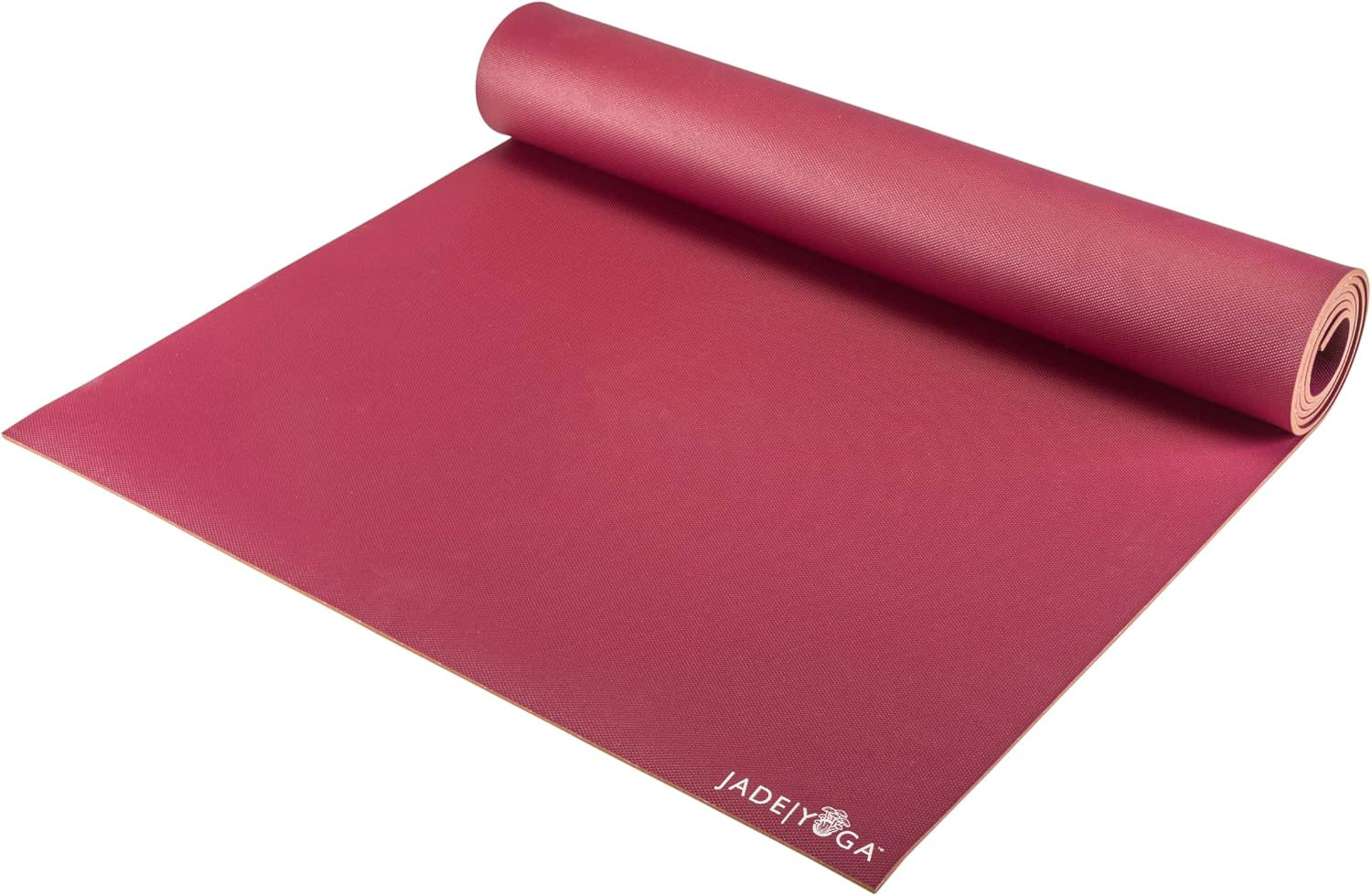
Best Overall: JadeYoga Mushroom Yoga Mat
If you want one mat that does the most things well, this is the one I point to. The listing describes it as a thick, non-slip mat in natural rubber, and natural rubber is the material I trust most once a room warms up and your hands get damp. Rubber grips through chemistry rather than texture, which is why it keeps holding when a foam surface has already given up on you.
The name deserves a raised eyebrow, though. Mushroom is the model name, not something I can verify about the recipe, so read the listing yourself rather than trusting my word or a marketing badge's word about what is inside it. What I can say is that rubber is denser and heavier than foam, and that weight is the price of the grip.
Who it suits: a regular practitioner who wants one mat to last, who does not mind carrying something substantial, and who would rather spend once than replace a slick mat every eighteen months. Who it does not suit: anyone who needs maximum cushion under a sore knee, or anyone who wants a mat that disappears into a tote bag.
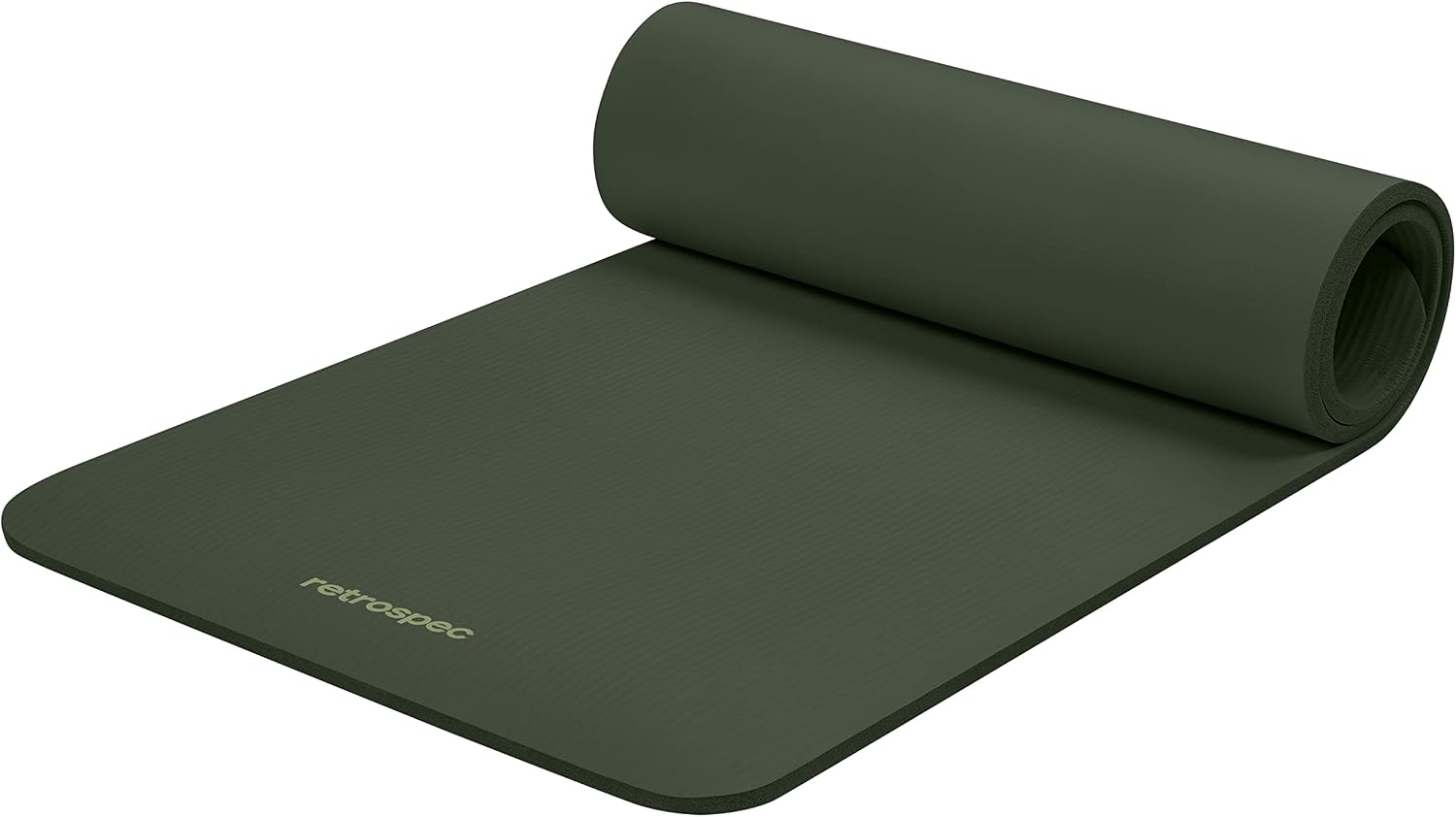
Best Value: Retrospec Solana Yoga Mat
The Solana is what I recommend when someone is starting out and does not want to think too hard about it. The listing gives you 72 by 24 inches, a half inch of thickness, a nylon strap, a BPA-free claim, and an easy-clean surface. That is a complete starter kit for the price of a couple of studio drop-ins, and 72 inches of length matters more than most beginners realize, because a 68-inch mat means your heels hang off the back in downward dog.
Half an inch is the sweet spot for a general-purpose mat. It is enough to take the edge off a hardwood floor, and not so much that you feel like you are balancing on a mattress. The strap is the unsung part of the package. A mat you can roll, strap, and sling over a shoulder is a mat you will actually take to class.
The compromise is honest. At this price the surface is foam, and foam grip is a texture story rather than a chemistry story. It works best dry and gets progressively less reliable as sweat accumulates. If you practice hot, plan on a towel over the top. If you practice at home in a normal room, this is plenty.
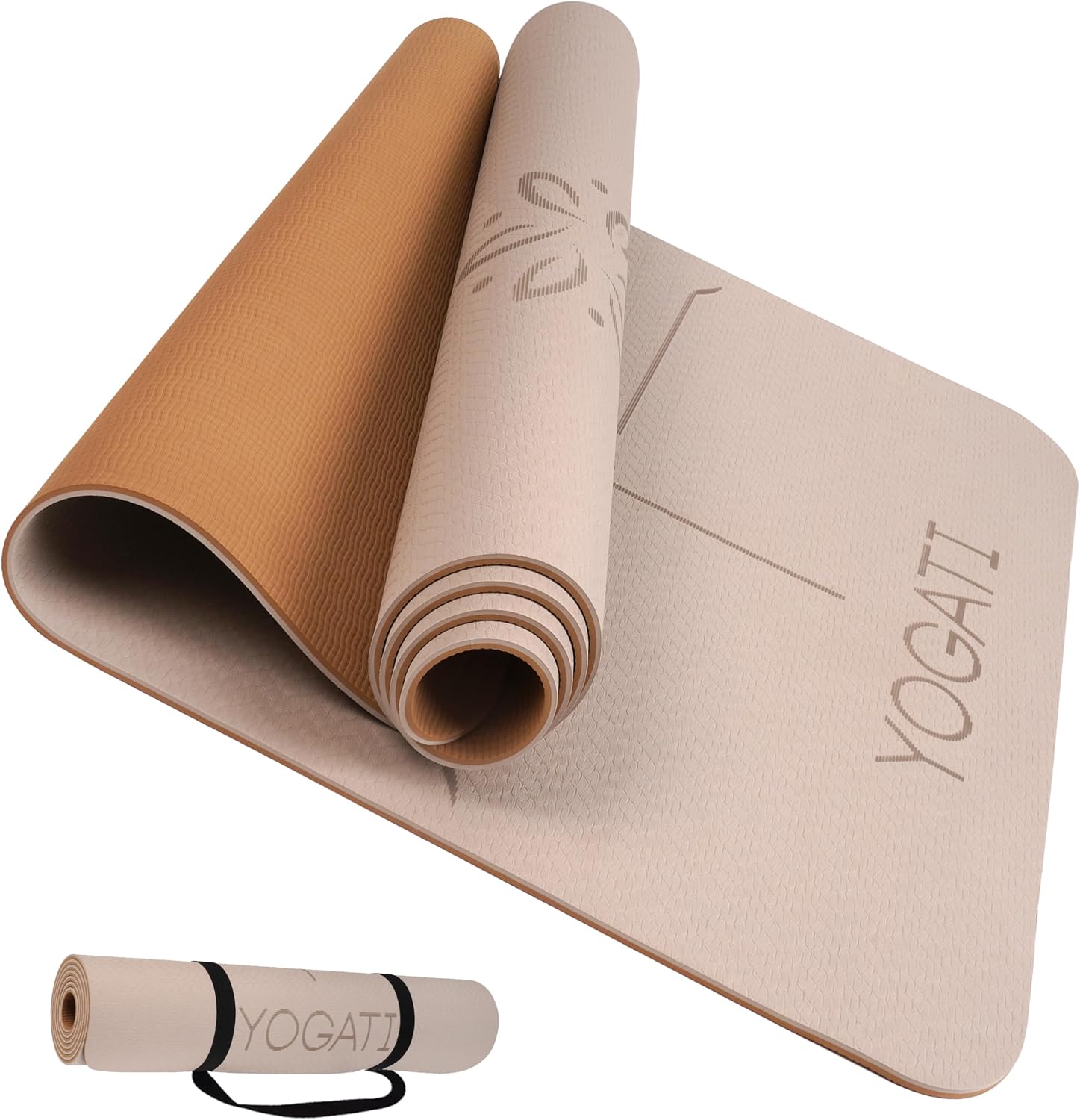
Best for Alignment: YOGATI Yoga Mat with Strap
The feature that earns this mat its spot is the alignment lines. If you have ever finished a class and discovered you drifted a foot to the left of where you started, you know why. Marks on the surface are a reference grid, not a gimmick. New students creep. Everyone creeps. Lines give you something to check against without craning your neck at the teacher's mat.
The listing describes it as a thick, non-slip mat with a strap, sold in brown, pink, and purple, pitched at home workouts for women, men, and kids. The strap matters here too. So does the color range, which is a real consideration if your mat lives in a shared living room and you would rather it read as furniture than as gym equipment.
What it is not is a hot-room mat. Same foam caveat as the Solana, same fix: a towel. And I would treat the alignment lines as a teaching aid rather than a permanent crutch. Use them for a season, learn where your hands belong, then stop looking down.
Best for Hard Floors and Aching Knees: BalanceFrom 1-Inch Mat
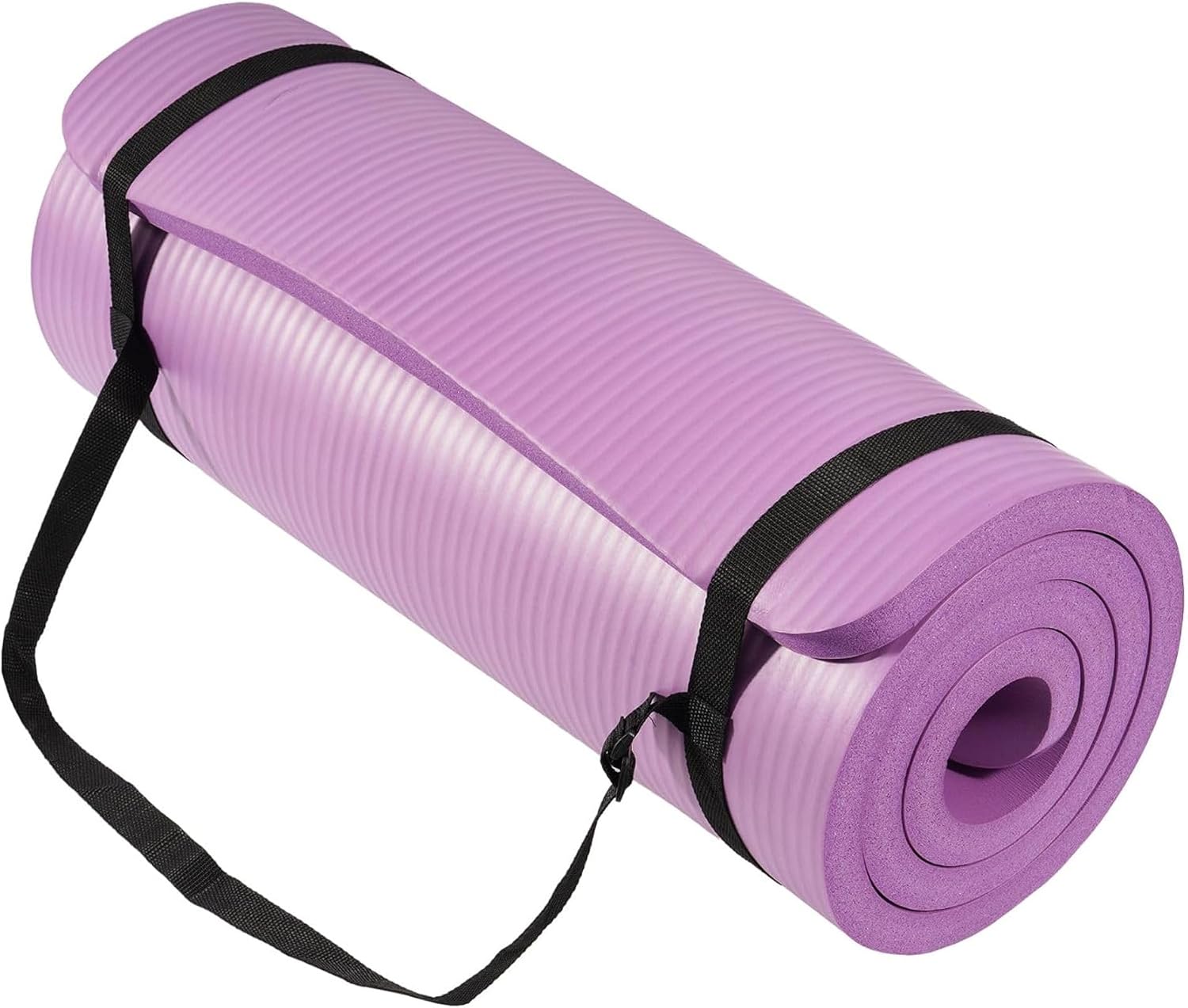
This is the mat for the person who winces getting up off the floor. One inch of extra-thick, high-density foam, an anti-tear surface, a carrying strap, and a range of colors. On a concrete slab or a thin apartment carpet, that much cushion is the difference between a floor practice you dread and one you can finish.
I want to be straight about the limit, because this is where people get frustrated. One inch of foam is a cushion, not a grip surface. In standing poses you sink, your ankles wobble, and your warrior two turns into a balance drill you did not sign up for. Use it for seated work, restorative poses, core work, and stretching. If you want to stand on it, keep your expectations modest and your stance wide.
That is not a knock on the mat. It is a knock on buying one mat and expecting it to be two mats. This one handles the floor work the thinner mats cannot, and it does it for less than a single class pack.
How I Judge a Mat
The calipers come out before the mat comes out of the tube. I measure thickness at six points, because the middle of a mat is almost always thicker than the edges, and the edges are where your hands actually land in a wide-legged forward fold. I weigh mats on a luggage scale, since carry weight is the number nobody lists and the one your shoulder cares about.
Then there is the angle test: a weighted board, raised until the weight slides, read dry and read wet. That single number tells you more about a mat than any adjective on the box. A mat that holds on a shallow incline when dry and gives up early when wet is a dry-room mat, no matter what the listing says.
After that I roll it out and watch for mat drag, which is corner curl and edge lift. A mat that will not lie flat on a smooth studio floor is a tripping hazard, full stop, and no amount of cushion compensates. I also smell every mat fresh out of the packaging and again a month later. Foam offgasses. Rubber smells like rubber and then settles. If the smell gets worse over a month, the mat is telling you something.
What the Specs Actually Tell You
Thickness is the most abused number in this category. A mat listed at one inch frequently measures under it at the edges, and a half-inch mat can measure well under that at the thinnest point. Anything over a millimeter of gap between the claim and the edge reading is a character test the brand just failed. You do not need calipers to notice it either. Roll the mat and look at the cross-section.
Material matters more than thickness, and it is the part shoppers skim. Foam is cheap, light, and grippy only while it is dry. Natural rubber is heavy, durable, and grips wet because of what it is made of rather than how it is embossed. Polyurethane is the wet-grip champion and also the most expensive and least durable top layer. When a listing says non-slip and never says when dry, assume it means dry.
Sink factor is the spec nobody publishes. Put your palms down in downward dog and see how far the surface compresses under your bodyweight. A millimeter or two is comfortable. Several millimeters and your wrists start doing extra work to hold you up, which is how a soft mat turns into wrist pain by the end of a long class.
Length is the other quiet one. A standard 68-inch mat fits a person up to roughly five foot eight without heels hanging off. If you are taller, 72 inches is not a luxury, it is the minimum. The Retrospec Solana at 72 inches and the JadeYoga at its listed length are both worth measuring against your own height before you buy.
Finally, ignore any mat described as eco-friendly if the material is PVC. PVC is petroleum-based, it offgasses, and it is the least eco-friendly mat material on the market. Natural rubber is a real improvement, and a rubber mat you keep for five years beats a "biodegradable" mat you replace every two.
The comparison table
Same four mats, side by side, in the terms that actually decide the purchase. Thickness and material come from the listings. The rest is my read on who each mat is for.
| Mat | Stated thickness | Material as listed | Best for | Wet grip | Price |
|---|---|---|---|---|---|
 Visit on Amazon → JadeYoga Mushroom Yoga Mat |
Thick, see listing | Natural rubber | One mat for everything | Strongest of the four | $119.95 |
 Visit on Amazon → Retrospec Solana Yoga Mat |
1/2 inch, 72 x 24 inches | Foam, BPA free | Beginners and general practice | Use a towel | $24.99 |
 Visit on Amazon → YOGATI Yoga Mat with Strap |
Thick, see listing | Foam | Learning alignment and spacing | Use a towel | $24.99 |
 Visit on Amazon → BalanceFrom 1-Inch Mat |
1 inch | High-density foam | Seated, restorative, and floor work | Not built for it | $30.99 |
The table makes the split obvious. Two mats are built for standing poses on a normal floor. Two are built for comfort and floor work. Buying one when you needed the other is the most common mistake I see, and it has nothing to do with budget.
Should you buy the JadeYoga Mushroom mat?
Yes, if you practice regularly, you sweat, and you want a mat you will still be using in five years. Natural rubber is the honest answer to the wet-grip problem, and it comes with the honest drawbacks: weight, and less cushion than the one-inch foam option. If you carry your mat across town on public transit, weigh that against your shoulder's opinion. If it lives at the studio or in your living room, buy it and stop shopping.
Should you buy the Retrospec Solana?
Yes, if you are new, if you are on a budget, or if you want a second mat for travel and outdoor sessions. The 72-inch length, the half-inch cushion, and the nylon strap cover the basics well. Just be realistic about the surface: it is foam, so it is a dry-room mat, and in a heated class you will want a towel over it. For the money, nothing else here comes close on value.
Should you buy the YOGATI?
Buy it if alignment is your current project. The lines are genuinely useful for anyone who drifts across the mat without noticing, and the strap and color options make it easy to live with. Skip it if you already know where your hands go, because you would be paying for a teaching aid you no longer need. It is a starter and improver mat, and it is honest about that.
Should you buy the BalanceFrom 1-inch mat?
Buy it for your knees, not for your practice. If getting down to the floor is the part that hurts, one inch of high-density foam on a hard surface changes what is possible, and the anti-tear surface and carrying strap make it easy to move around. Do not expect it to hold a standing pose, and do not blame it when it does not. Used for what it is built for, it earns its place in the corner of the room.