Related: How to Break In a Slick New Yoga Mat Without Ruining Your Practice
I make money when you buy through the links in this post. That is the deal, and I would rather say it in the first paragraph than hide it in a footer. My rule is simple: I only link gear I would tell a student to buy, and if I would not hand it to someone in my Thursday night recovery class, it does not get a link. What follows is a yoga mat carrier bag and three mats, sorted by who should own each one.
I have taught vinyasa in Portland for more than a decade, and before that I spent eight years installing sprung dance floors and gym rubber in theaters and studios across the Midwest. That second job is why I own calipers and a luggage scale, and why I do not trust a box that says "non-slip" without telling you what happens at minute 45 of a hot room. Most students buy their gear wrong in the same three ways: too much cushion, not enough grip, and a bag that fits nothing.
Thickness is the number everyone shops by, and it is the least useful one. What matters is what the top layer is made of, how far the mat sinks under your palms in downward dog, and whether the corners stay down on a studio floor. So here is how I would sort these four.
The Beginner Default: Gaiam Essentials 1/4" Thin (6mm) Yoga Mat
If a student asked me what to buy for their first class, this is the mat I would point at. Six millimeters is the middle of the road, and the middle of the road is where most people belong: thick enough that your knees stop complaining in low lunge, thin enough that you are not balancing on a sponge in tree pose. The name calls it thin, which is a little funny, because 6mm is standard for a general purpose mat.
It comes with an easy-cinch carrier strap, and that matters more than it sounds. Corner curl is the thing that makes a cheap mat dangerous on a smooth studio floor, and a strap that holds the roll tight when you are not using it is half the battle. The other half is how you store it, which is a shelf or a hook, never a hot car.
This is a PVC mat, so treat grip as a chemistry question rather than a texture question. A PVC top layer is fine dry and fine lightly damp, and it will go slick when you are genuinely pouring sweat, which is normal at this price. If you teach hot yoga or you sweat like it is your job, budget for a towel or plan on a mat with a polyurethane top layer. For everything else, a first class, a home practice, a Sunday morning session, this does ninety percent of what a mat several times the cost does.
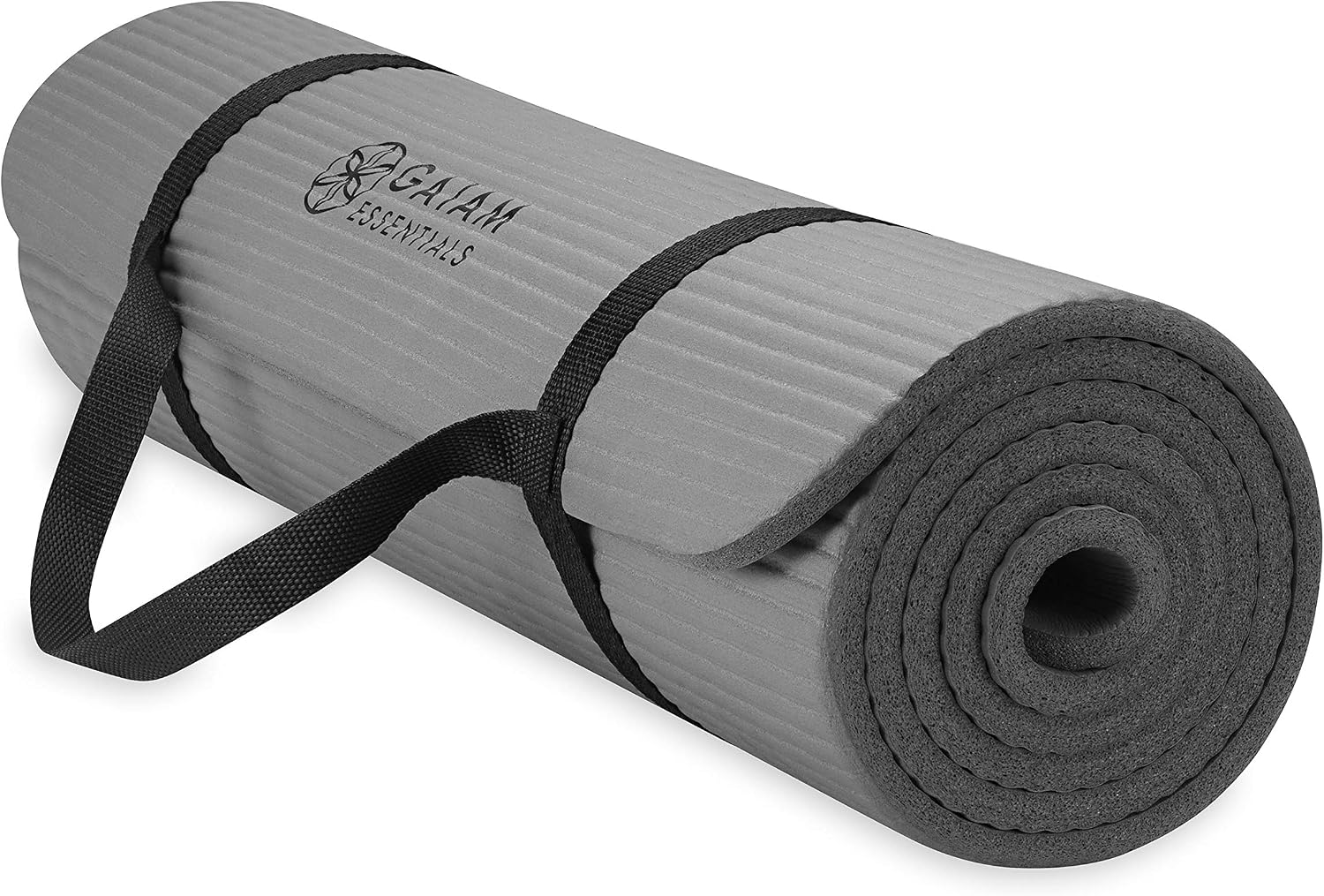
The Cushion Play: Gaiam Thick Yoga Mat
This is the same family of mat with more foam under your hands and knees. If you have arthritic knees, a healing injury, or you spend most of your practice on a hardwood floor doing restorative work and Pilates, more cushion is a real comfort upgrade, and there is nothing wrong with buying comfort.
The trade is the sink factor. Every extra millimeter of foam compresses under your palms, and when your hands sink, your wrists take the difference. Standing balances get wobblier, and long holds in warrior two start to feel like standing on a mattress. That is not a defect, it is physics, and it is why I would not buy this as my only mat if I were working toward a handstand or a long headstand.
If your practice is mostly floor work, yin, restorative, or Pilates mat classes, this is a sensible pick, and the easy-cinch carrying strap keeps it rolled and out of the way. If your practice is standing poses and balance work, buy the 6mm instead and put the difference toward a knee pad or a blanket.
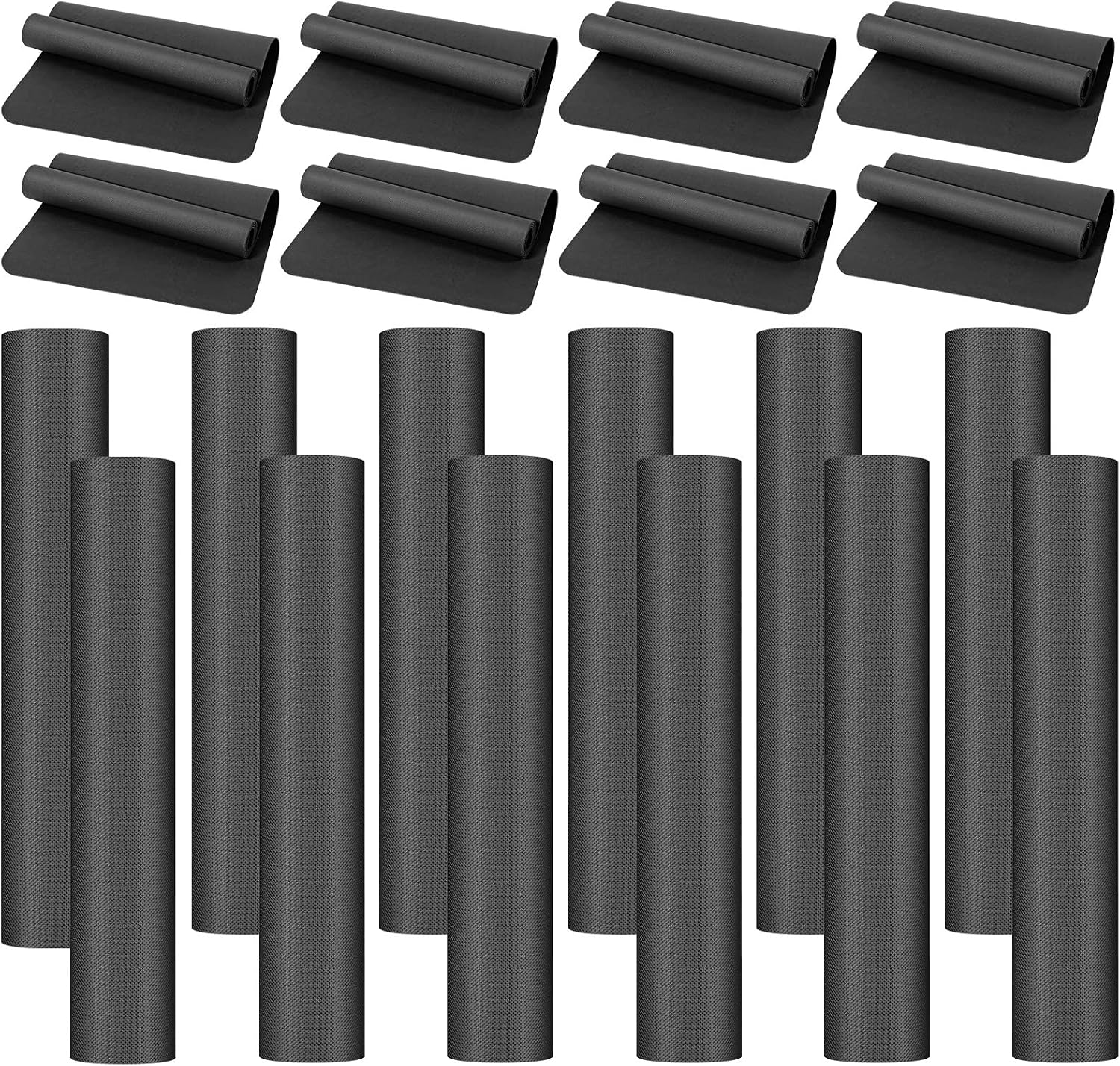
The Studio Pack: LEIFIDE 10 Pack Yoga Mats
Ten mats, 68 inches long by 24 inches wide by 4mm thick. This is not the mat you buy for yourself. This is the mat you buy when you are the one handing mats out: a studio shelf, a retreat, a corporate lunchtime class, a school program, or a teacher who is tired of telling students to bring their own.
Four millimeters is thinner than either Gaiam above, which cuts both ways. Thinner means less sink, so standing poses and balance work feel more honest, and it means less cushion for bony knees and thin wrists. For a loaner mat that gets used by a different body every hour, I would rather have the firmer one and hand out a folded blanket for anyone who needs knee padding.
The 24 inch width is the standard, so if you are a taller practitioner whose arms hang off the edge of a narrow mat, this will not fix that. What it does fix is the logistics problem: ten mats, one order, and enough of them that one can go home with a guest and you will not notice until the following week. Compare the bulk price against ten singles before you commit, because that is the whole decision.
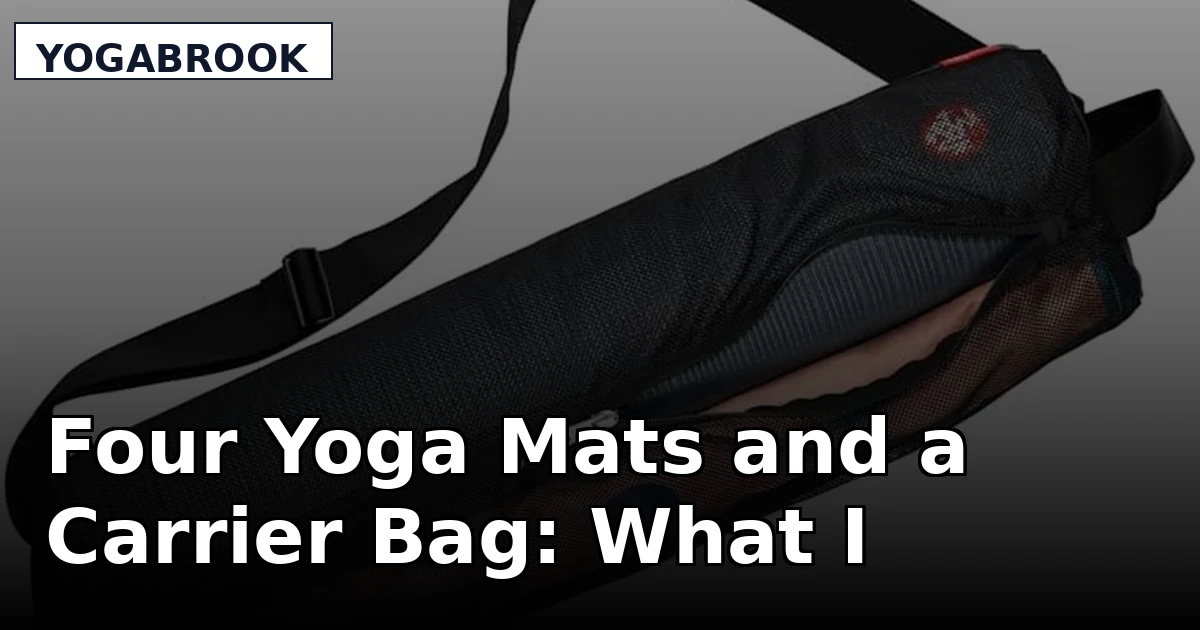
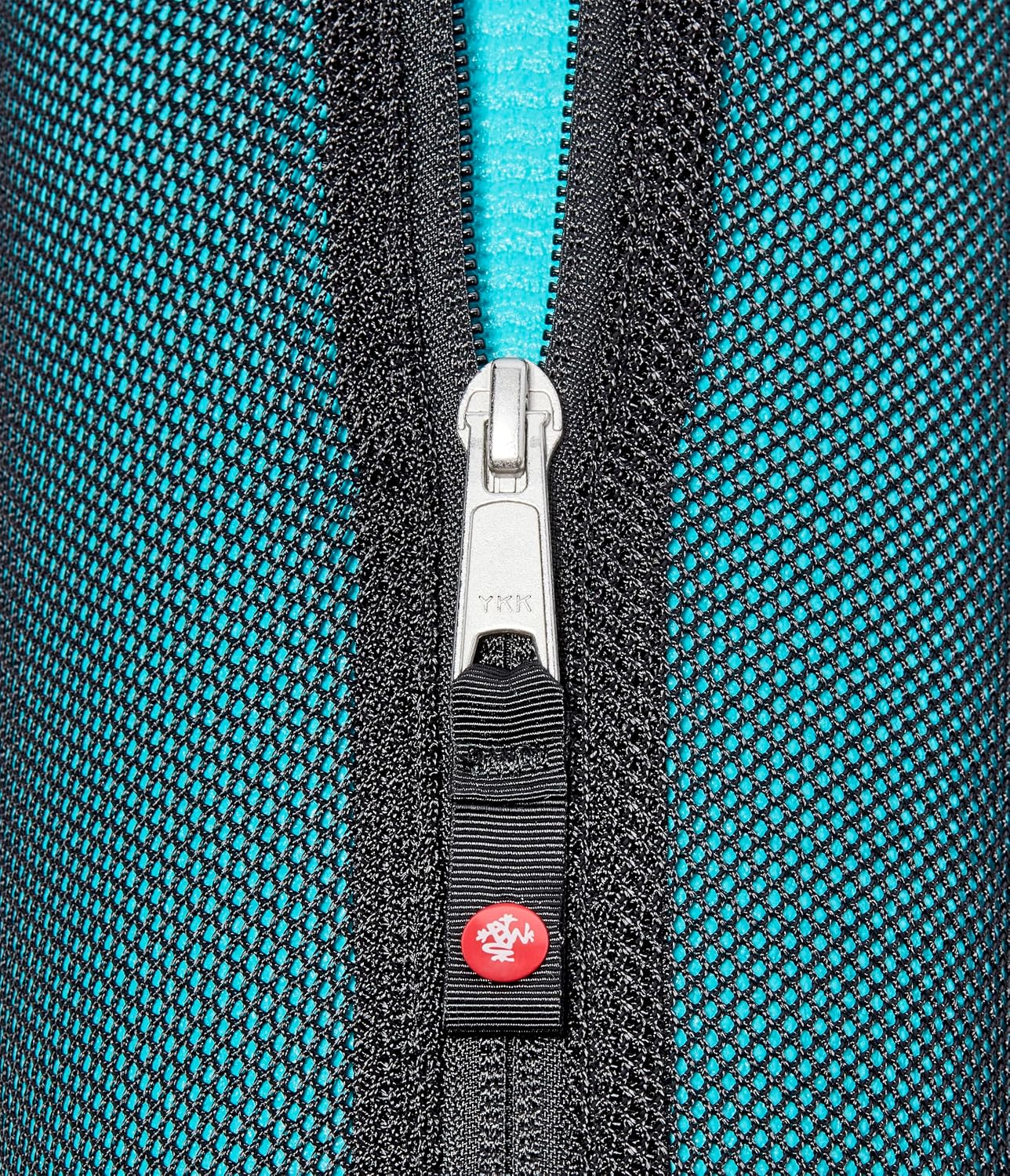
The Bag That Keeps a Cheap Mat Alive: Manduka Breathe Easy Full Zip Carrier Bag
Here is the thing nobody tells beginners: the bag is not a fashion accessory, it is what keeps the mat in one piece. A cinch strap holds the middle of the roll and leaves both ends and the whole outer surface exposed to your trunk, your gym locker, and the changing room floor. A full zip bag covers the mat end to end.
This one is a full zip with an exterior pocket and an adjustable strap, and it is sized to fit most yoga mats. The pocket matters more than you think once you are carrying a phone, keys, a card, and a strap of your own. The adjustable strap matters if you are short, tall, or you like to carry the bag across your body on a bike.
One caution: it fits most mats, not every mat. If you use an extra wide or unusually long mat, measure it before you order, because a bag that almost fits is worse than a plain strap. And if your mat lives permanently in your living room, you do not need this at all. You need it if your mat travels, because a mat you actually carry is a mat you actually use.
How I Judge a Mat Before I Recommend It
Grip is chemistry, not texture. A pebbled surface sells well in photos and does nothing for you when your hands are wet; what decides whether you slide is what the top layer is made of. PVC behaves one way, polyurethane another, natural rubber another, cork another again. Any mat that claims to be non-slip without naming the condition, usually dry, is telling you something by omission.
Thickness on the box is a claim, not a measurement. I have never had calipers agree exactly with a spec sheet, and a gap of about a millimeter at the thinnest edge tells you the number was rounded up for the shelf. What you want to know is the thickness at the edges, not the middle, because the edges are where corner curl starts.
Then the boring stuff, which is where most mats fail. Does it lie flat when you unroll it, or does it fight you for a month? Does it stay put on a smooth studio floor in a lunge, or does it drag under your back foot? Does it smell like a tire for a week? And does it survive being rolled and unrolled four times a week, because that is the actual test, not the first class.
I care about materials too. Natural rubber beats PVC for the planet, but a mat you keep for five years beats a biodegradable one you replace every two, so I will not tell you to retire a working mat in the name of green.
The Four Options at a Glance
| Product | Best for | Listed specs | What I would watch |
|---|---|---|---|
 Visit on Amazon → Visit on Amazon →Gaiam Essentials 1/4" Thin (6mm) Yoga Mat |
First mat, general practice, home use | 6mm, easy-cinch carrier strap | Grip drops when you sweat hard |
 Visit on Amazon → Visit on Amazon →Gaiam Thick Yoga Mat |
Knees, yin, restorative, Pilates | Thick profile, easy-cinch carrying strap | Sink factor in standing balances |
 Visit on Amazon → Visit on Amazon →LEIFIDE 10 Pack Yoga Mats |
Studios, retreats, loaners | 10 mats, 68" x 24", 4mm | Thin for bony knees and wrists |
 Visit on Amazon → Visit on Amazon →Manduka Breathe Easy Full Zip Carrier Bag |
Carrying and storing any mat above | Full zip, pocket, adjustable strap, fits most mats | Measure an extra wide mat first |
Should you buy the Gaiam Essentials 6mm?
Yes, if you are buying your first mat or you want a home mat that does not cost much. Six millimeters is the compromise I would pick for most bodies, and the easy-cinch strap solves the corner curl problem before it starts. It is not a hot yoga mat and it is not a forever mat. It is a mat you will actually unroll on a Tuesday, which is the only test that matters.
Should you buy the Gaiam Thick Yoga Mat?
Yes if your practice is floor based: yin, restorative, Pilates, or a bad-knee day on a hard floor. No if you are chasing standing balances or arm balances, because the foam under your palms will make your wrists work harder than your legs. Buy it for comfort, not for stability, and you will be happy with it.
Should you buy the LEIFIDE 10 pack?
Yes if you are the person handing out mats, and only then. Ten mats at 4mm is a firm, standard-sized loaner that suits a studio shelf or a retreat far better than it suits one person's closet. If you are buying for yourself, one good mat beats ten adequate ones, every time.
Should you buy the Manduka Breathe Easy carrier bag?
Yes if your mat leaves the house. The full zip is the whole argument: it covers the mat end to end instead of gripping the middle and leaving the rest exposed. Check the size against your mat before you order, and skip it entirely if your mat never travels.