Related: Best Yoga Mat for Bad Knees: Cushion Without the Wobble
I have been teaching vinyasa in Portland since my 200-hour training in 2012, and before that I spent eight years on a flooring crew, installing sprung dance floors and gym rubber in studios across the Midwest. That job taught me that "non-slip" is a measurement, not a mood. A mat is a floor you carry, and floors fail in predictable ways.
In 2022 a student slipped on a slick mat in my hot class and sprained her wrist. Her name is Rosa, and she is the reason I keep calipers in my mat bag. Since then I have logged every mat I teach on: grip at minute 40, corner curl, how it smells after a month. That log is why this guide to yoga mats for home practice is short and specific instead of a list of twenty mats you will never touch.
Four things cover almost every home practice. A cushioned mat for bad knees and hard floors. A thin, foldable mat for travel and hot rooms. A strap, because a mat alone will not get you into a pose your hamstrings are not ready for. And a bulk pack, because a studio, a school, or a family with three kids in the living room needs ten mats, not one perfect one.
One housekeeping note before the picks. The links in this guide are affiliate links, and I earn a commission if you buy through them. My rule is simple: I only link mats I would hand to a student in class. That is not a hedge. It is the whole editorial policy.
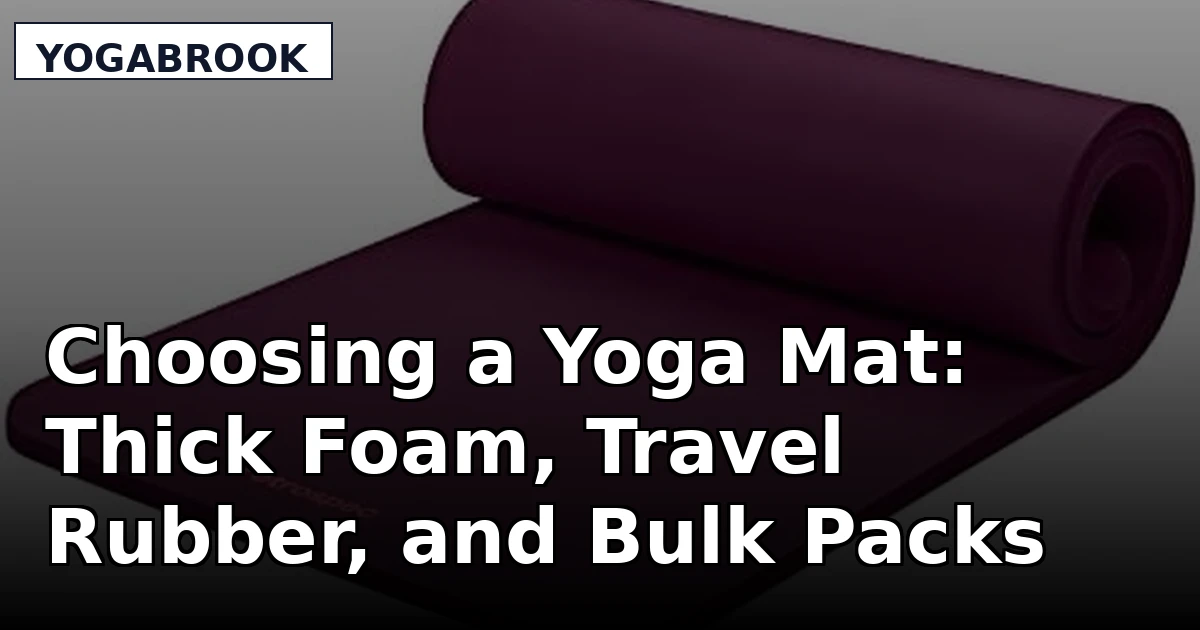
Best Overall for Home Practice: Retrospec Solana
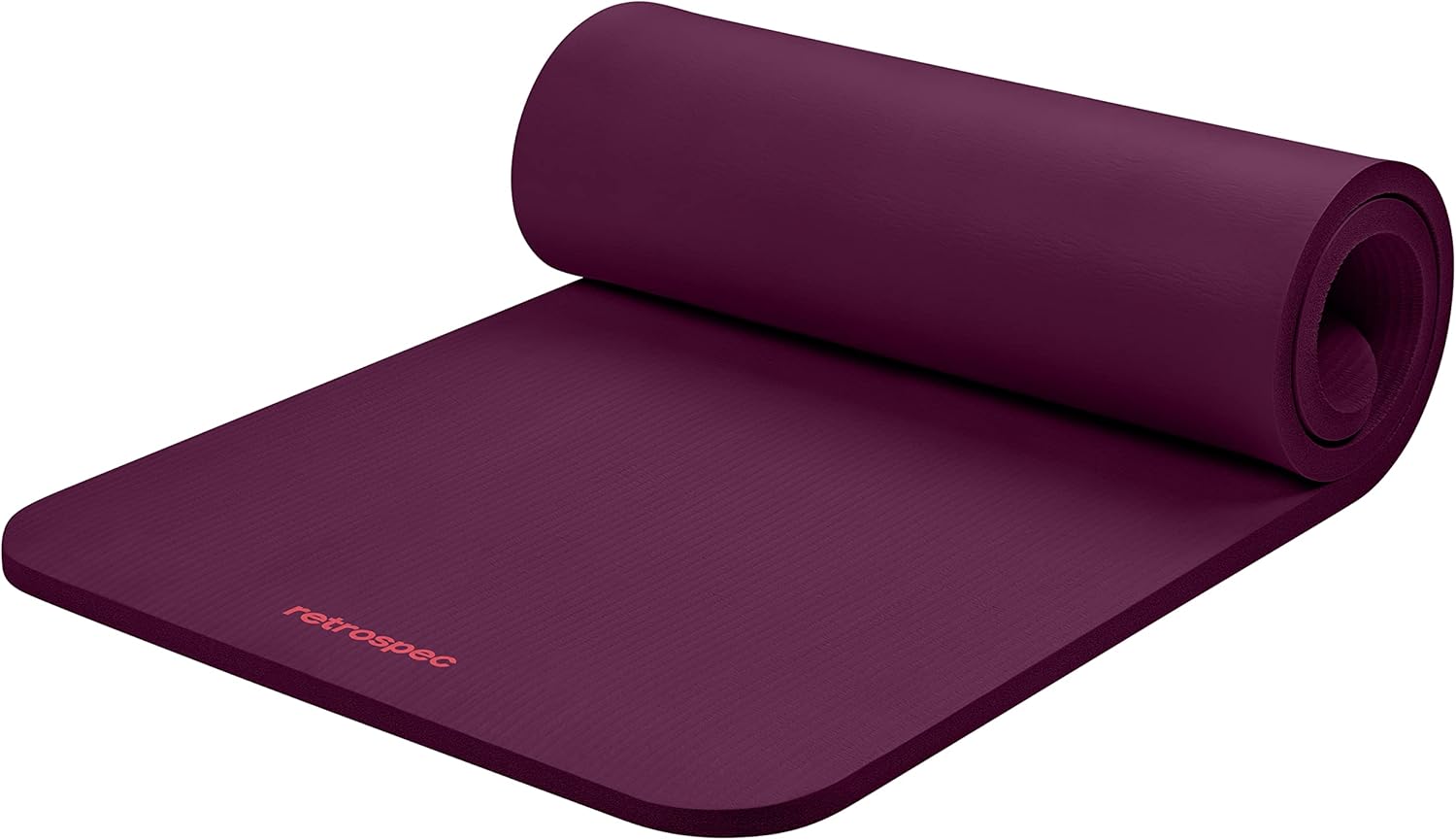
This is an inch of foam with a nylon carry strap, and it is built for the person the yoga industry mostly ignores: someone whose knees complain when they kneel, someone practicing on carpet over a concrete slab, someone who needs cushion more than they need a rubber brick.
What an inch of foam does well is protect joints. Knees, hips, elbows, the sit bones in a long seated stretch. What it does badly is standing balance. My note on thick foam mats has said the same thing for years: for bad knees on hard floors, fine; for standing poses, a disaster. You sink, you wobble, your warrior two suffers, and the sink factor puts your wrists to work in downdog because your palms compress instead of pressing.
The nylon strap matters more than it looks. A thick mat is bulky, and a mat you cannot carry is a mat that stays rolled in a closet. If your practice is mostly floor work, stretching, and slow movement, this is the pick. If your practice is a sweaty standing flow, you want something thinner and denser under your hands.
Best for Travel and Hot Rooms: Manduka eKO SuperLite
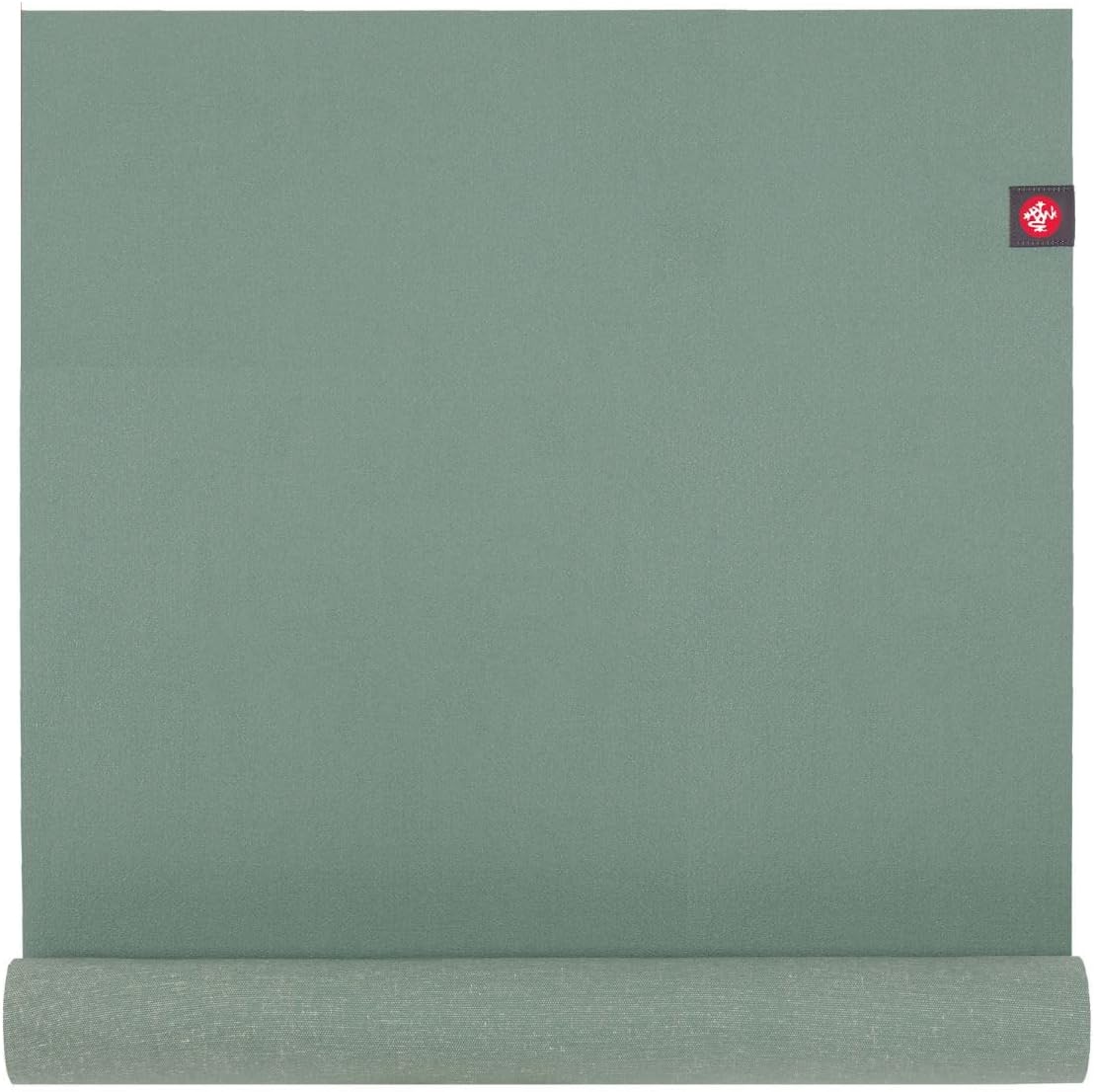
This is 1.5mm of natural rubber, it folds instead of rolls, and it is the opposite philosophy from the Solana. There is no cushion here. There is barely a mat. What you get instead is grip from a rubber surface, a mat that folds into a tote bag, and a material that is not PVC.
Natural rubber is the honest answer to grip. It holds when you are dry, and it keeps holding when you start to sweat, which is why my hot class has more rubber underfoot than anything else. Rubber also has no break-in tax. A Manduka PRO is famously slick for its first twenty or thirty classes; a rubber mat grips on day one, and that matters when the room is 105 degrees.
The trade-offs are real. At 1.5mm your knees meet the floor directly, so this is a mat for joints that are fine, or for someone who lays it over a studio mat. It is also rubber, so it can smell like rubber for a while, and it wants cleaning more often than PVC does. For something you can fold flat and carry onto a plane, none of that is a dealbreaker.
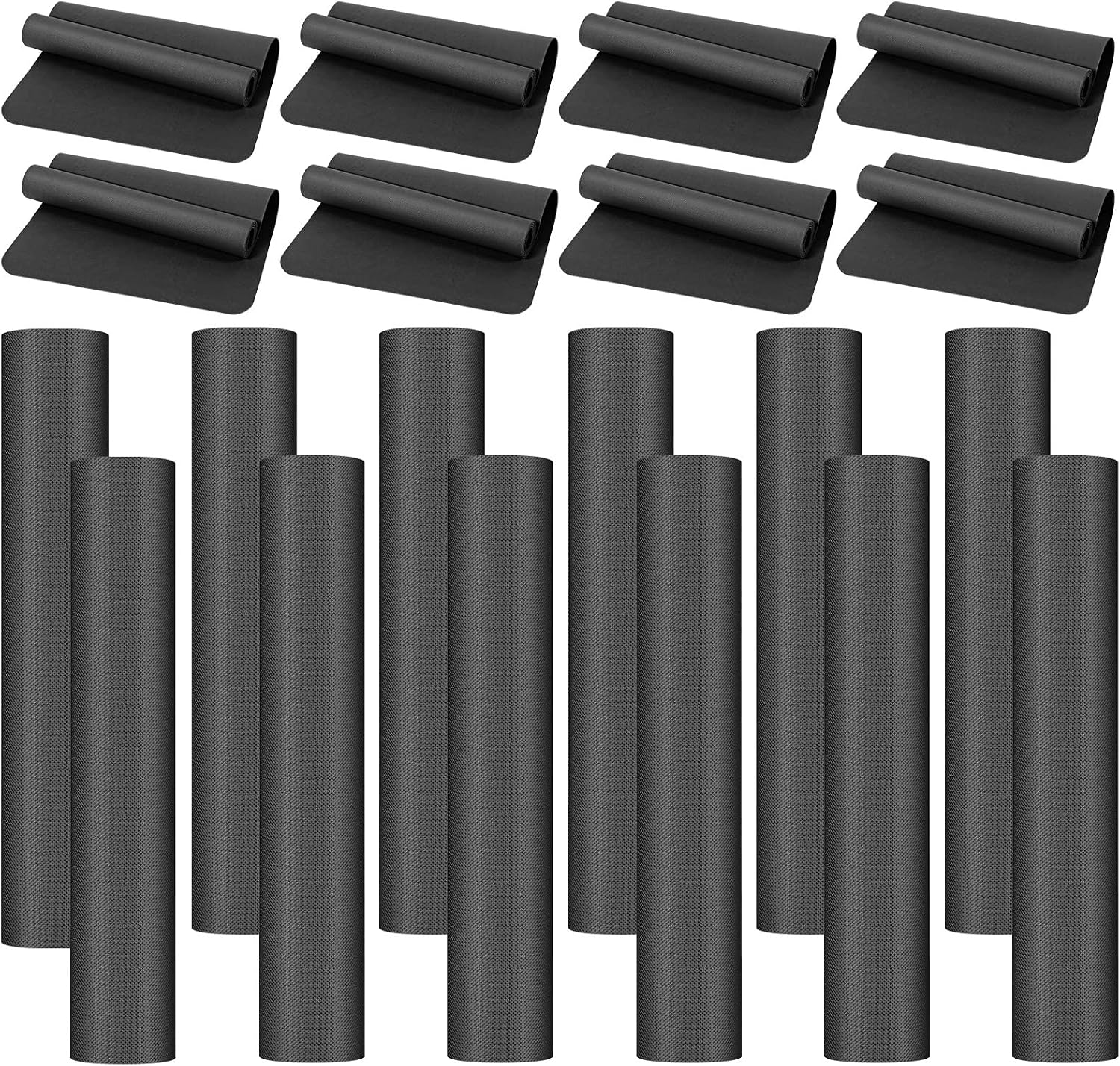
Best for Studios, Schools, and Families: LEIFIDE 10 Pack
Bulk mats are their own category, and most of them are terrible. This pack is ten mats at 68 by 24 inches and 4mm thick, which is the math a studio does when it needs a loaner rack, a school does when it needs a whole class on the floor, and a parent does when three kids want to do the same video at once.
4mm is a real thickness. Thin enough to stand on without wobbling, thick enough to kneel on without cursing, which is the middle ground the one-inch mats overshoot and the 1.5mm travel mats undershoot. For a shared mat that middle is exactly right, because you do not know who is going to unroll it next, or what they weigh.
What you are not buying is a five-year mat. Bulk packs get stacked, dragged, and handed to strangers, and they are bought to be replaced. If you are outfitting a space, buy the pack. If you are buying one mat for your own practice, buy one mat and keep it for a decade.
Best Add-On: Gaiam Yoga Strap

A strap is the cheapest real upgrade in yoga, and this is the one I hand to students who cannot yet reach their feet. It is a woven band with an adjustable metal D-ring buckle, so you make a loop, you slip it around your foot, and your hamstring gets a thirty-second stretch without your lower back rounding to get there.
The metal buckle is the part that matters. Cheaper straps use plastic sliders that give under load, and a strap that slips while you are pulling on it is worse than no strap at all. Metal holds its position.
It also works for physical therapy homework, for dancers, and for anyone doing a floor stretch routine at home. It rolls up inside most mats, which means it travels with the mat instead of getting left in a drawer. If you buy one accessory for a home practice, buy this one.
How I tested
I judge mats on four things, and none of them is the spec sheet.
Thickness: calipers at six points, including the thinnest edge. The gap between the number printed on the box and the number on my calipers is what I call the caliper gap, and anything over a millimeter is a lie with a graphic design budget.
Grip: an inclined plane test, dry and wet. I raise a weighted board until the weight slides and I record the angle. The wet number is the one that decides whether a mat survives a hot room.
Sink factor: how far the surface compresses under my palms in downdog at body weight. One millimeter of sink is fine. Six millimeters wrecks your wrists over an hour of practice.
Mat drag: corner curl and edge lift over a month of rolling, unrolling, and carrying a mat across town in a bag.
Then I teach on it. Two hundred classes is my bar for ranking a mat in a roundup, and ten classes is my bar for mentioning one at all. This guide is a different job. It is about matching a mat to a practice, so I am describing what each of these four products is built to do and who each one fits. I would rather say that plainly than pretend four mats and a strap lived in my bag for a year.
Analysis and test results
Materials decide most of what you will feel, and these four picks cover three of them.
Foam is cushion. It is soft, it is inexpensive, it is quiet on a hardwood floor, and it compresses. Every millimeter of foam you add makes standing balances harder, which is why the one-inch mat is a floor-work tool and the 4mm pack mat is the compromise. If your knees hurt, foam buys you comfort. If your balance is shaky, foam takes some away. That is not a flaw in either product, it is physics, and knowing which side of the trade you are on is most of the decision.
Natural rubber is grip. It is the top layer that keeps working when you sweat, it has no break-in period, and it is not petroleum-based, which matters if you care what is under your face for an hour a day. It costs more, it is thin, and it wants cleaning. The eKO SuperLite is the travel expression of that idea: a foldable sheet of rubber that goes in a carry-on and grips like a studio mat.
PVC, the material behind most cheap mats, is the price winner and the planet loser. I say that as someone who recommends inexpensive mats to beginners constantly, because a mat you use daily beats a fancy mat you use twice. But cheap is not cheap if you replace it every eighteen months. Price per year of use is the only price that means anything, and a durable mat that costs three times as much but lasts four times as long is the better buy.
The strap is the outlier. It is not a mat, it is a range extender, and it is the thing that turns a stiff home practice into a stretch you can actually do. For a few dollars it does more for most beginners than upgrading a mat does.
The yoga mat reference table
Here is the same information in one place. Listed thickness comes from the product listing, because that is what you will see when you shop. What to expect is the practical version.
| Mat | Best for | Listed thickness | Material | What to expect |
|---|---|---|---|---|
 Visit on Amazon → Visit on Amazon →Retrospec Solana |
Bad knees, hard floors, floor work | 1 inch | Foam | Deep cushion, softer standing balance, carry strap included |
| <img src="/images/products/B09NBRVJWK.jpg" alt="Manduka eKO SuperLite Yoga Mat - 1.5mm Natural Rubber | Foldable & Travel Friendly | Soft Textured Surface | Eco-friendly" width="340" style="border-radius:8px;max-width:340px;width:340px;height:auto;max-height:420px;object-fit:contain"> Manduka eKO SuperLite |
Travel, hot rooms, sweaty palms |
 Visit on Amazon → Visit on Amazon →LEIFIDE 10 Pack |
Studios, schools, families | 4mm | Foam, ten mats | Middle-ground thickness, bought to share and replace |
| <img src="/images/products/B0964G5H4Q.jpg" alt="Gaiam Yoga Strap Premium Athletic Stretch Band with Adjustable Metal D-Ring Buckle Loop | Exercise & Fitness Stretching for Yoga, Pilates, Physical Therapy, Dance, Gym Workouts" width="340" style="border-radius:8px;max-width:340px;width:340px;height:auto;max-height:420px;object-fit:contain"> Gaiam Yoga Strap |
Tight hamstrings, stretching, PT | Not a mat | Woven strap, metal D-ring |
Should you buy the Retrospec Solana?
Yes, if cushion is what your joints are asking for. An inch of foam is kind to knees, hips, and sit bones on a hard floor, and the nylon strap means you will actually carry it somewhere. No, if you want one mat for everything. That much foam compresses under your palms and makes standing balances harder, and a mat you fight in warrior two is a mat you stop unrolling. Buy it for floor work and stretching, and keep a thinner mat for standing flows.
Should you buy the Manduka eKO SuperLite?
Yes, if you travel, practice in a hot room, or want to stop buying PVC. It is 1.5mm of natural rubber, it folds instead of rolls, and it grips when you sweat without the twenty-to-thirty-class break-in period a Manduka PRO demands. The catch is cushioning, which is to say there is none. Your knees meet the floor directly, so lay it over a thicker mat at home if your joints need padding.
Should you buy the LEIFIDE 10 Pack?
Yes, if the mats are for other people. A loaner rack, a school gym, a family room with three kids in it: ten mats at 4mm solve that problem in one purchase, and 4mm is a genuinely usable thickness rather than a foam cracker. No, if you are buying for yourself. One good mat you keep for a decade beats ten you store in a garage.
Should you buy the Gaiam Yoga Strap?
Yes. It is the least expensive thing in this guide and the one most likely to change what your body can do this month. The metal D-ring buckle holds under load, which plastic sliders do not, and it rolls up inside whatever mat you already own. If your hamstrings are tight and your lower back rounds every time you reach for your toes, this is the fix.