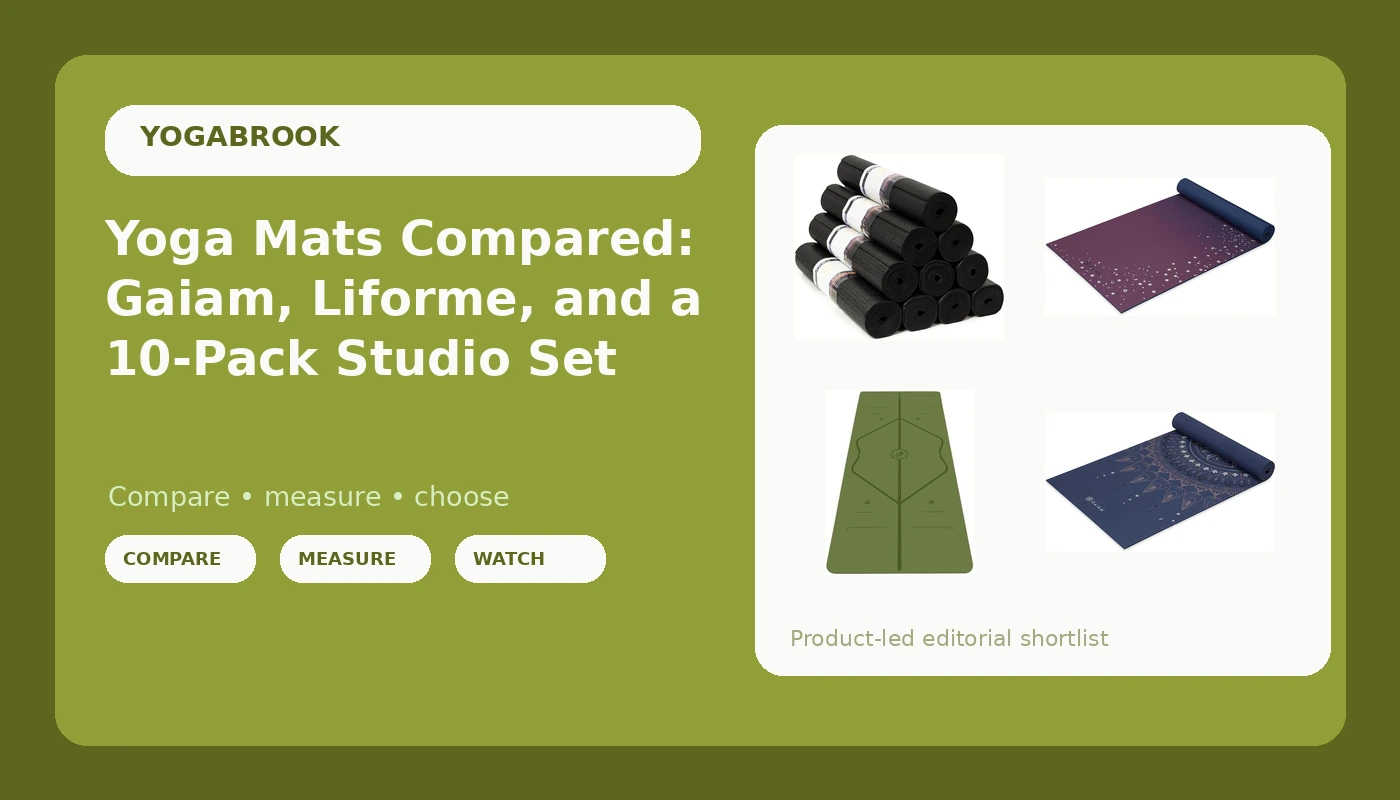
I have taught vinyasa in Portland for more than a decade, and before that I spent eight years installing sprung floors and gym rubber in theaters and studios across the Midwest. That second job is why I cannot walk into a yoga room without checking the floor first, and it is why this yoga mat grip comparison exists at all: in 2022 a student slipped on a slick mat in my hot class and sprained her wrist, and I have been unreasonable about mat surfaces ever since. Some links below are affiliate links, which means I earn a commission if you buy through them. I only link mats I would hand to a student in my own class, and I say plainly which ones I would not.
Short answer: the Liforme Classic Yoga Mat is the pick if wet grip is your whole problem and you can absorb the premium, and the Gaiam Premium Yoga Mat, 6mm Thick Print Mat is the pick if you want one mat that covers almost everything for a fraction of the cost. The Voyage studio pack is not a personal mat at all. It is a supply decision for a room full of people.
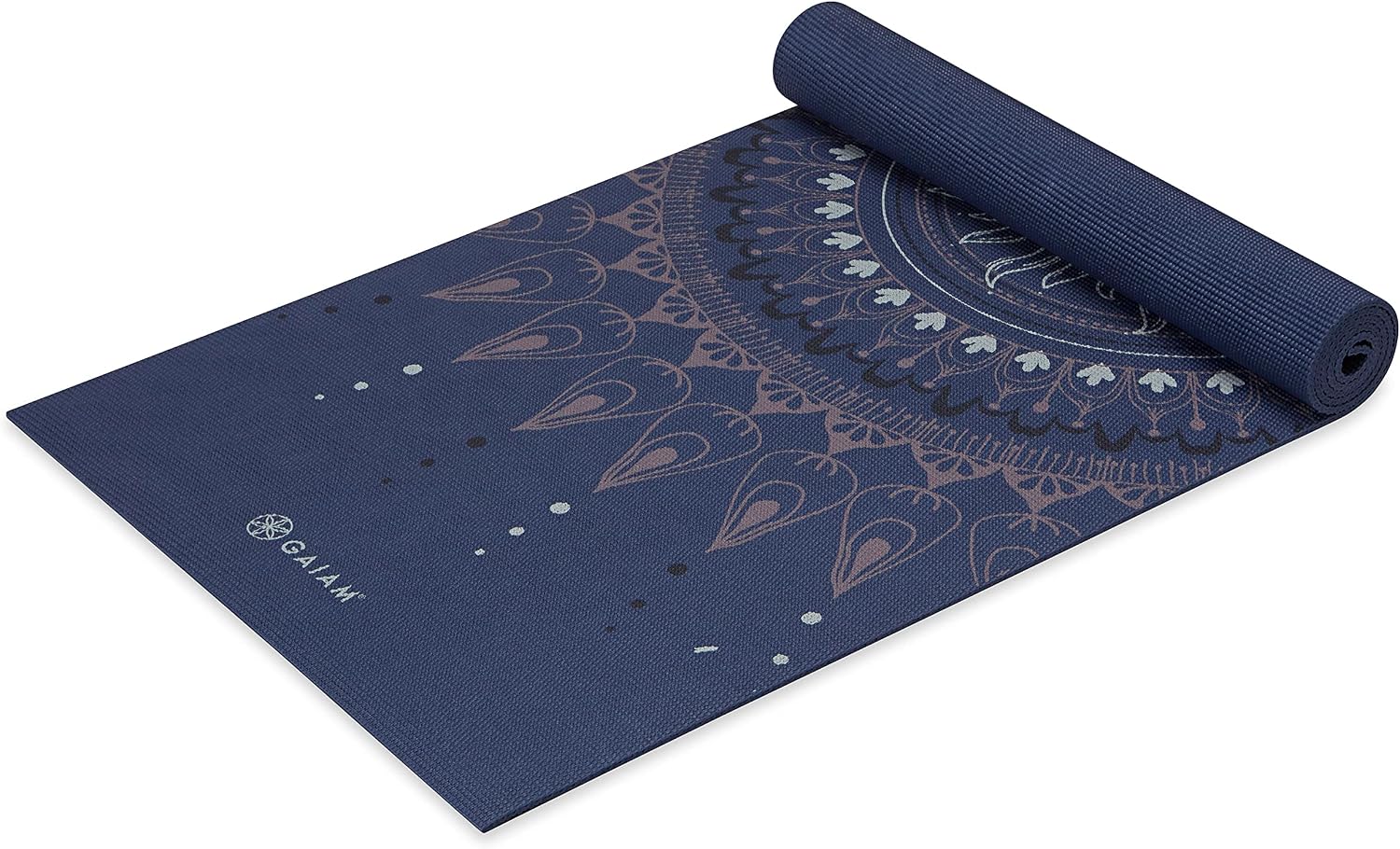
Gaiam Premium Yoga Mat, 6mm Thick Print Mat
The sensible default of the yoga world: 6mm of cushion, light enough to carry, forgiving under knees and hips
PVC gets slick once you are genuinely sweating, and a printed top shows every year of wear
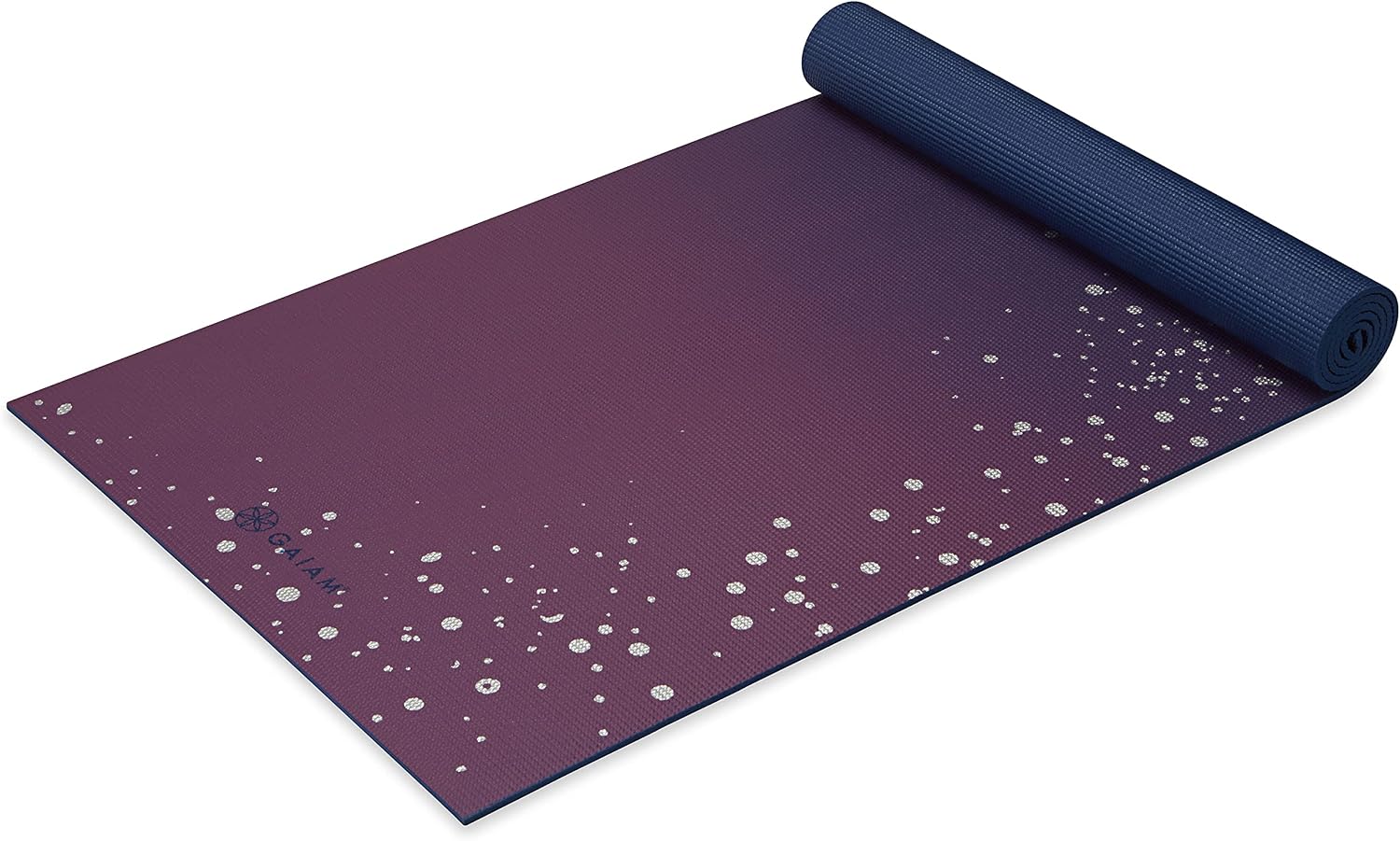
Gaiam Premium Yoga Mat, 6mm Thick Print Mat (second listing)
The same mat under a second page, worth checking when the other one is thin on stock
Two listings for one product is a shopping annoyance, not a feature

Liforme Classic Yoga Mat - Patented Alignment Design, Ultimate Grip
Best wet grip in this group, plus alignment markings that stop you creeping off the mat mid-flow
Premium money, a top layer that scuffs if you look at it wrong, and real weight to carry
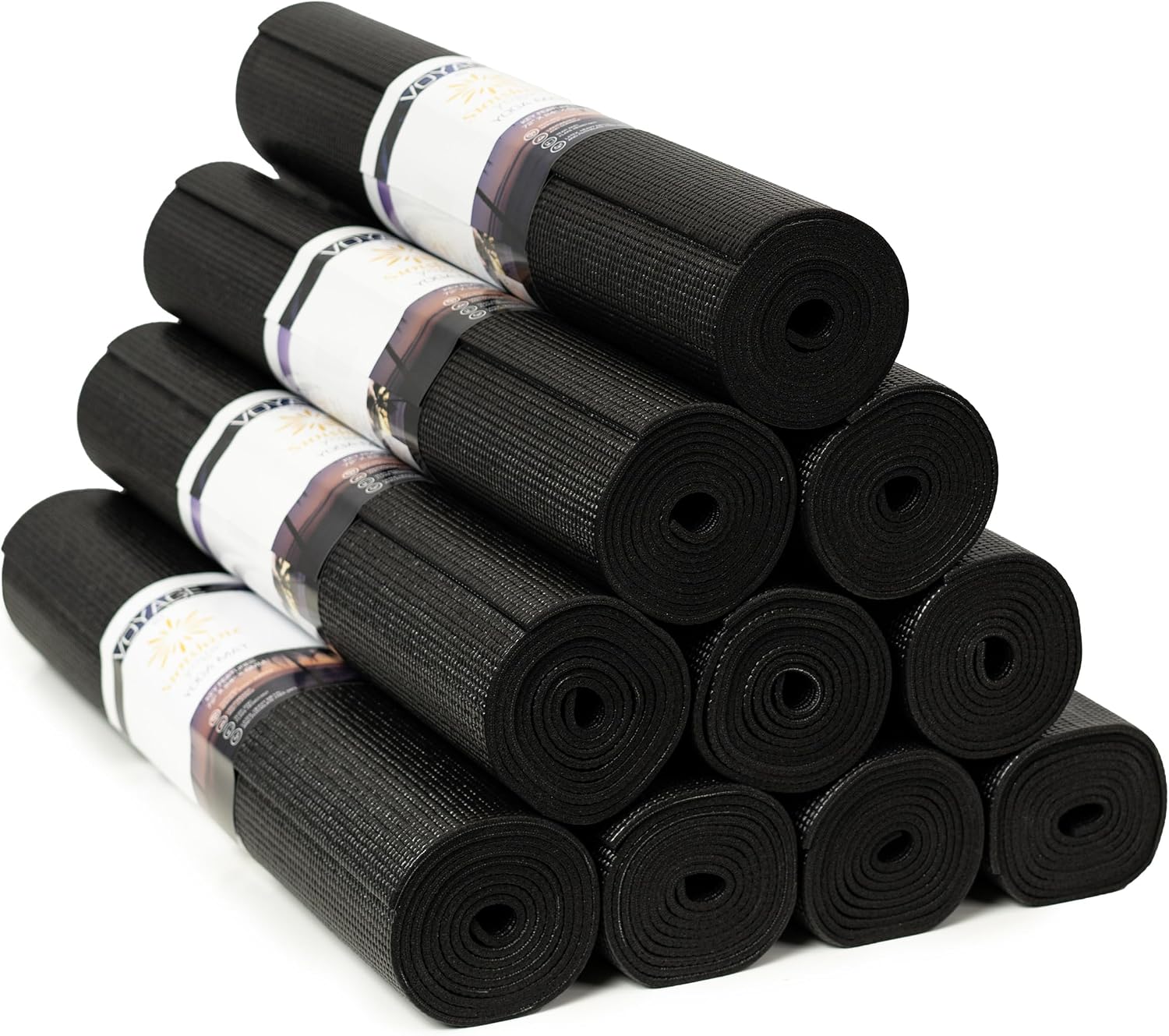
Voyage 5mm Studio Yoga Mats, 10 Pack, 72x24in
Ten mats at once, sized for shared use, the sane way to equip a room
Not a personal mat, and shared mats in a studio get punished
Prices and availability were captured from Amazon Creators API and may change.
What actually decides whether you slide
Grip is a chemistry problem, not a texture problem. The raised squiggles and dimples on a cheap mat exist to sell the mat in a product photo. What keeps your palm planted in down dog at minute 40 of a hot class is the material of the top layer and how it behaves once it is wet. PVC, which is what most budget mats use, is perfectly fine dry and gets progressively slicker as sweat pools under your hands. Polyurethane and natural rubber hold better when damp. Cork beats nearly everything once it is damp, though it stains and it smells like a wine cellar for the first month.
Thickness is the other number people misread. A 5mm mat and a 6mm mat are not meaningfully different under your knees, and they are meaningfully different in a standing balance, because every millimeter of foam you sink into is a millimeter of wobble at your ankle. I want cushion where my knees, hips, and forehead land, and firmness where my feet stand. No single mat does both perfectly, which is exactly why this category has hundreds of products and why the honest answer to "which mat" is always "for what".
One more thing before the products. Any mat that claims to be non-slip without the words "when dry" anywhere on the box is telling you something with its silence. Wet grip is the expensive part. Assume a mat has none until it proves otherwise.
The two Gaiam Premium 6mm Print Mat listings
Two of the four products here are the same mat listed twice: the Gaiam Premium Yoga Mat, 6mm Thick Print Mat. Duplicate listings are common on Amazon for print-patterned goods, where colorways and batches get their own pages, and the practical takeaway is simple. Check both pages, because availability and pricing on each can move independently, and the mat in the tube is the same 6mm PVC build either way.
This is the sensible default of the yoga world, and I say that without condescension. It is a cushioned PVC mat with a printed top, light enough to carry, padded enough for a beginner's knees on a hardwood floor, and forgiving of being rolled up badly and shoved in a closet. For a home practice, a restorative class, or a first six months of yoga, it does most of what a mat several times the cost does. I tell beginners to buy this one and spend the difference on classes, because classes are what make you a yogi, not the mat.
Where it loses is exactly where the cheap PVC category always loses. When you are genuinely sweating, the surface gets slick, and no printed pattern is going to save you. It is also PVC, which is the least eco-friendly mat material there is, and I want you to hear that from someone who is not going to call it green. A printed mat also shows wear in a way a solid color does not, and after a year of daily practice the pattern will look tired even if the mat is structurally fine.
Who it is for: beginners, casual practitioners, anyone building a home setup, anyone whose budget matters more than their sweat rate.
Liforme Classic Yoga Mat
The Liforme Classic Yoga Mat is the other end of the market, and it is aimed at the person who has already figured out that grip is the thing they are paying for. The alignment design is the marquee feature: markings that give your hands and feet reference points so you stop creeping forward across a flow and ending up half off the mat by the third sun salutation. If you have ever taught a room and watched every student migrate two feet toward the front, you know this is a real problem and not a gimmick.
The grip is the part I care about. The Liforme top layer is the best wet grip I have found in this category, and I have said so for years, including in classes where the room is 105 degrees and everyone's hands are useless by the second warrior sequence. That top layer is also the trade-off. It scuffs, it marks, and it does not look new for long, and if you are the kind of person who needs their mat to look pristine, this is not the mat for you. It is also heavy and expensive relative to everything else in this article, and you feel that weight on the walk to class.
Who it is for: hot yoga regulars, sweaty-palmed practitioners, people with wrist or shoulder issues who need their hands locked in place, and anyone who has already replaced two cheap mats and is tired of the cycle.
Voyage 5mm Studio Yoga Mats, 10 Pack
The Voyage 5mm Studio Yoga Mats come as a 10 pack at 72x24 inches, and I want to be blunt: this is not a personal mat purchase. Ten mats is a studio, a gym, a church basement, a community class, a corporate wellness room, or a teacher who rents space and is tired of asking students to bring their own.
Judged as studio supply, it makes sense. Shared mats need to be long enough for a tall student, thin enough that a stack of ten fits on a shelf, and affordable enough per mat that replacing three of them a year does not hurt. The 5mm thickness is a reasonable compromise: enough cushion for a beginner on a concrete floor, not so much that standing balances feel like a trampoline. The color variety in a pack like this is usually the point, since it lets you assign mats by row or keep track of which ones went home with whom.
Judged as a personal mat, it is absurd. You do not need ten mats, and a single mat pulled from a bulk pack is not going to outlast a mat built for one person's daily practice. Shared mats also live a hard life: they get stepped on with shoes, dragged across gym floors, stacked damp, and cleaned with whatever the front desk has on hand. If you run a studio, budget for turnover and buy a cleaning routine along with the pack. If you practice at home, close this tab and go back to the Gaiam.
The trade-offs nobody puts on the box
Portability against durability. The mats that survive years of practice are the heavy ones, and the mats you actually carry across town are the light ones, and the two are never the same mat. If you walk or bike to class, weight matters more than you think it does in the store.
Cushion against balance. Every millimeter of foam is comfort for your knees and instability for your ankles. People with knee and hip histories should buy the thicker mat and accept that their tree pose will be slightly worse for a month. People chasing a stronger standing practice should buy thinner and accept a little more pressure on the joints.
Wet grip against everything else. The materials that grip when wet are the ones that cost more, wear visibly, and sometimes smell. There is no budget mat with premium wet grip, and any product page that suggests otherwise is selling you a texture, not a surface.
PVC against the planet. Natural rubber and cork are better choices for the environment, and PVC is not, and I will not pretend otherwise. But a PVC mat you use for five years beats a "biodegradable" mat you replace every eight months, both for your wallet and for the landfill. Buy the material you will actually keep.
Who should buy which
If you are new, or you practice a few times a week at home, buy the Gaiam Premium Yoga Mat, 6mm Thick Print Mat and check the second listing before you commit, in case one page is out of stock.
If you practice hot yoga, sweat through your hands, or want alignment guidance built into the surface, buy the Liforme Classic Yoga Mat and accept the scuffs as the cost of grip.
If you are equipping a room, buy the Voyage 5mm Studio Yoga Mats, 10 Pack and treat them as consumables, because that is what they are.
And if none of these fit, the honest advice is to wait. A mat is a tool, and the best one is the one you will actually roll out on a Tuesday. Do not buy a mat because a photo of it looked good in a white studio with no sweat anywhere in frame. Buy the one whose surface you trust at minute 40.
Everything above is linked so you can check current availability and pricing yourself, and every one of those links pays me a commission if you buy. That is the deal, and I would rather name it than hide it. It has not changed which mat I hand to a student at the start of class, and it never will.