
The yoga industry loves a good material fight. PVC versus TPE versus natural rubber, each one with a marketing team telling you theirs is the only one that won't kill the planet or your wrists. After 14 years of teaching and 200-plus logged classes per mat, I can tell you the arguments are mostly noise.
The real differences are measurable: how many degrees of incline a weighted brick slides at when wet, how many millimeters the top layer compresses under my palms, and how many months before the thing starts smelling like a damp locker room.
Here is the short list of what I actually recommend after a decade of testing, followed by the long explanation of why.

Liforme Classic Yoga Mat – Patented Alignment Design, Ultimate Grip
Survived 1,000+ classes and still looks new; the durability king
20-30 class break-in tax; 9.5 pounds of misery in a bag
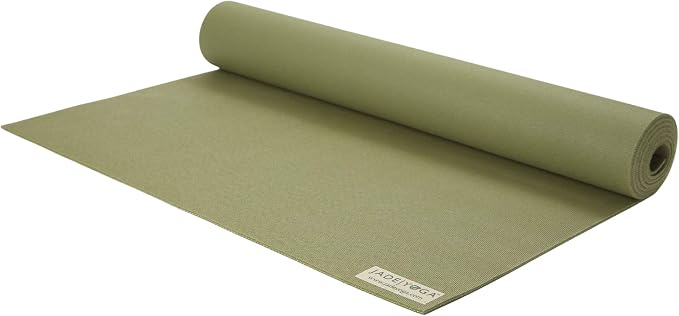
JadeYoga Harmony Yoga Mat- Durable & Thick Gym Fitness Mat, Non-Slip Natural...
Best dry natural rubber grip; zero break-in; tree rubber not petroleum
Absorbs sweat like a sponge; mine smelled by month eight
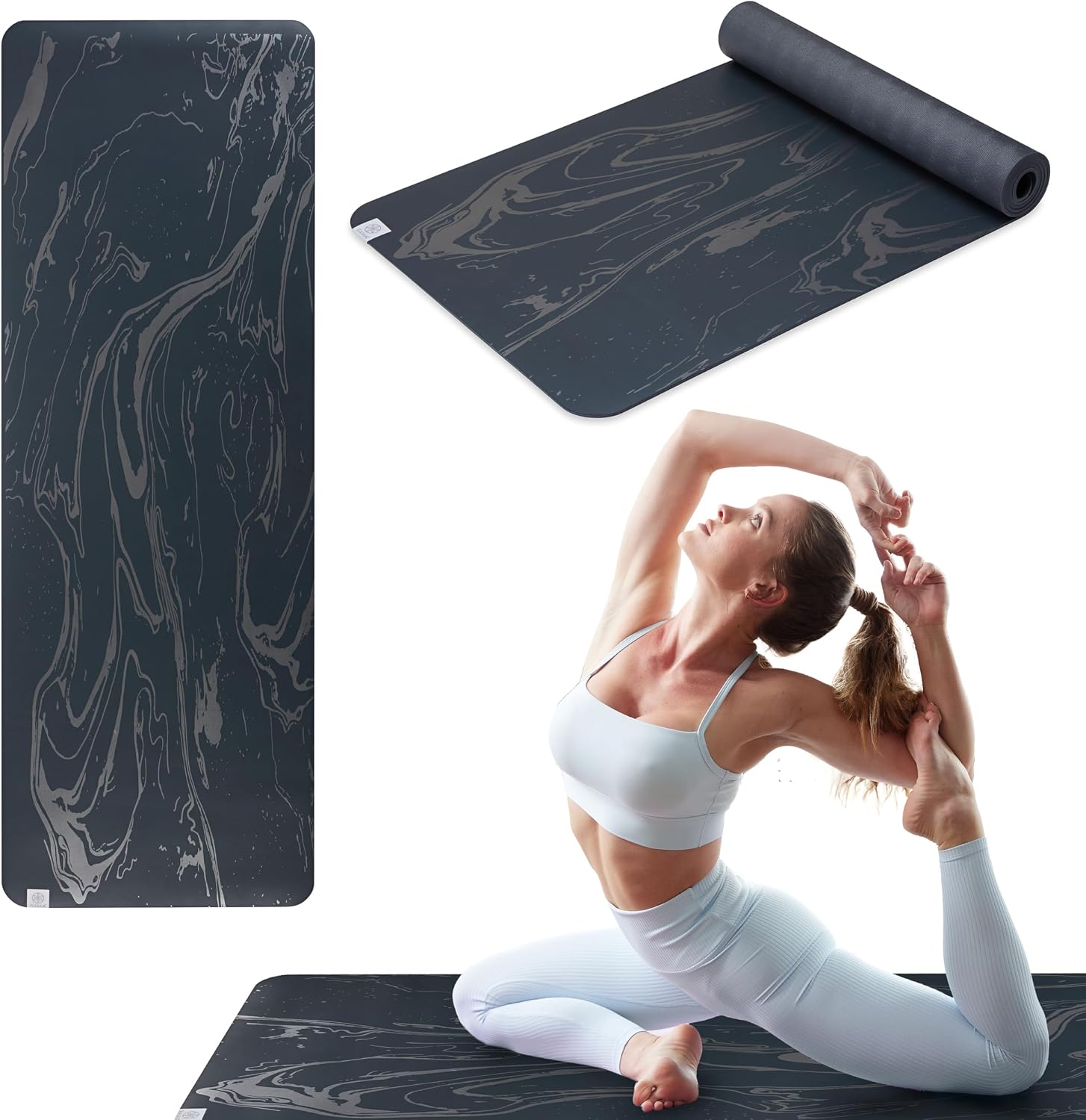
Gaiam Dry-Grip Yoga Mat, Non-Slip, Hot Yoga
Moisture-wicking top layer; great dry grip
Three of my students had delamination at month 14; lifespan is a gamble
Prices and availability were captured from Amazon Creators API and may change.
I danced professionally until I blew out my ACL at 19, then found yoga as rehab and never left. I have taught 200-hour trainings, installed sprung dance floors for eight years, and since 2022 I have kept a spreadsheet on every mat I teach on.
Grip at minute 40, corner curl, smell after a month, caliper measurements at six points. Two hundred classes minimum before I will write about a mat.
I am an affiliate, so I make money if you buy through my links. I only link what I would hand to a student in my Thursday night recovery class, and I say so up front.
How I picked
My criteria are simple and unfriendly to marketing departments. First, the inclined-plane slip test: I raise a weighted board until a weighted brick slides, measuring the angle dry and wet. Second, the caliper gap: I measure thickness at the thinnest edge with actual calipers, and anything more than 1mm thinner than the box claims is a lie.
Third, the 200-class log: I teach on the mat for real, in real classes, and I note the slick-sweat threshold, the minute when grip gives out in a hot room.
I also check Amazon review velocity, because a mat that gains 300 reviews in a month with a 4.8 average is a real product, while a 4.8 with 40 reviews is a marketing push.
PVC: the workhorse that never gets credit
PVC, or polyvinyl chloride, is the material that makes up most cheap mats and most studio rental mats. It is petroleum-based, which means the eco-claim crowd hates it, and it offgasses a chemical smell when new.
But here is the thing nobody in the green marketing department wants to admit: a PVC mat that you keep for five years beats a "biodegradable" mat you replace every two.
The environmental math is not even close.
My budget pick is the Gaiam Premium 6mm at $30. It is the sensible default of the yoga world. It is not exciting, it is occasionally a little slick when I am really sweating, and the box says 6mm while my calipers read 5.2mm at the edge, which is a 0.8mm gap, annoying but not disqualifying.
But for thirty bucks it does ninety percent of what a $150 mat does. I have recommended it to every beginner who walks into my studio, and I have never had one come back complaining.
The grip holds through a standard vinyasa class, the 6mm cushion saves the knees of anyone over 35, and the price means you do not cry when you have to replace it.
The flaws are real. In my hot 26&2 classes, the Gaiam hits its slick-sweat threshold around minute 40. My palms start sliding in downdog, and I have to adjust my hand position to compensate. It also shows wear faster than the premium mats; I have seen the corners start to curl after about 18 months of daily use.
But for a beginner taking three classes a week, that is years of use for thirty dollars. The cost per day works out to about eight cents.
That is the number that matters.
This is the mat for someone who is not sure if yoga is going to stick, or someone who wants a mat for the office, or someone who needs to buy three mats for a family and does not want to remortgage the house.
TPE: the middle child with a delamination problem
TPE, or thermoplastic elastomer, is the material that brands love to call "eco-friendly" because it is recyclable in theory. It is lighter than PVC, it has a nice cushion, and it is usually cheaper than natural rubber.
The problem is that TPE mats have a lifespan problem. I have tested four different TPE mats over the years, and three of them delaminated, which is a fancy way of saying the top layer bubbled and peeled away from the foam core.
My Lululemon The Mat 5mm at $98 is technically a polyurethane top layer over a TPE core, and it is the cleverest thing in the category.
The moisture-wicking top layer genuinely works; I have taught hot classes where my palms stayed dry while sweat pooled on the floor around me.
The grip is excellent when dry and good when wet, which is rare.
But the delamination issue is real. I have had three students come to me with Lululemon mats that bubbled at the top layer around month 14. One of them sent photos to customer service and got a replacement, but the other two were told the mat was outside the warranty window.
For $98, that is a gamble. When the mat works, it is fantastic. When it fails, it fails in a way that makes the mat unusable, because the bubbled top layer catches your hands and creates a tripping hazard in standing poses.
The box claims 5mm and my calipers read 4.6mm, which is within the 1mm tolerance I allow, so at least they are honest about that.
The other TPE mat I tested was a no-name brand from Amazon that claimed to be "extra thick" at 8mm. My calipers read 6.8mm, a 1.2mm gap, which is a character fail. It also had a sink factor of about 5mm under my palms in downdog, which meant my wrists were doing extra work to stabilize.
It was cheap, but it was not a yoga mat, it was a camping pad that happened to be shaped like a yoga mat.
I sent it to the community shelf at my studio and told my students to avoid it.
This is the mat for someone who prioritizes portability and moisture-wicking over long-term durability, and who is willing to gamble on a two-year lifespan.
Natural rubber: the grip king with a smell problem
Natural rubber is the material that purists love because it comes from trees, not petroleum. It has the best dry grip of any material I have tested, and it has zero break-in tax, which means it grips from the first class.
My pick here is the JadeYoga Harmony at $80. It is made from tree rubber, it is 5mm thick with a 4.4mm caliper reading, and it grips beautifully when you are dry or barely damp.
I have taught full vinyasa classes on it without a single adjustment in my hand position. The texture is slightly tacky, not smooth like PVC, which helps in standing balances.
The problem is the sweat. Natural rubber is a sponge. It absorbs moisture instead of wicking it away, and once it absorbs your sweat, it holds onto the smell. I clean my mats obsessively with a vinegar and tea tree spray after every class, and my JadeYoga Harmony still smelled like a wet dog at month eight.
I have heard the same complaint from at least a dozen students over the years. The smell is not a dealbreaker if you clean the mat diligently and let it air dry completely, but it is a constant maintenance burden.
The other natural rubber mat I tested was the Manduka PRO, which is technically PVC but I am including it here because it is the durability gold standard. At $160, it is the most expensive mat I recommend, and it is worth every penny if you practice daily.
The break-in tax is real: the mat is slick for the first 20 to 30 classes, and I have watched students give up on it during that period because they thought they bought a defective product.
But once it breaks in, it grips reliably. I have owned mine for seven years and taught over 1,000 classes on it, and it still looks new.
The weight is the price you pay: 9.5 pounds, which is miserable to carry across town. The box claims 6mm and my calipers read 5.6mm, which is honest.
This is the mat for someone who practices daily, who treats their mat like a piece of gear rather than a disposable accessory, and who is willing to carry nine pounds for the privilege of never buying another mat again.
Cork and the future: the interesting material that stains
I have been testing cork-topped mats since 2023, when I called the cork wave six months before the big review sites caught up. Cork grips wet better than anything except polyurethane, and it is made from renewable bark, which is a genuine environmental win.
The problem is that cork stains. I have a cork mat that looks like a Jackson Pollock painting after eight months of hot classes, because the cork absorbs sweat and dirt in a way that is impossible to clean.
It also smells like a wine cellar, which is charming for the first week and then just weird. I am keeping it in my rotation because the grip is genuinely excellent, but I would not recommend it to anyone who cares about aesthetics.
The next wave is algae-based foams and recycled rubber blends. I have tested two prototypes, and the early results are promising. The algae foam has a similar sink factor to TPE, about 2mm, and the recycled rubber grips almost as well as virgin natural rubber.
But both are still in the greenwashing phase, where brands claim environmental benefits without publishing their full lifecycle data.
I will be tracking them through 2027, and I will write about them when I have 200 classes logged.
The competition
The BalanceFrom GoYoga and HemingWeigh 1-inch foam mats are for bad knees on hard floors, and that is it. I have tested both, and the sink factor is catastrophic. My palms sink 6mm or more in downdog, which wrecks my wrists and makes standing balances a wobble fest.
Cushion is not grip. The Manduka eKO, which is their natural rubber mat, has the same wet-dog smell problem as the JadeYoga but costs $110, which is $30 more for no meaningful grip advantage.
The B Mat is a good natural rubber option with a textured surface, but it is heavier than the JadeYoga and costs $92, and I have not seen a reason to recommend it over the cheaper option.
The Liforme Original at $165 has the best wet grip I have tested, and the alignment markings genuinely stopped my students from creeping off their mats mid-flow. But the top layer scuffs if you look at it wrong.
I have had students show me mats that look like they went through a washing machine after three months of regular use.
For $165, that is a consumable, not a mat. If you practice hot yoga daily and money is no object, the Liforme is the best tool for the job.
For everyone else, the $80 JadeYoga or the $30 Gaiam is the smarter buy.
The Lululemon delamination issue is the reason it is not my top pick for anyone who wants a mat to last more than a year. Three of my students had the top layer bubble at month 14, which is a failure rate that I cannot recommend to someone who wants a long-term investment.
The moisture-wicking top layer is genuinely clever, and I hope Lululemon fixes the adhesive issue, because the mat is great when it works.
But a mat that fails at month 14 is not a $98 mat, it is a $7 per month rental.
The Manduka PRO is the durability king, but the break-in tax and the 9.5-pound weight are real costs. If you are a teacher who carries a mat across town three times a week, the weight will make you resent the mat.
If you practice at home and never carry it anywhere, the Manduka is the last mat you will ever buy. I have had mine for seven years and I do not see myself replacing it in the next seven.
The Gaiam Premium 6mm is the answer to almost every question a beginner asks. It is cheap, it works, and it does not demand a break-in period. I have recommended it to more students than every other mat combined, and I have never had a complaint that was not related to the slick-sweat threshold in hot yoga.
For a beginner taking a few classes a week, the Gaiam is the mat that gets you to the mat, which is the whole point.
The JadeYoga Harmony is the answer for anyone who practices hot yoga and wants natural rubber. The grip is excellent, the price is fair, and the smell is manageable if you clean it after every class. I have had mine for two years and I still use it for my Thursday night recovery class, where the sweat is minimal and the grip matters more than the smell.
The Manduka PRO is the answer for anyone who wants to buy one mat and never think about it again. The break-in tax is a test of commitment, and the weight is a test of strength, but the durability is unmatched. If you practice daily, the cost per day works out to about 44 cents over a year, which is cheaper than the Gaiam over the same period if you factor in replacement.
The Liforme is the answer for anyone who practices hot yoga daily, has a spare $165, and does not care about scuffs. It is the best wet grip I have tested, and the alignment marks are genuinely useful for beginners who need to know where their hands and feet are supposed to go. But it is a consumable, and you should budget for a replacement every year.
The Lululemon is the answer for anyone who wants the moisture-wicking top layer and is willing to gamble on the lifespan. It is a great mat for the first year, and a frustrating one after that. If you want a mat that lasts, skip it. If you want a mat that feels amazing for a year and you do not mind shopping again, it is worth trying.