Related: Best Yoga Mat for Bad Knees: What Actually Cushions a Joint
Thick yoga mats for studios and home practice get lumped into one category, and that is exactly where buying goes wrong. Three different jobs hide inside that phrase: a class set you buy by the dozen, a small pad that keeps your knees off the floor, and the single mat you roll out on a Tuesday night in your living room. Pick the wrong one and you will decide you hate yoga, when really you bought the wrong piece of foam.
I have taught vinyasa and a recovery class for people with knee and hip histories for years, and I have spent a lot of that time watching what mats do under real bodies. Mats fail in three ways. The top layer goes slick once your palms get wet. The corners curl and lift, which turns a mat into a trip hazard on a smooth studio floor. Or the foam compresses under your hands until your wrists carry load the mat was supposed to carry. None of those failures show up in a product photo.
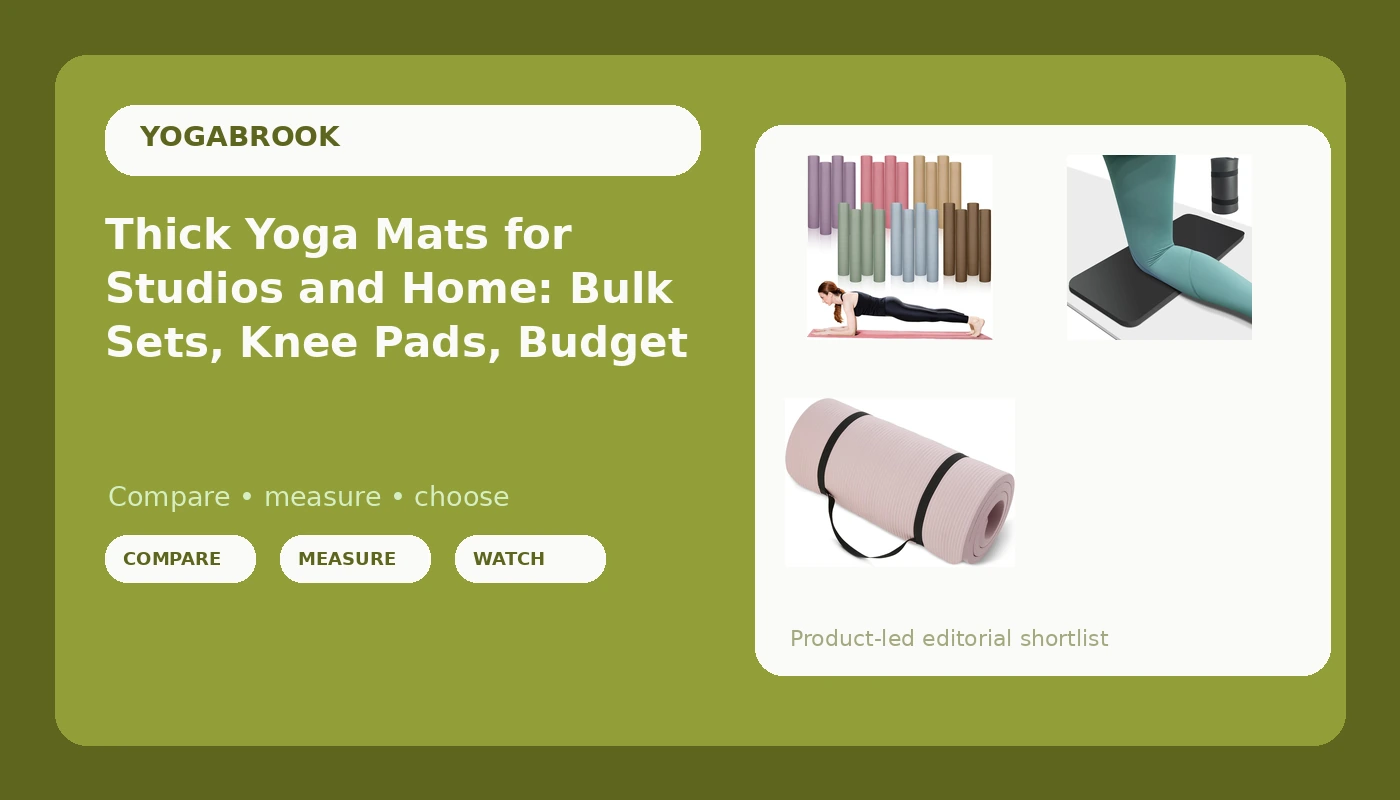
The three mats here cover those three jobs at three price points, and each one is built for a different person. The Timgle 24 pack is for anyone buying in volume. The knee pad cushion is a supplement, not a mat. The Amazon Basics extra thick mat is the budget single mat for home practice. Here is what each one is actually for, and what to check before you click.
Best for Studios and Class Sets: Timgle 24 Pack Yoga Mat Bulk
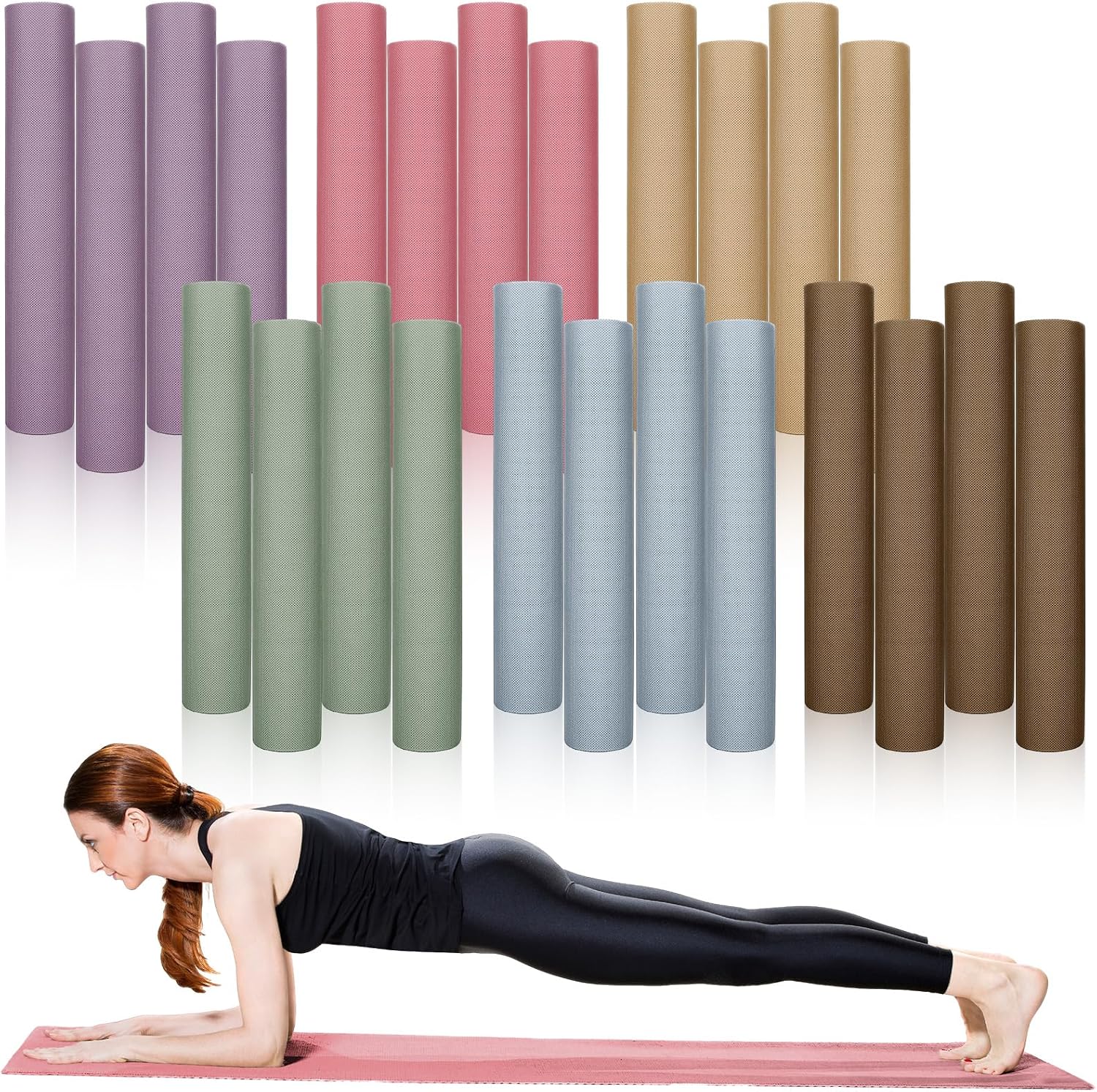
Twenty-four mats, 68 inches by 24 inches, 4mm thick, in one order. That is the whole pitch, and for the right buyer it is a good one. This is the mat you buy when you need a mat for every person in the room instead of a mat for you.
A few honest notes on the numbers. The listing calls it extra long, and 68 inches is the standard length, not a long one. If you are tall and your feet hang off the end of most mats, read the number rather than the adjective. At 4mm this is a thin mat, and thin is a feature for standing poses. A thin mat keeps your palms close to the floor, so your hands and feet have less foam to fight. It is not a mat for kneeling on hardwood for ten minutes, and it is not trying to be.
The anti-slip and tear-resistant claims deserve understanding rather than trust. Almost every mat on the market says non-slip, and the box almost never adds the words when dry. Grip is decided by the chemistry of the top layer, not by how grippy the surface feels in a store. A textured top can feel sticky while dry and turn slick at minute 40 of a hot class. You will not know which one you have until you sweat on it.
What you can control is maintenance. Wipe these down after class with mild soap and water, then let them dry fully before they go back in the rack. Closed-cell mats tolerate that routine well, and a wiped mat lasts longer than a mat that lives in a humid pile.
Storage is the real cost. Two dozen rolled mats need a rack, a bin, or a wall. If you are buying for a family or a home gym, count how many people actually practice before you order two dozen.
Best for Knees, Forearms, and Long Holds: Yoga Knee Pad Cushion
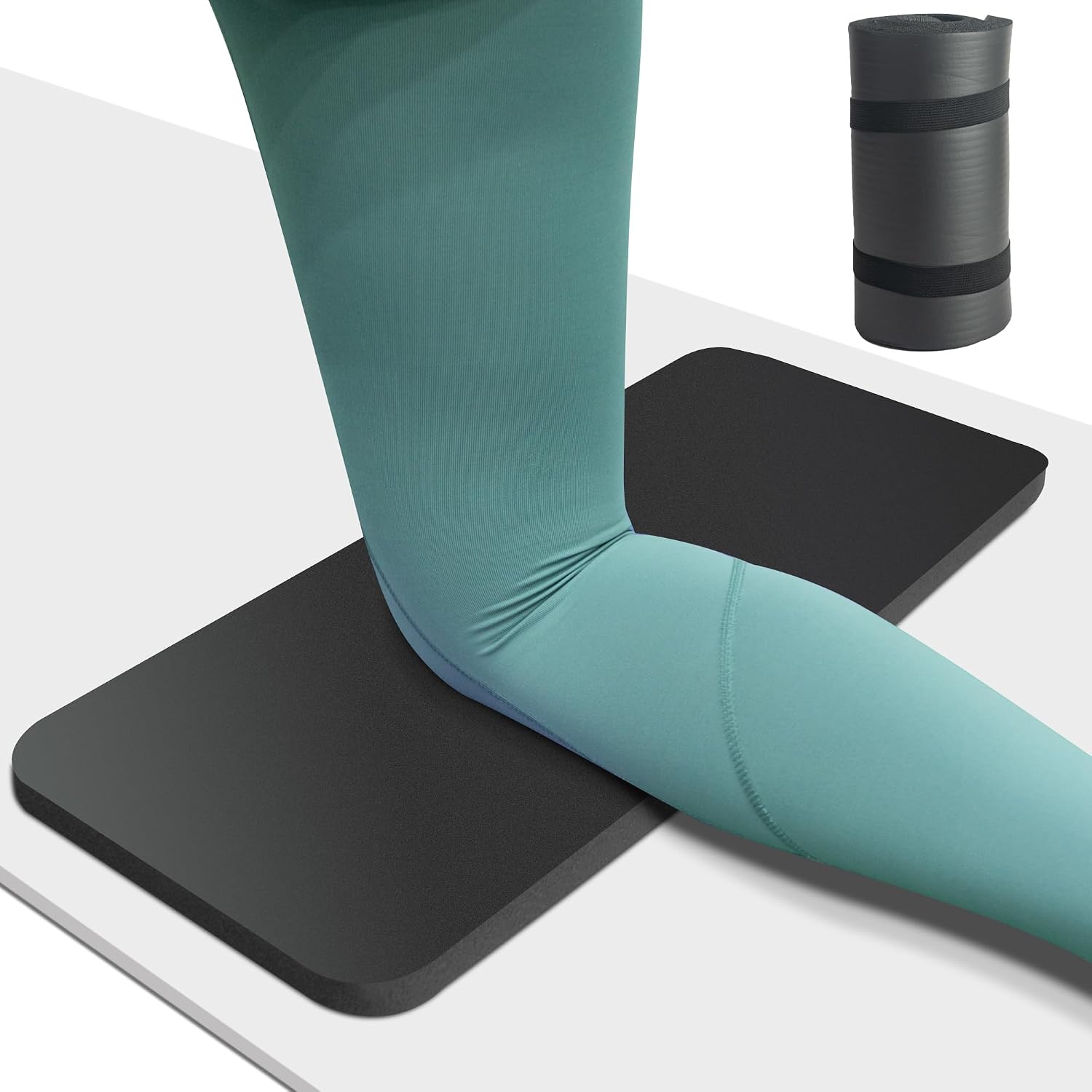
This is 24 inches by 9.8 inches by 0.8 inches of NBR foam with a storage strap, and it is the piece of gear I wish more students owned. It is not a mat. It is a pad that goes where your joints go.
The math on kneeling is simple. An 0.8 inch pad under a knee is a lot of relief on a hardwood or concrete floor, which is why this works where a 4mm mat does not. Under a kneecap or a forearm, foam that compresses is exactly what you want. Under a standing foot, it is exactly what you do not want, which is why the pad is narrow. You put it where you kneel, then move it out of the way.
NBR is a soft closed-cell foam, and the listing makes an odor-free claim. That matters more than it sounds. Cheaper foam pads can smell like a tire for the first week, and that smell is a sign of what is still offgassing. Unroll it, leave it in a ventilated room for a day or two, and judge for yourself. This is one of the few categories where the smell test is genuinely useful.
Use it for cat-cow, lunges, kneeling poses, forearm planks, and any long hold that puts you on the floor. The strap is simple and does its job, which is the right amount of engineering for a pad this size. Pair it with a thin mat and you have a setup that handles standing and kneeling without a six-millimeter mat that wobbles you through warrior two.
Best Budget Single Mat: Amazon Basics Extra Thick Exercise Yoga Mat with Carrying Strap
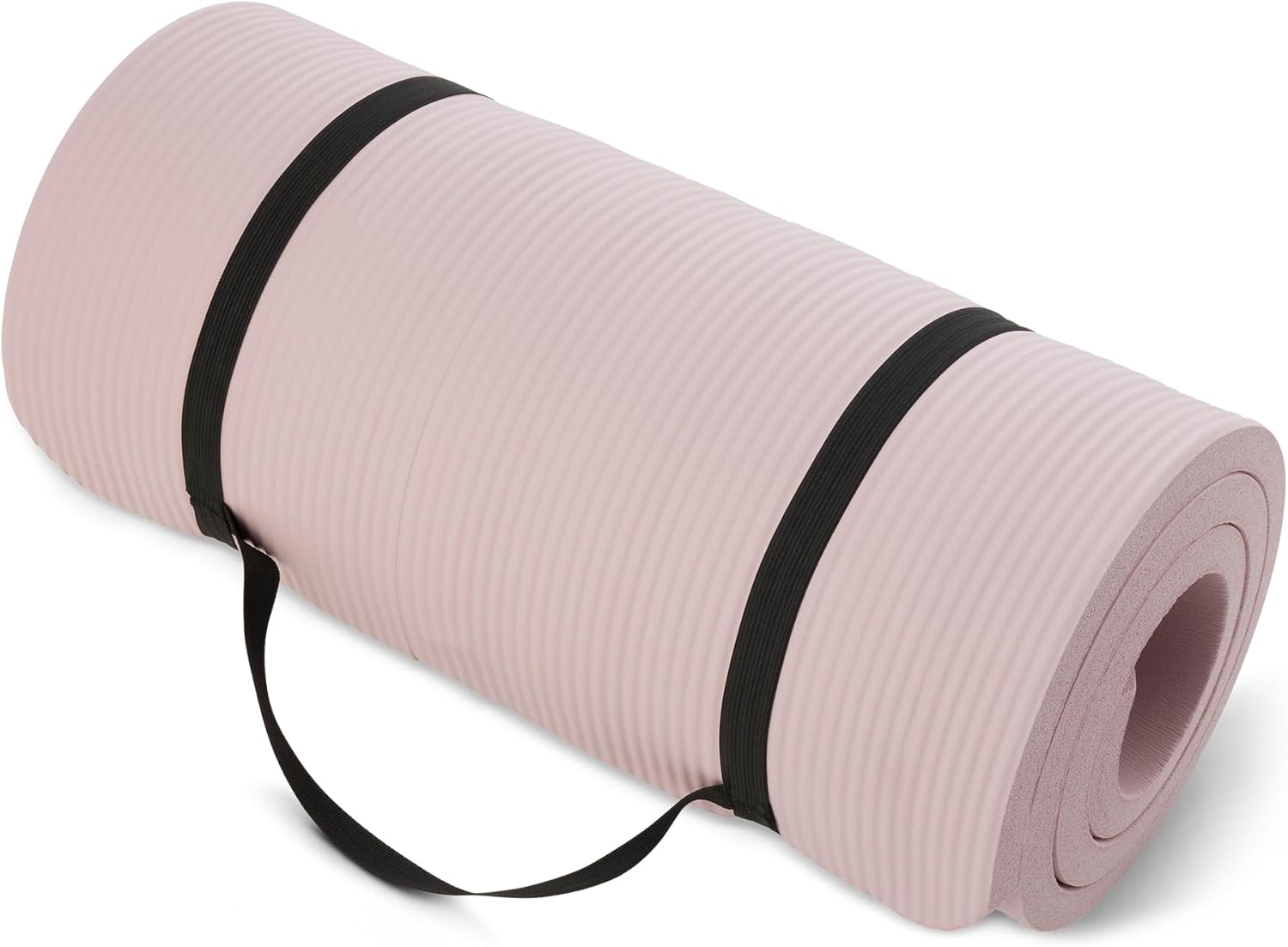
This is the one to buy if you want a single mat, you want it inexpensive, and you want it to come with a way to carry it. The carrying strap tells you who it is for: someone taking a mat to a class, not someone leaving it on a studio floor.
Notice what the name does not tell you. It says extra thick and stops there, with no number attached. That is your first assignment as a buyer. Find the thickness figure in the product details and hold onto it, because thickness decides how the mat feels under you. Extra thick mats in this class usually land somewhere near half an inch, which is comfortable for seated work, stretching, and floor exercise on a hard surface. It is also soft enough that standing balances get harder, since your foot sinks and your ankle has to do the correcting.
That trade is the whole story with thick foam. If you are starting out, if your knees complain on a bare floor, if you do more floor work and stretching than standing flow, cushion is the right call and you will be happy. If you are chasing a stable tree pose or a long-held handstand, a thick mat fights you.
PVC foam wipes clean, which is the practical advantage of the material. Wipe it after class, let it dry, and it will not hold onto sweat the way a natural rubber mat does. If the mat arrives with a curl from the tube, roll it the other way and let it sit overnight before you judge it.
What the specs tell you, and what they don't
Every mat I write about gets judged on the same short list, and you can run that list yourself in the first week, while the return window is still open.
Thickness is first. Boxes round up, and the gap between what the label says and what the thinnest edge actually measures is what I call the caliper gap. Anything over a millimeter is a lie, and you can check it with an inexpensive pair of calipers at the edge of the mat, where foam is thinnest. Do that before you decide the mat feels wrong.
Grip is second, and it is the one you cannot fake. Get the mat wet. Do a downdog with sweaty palms, or take it to a hot class. If your hands slide forward when you press down, the top layer is not doing its job, and no amount of texture will fix chemistry.
Corner curl is third. Lay the mat flat on the smoothest floor you have and look at the corners. If they lift, that mat will slide around on a studio floor, and mat drag is how mats get pulled out from under people mid-pose.
Smell is fourth. New foam smells like new foam, and that is fine for a week. A chemical smell that persists past two weeks tells you the material is still offgassing, and that is worth a return.
Fit is last. Length matters more than thickness for tall practitioners, and 68 inches is standard, not long. Measure yourself lying down before you decide a mat is long enough. For a bulk set, this matters less, since you are outfitting a room rather than one body.
The reference table
Same three mats, side by side, with the number that matters for each one.
| Mat | Size and thickness | Best for | What to check |
|---|---|---|---|
 Visit on Amazon → Visit on Amazon →Timgle 24 Pack Yoga Mat Bulk Visit on Amazon → |
68 x 24 in, 4mm thick, 24 mats | Class sets, studios, loaner mats, family setups | Storage space and a cleaning routine; 68 in is standard length, not long |
 Visit on Amazon → Visit on Amazon →Yoga Knee Pad Cushion Visit on Amazon → |
24 x 9.8 x 0.8 in, NBR foam | Kneeling poses, planks, forearm work, unhappy knees | Odor out of the box; it is a pad, not a mat, so you still need a mat under it |
 Visit on Amazon → Visit on Amazon →Amazon Basics Extra Thick Exercise Yoga Mat Visit on Amazon → |
Extra thick, carrying strap included | One mat for home practice, stretching, beginners | The thickness number, since the name does not give one; thick foam makes balances wobblier |
What I would leave off this list
Anything one inch thick and sold for standing flows. Cushion is not grip, and a foam tower under your feet turns warrior two into a balance drill. I would also skip any PVC mat with a leaf icon and the words eco-friendly printed on it, because PVC is the least eco-friendly mat material there is. And I would skip any mat that arrives slick when dry, no matter how good the color is. A mat you avoid rolling out is a mat you wasted money on.
Should you buy the Timgle 24 pack?
Yes, if you are outfitting a room. Twenty-four mats at 68 by 24 inches and 4mm thick covers a full class, and buying in volume is the only sane way to do that. The thin profile suits standing work, the closed-cell surface wipes down easily, and having a mat for every student removes the awkward pause at the start of class while people hunt for one.
The catches are storage and length. Twenty-four rolled mats need real space, and 68 inches is a standard length, not a long one, so tall practitioners should not expect extra room. Buy it for the room, not for your own practice, and it does its job.
Should you buy the yoga knee pad cushion?
Yes, if kneeling poses make you wince. At 24 by 9.8 inches it covers a knee or a forearm without pretending to be a full mat, and 0.8 inches of NBR foam is meaningful relief on a hard floor. It also travels easily, thanks to the strap.
Give it a day or two to air out before class, and keep your expectations straight: this supports joints, it does not replace the mat underneath you. If your knees hurt in every kneeling pose, this is the cheapest fix in the category.
Should you buy the Amazon Basics extra thick mat?
Yes, if you want one mat, a low price, and a strap. It is the sensible first mat for home practice, stretching, and floor work, and the carrying strap means it can leave the house. Check the thickness figure in the product details first, because the name gives you an adjective instead of a number, and check the corners for curl when it arrives.
If you practice standing balances seriously, spend your money on something thinner. If you mostly stretch, kneel, and lie down, this is the right call.