Related: Best Yoga Mat for Bad Knees: Cushion Without the Wobble
I teach vinyasa four nights a week in a studio near the Hawthorne Bridge, and I have watched more students step off the edge of a mat than I can count. An extra wide non slip yoga mat solves the problem that no amount of cueing fixes: you simply ran out of floor. Width, thickness, and the chemistry of the top layer decide whether a mat works in a real class, and those three things are what I look at before anything else.
Some links in this article are affiliate links, and I earn a commission if you buy through them. Nothing here is sponsored. I only link gear I would hand to a student in my Thursday recovery class, and I would rather name the money than pretend it is not there.
The mat aisle is a mess of claims. "Non-slip" appears on boxes that say nothing about whether the grip survives sweat. Thickness numbers are frequently optimistic. And "eco-friendly" gets printed on materials that are anything but. So here are four products, each doing a different job: a wide platform, a budget workhorse, a light everyday mat, and something to carry any of them in.
The wide platform: Gruper Extra Wide Non Slip Exercise Mat
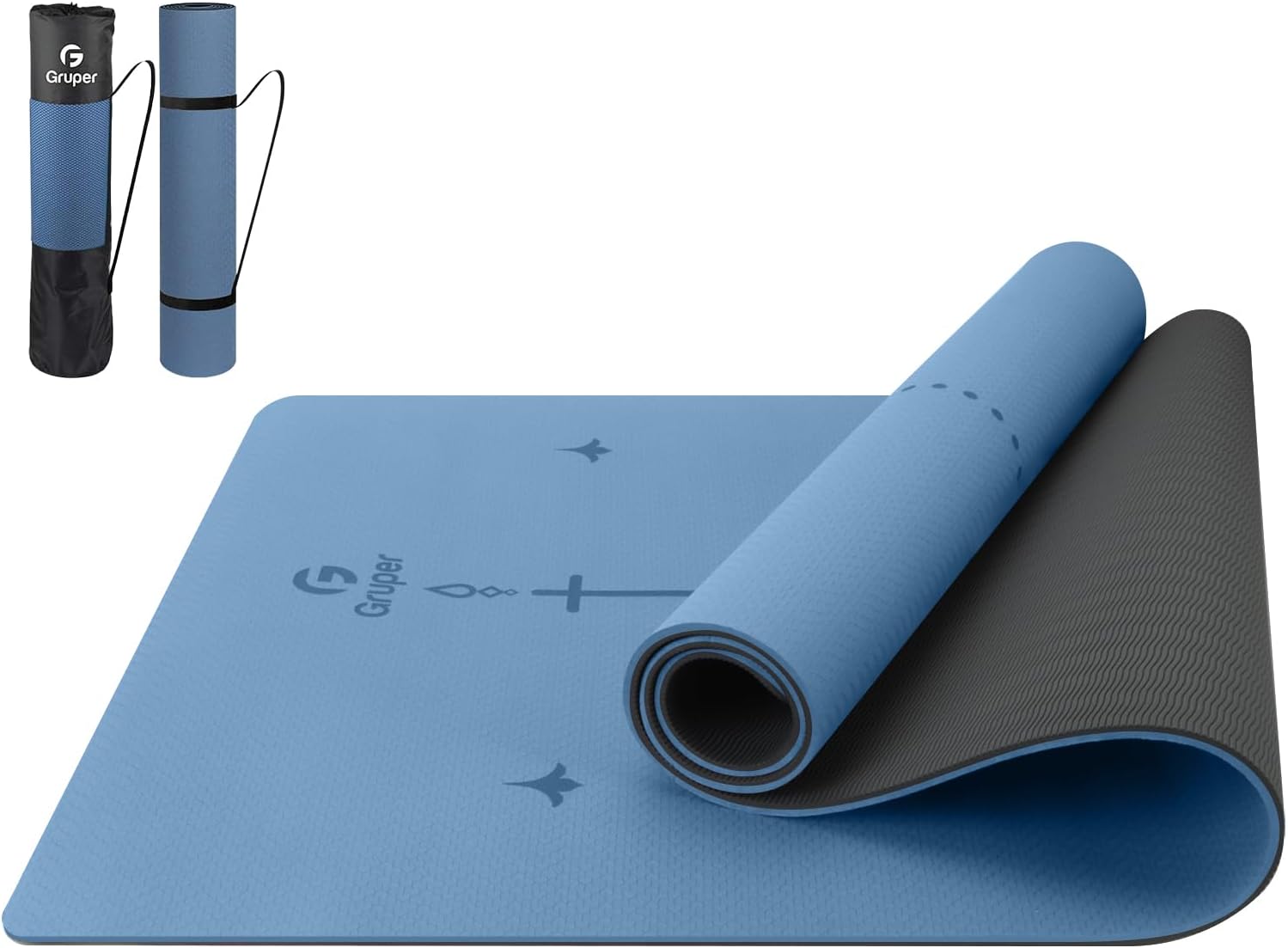
The listing gives 72 by 32 inches, and that width is the whole point. A standard mat runs about 24 inches across, so those extra eight inches are the difference between a wide-legged forward fold that feels grounded and one where a heel hangs in the air waiting to slide. Length at 72 inches covers most people up to roughly six foot two, which means your head does not run off the end of the mat in a supine twist.
Here is the part to read carefully: the title carries two thicknesses, 0.32 inch and 0.24 inch, which means the listing has variants. Check the option you are buying rather than trusting the headline. From years of teaching on studio floors, the tradeoff is predictable. Thicker is kinder to knees in kneeling poses and harder for balance in standing poses, because foam that compresses under your palms turns a steady tree pose into a negotiation. Around a quarter inch is the sensible middle for most people. If your home floor is tile over concrete and your knees complain in camel, take the thicker variant. If you spend your practice on one leg, take the thinner one.
Every mat in this category claims to be non slip, and the word that should follow it is "when dry" or "when wet." Most listings never say. What you control is the surface underneath you and how you clean the top layer, since soap residue is the most common reason a mat that gripped in January slides in June.
The budget workhorse: CAP Barbell 1/2-Inch High Density Exercise Yoga Mat with Strap
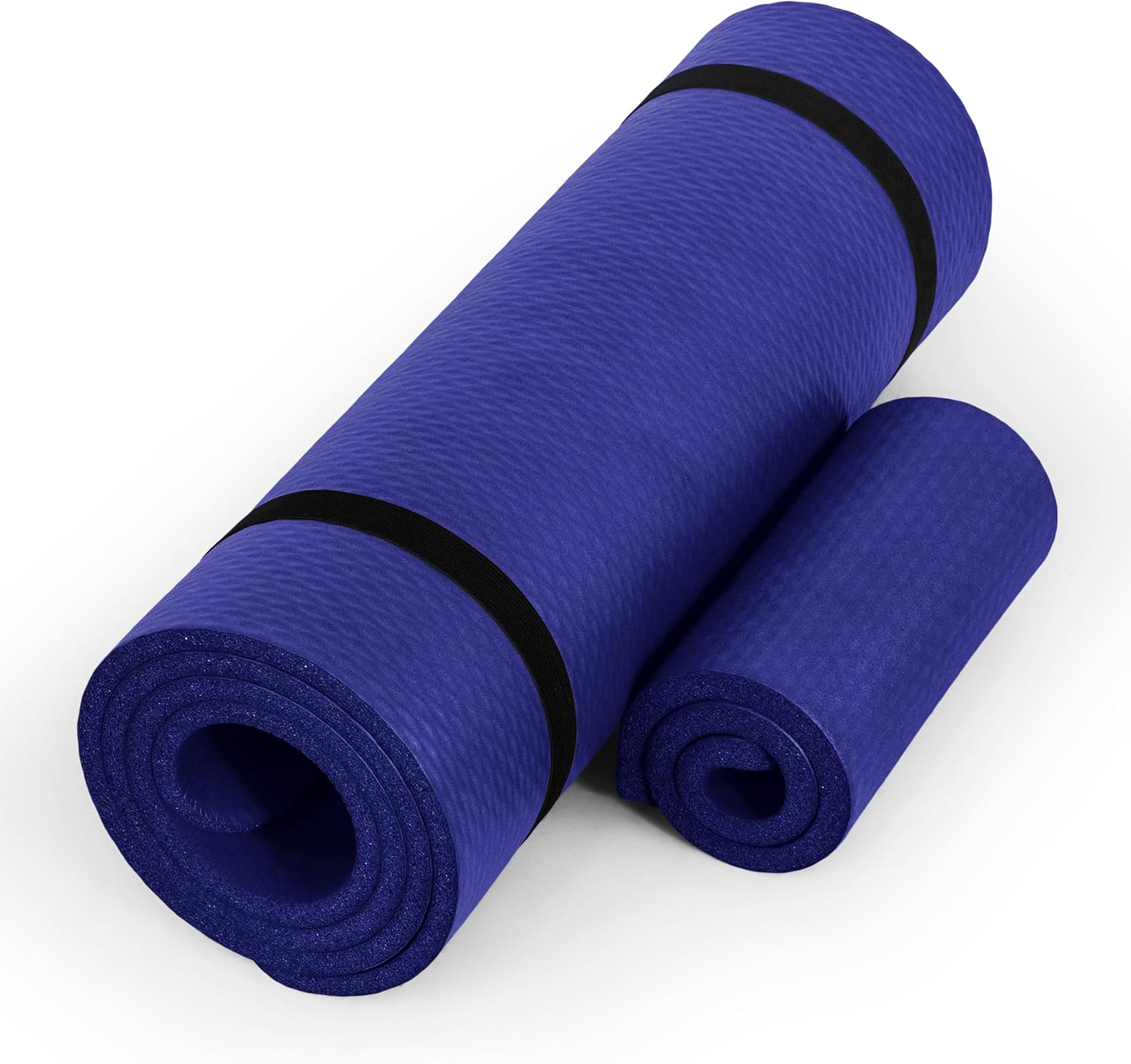
Half an inch thick, and the two words that matter in that title are "high density." Cheap foam at this thickness is a sponge. You put weight into your palms in downward dog and your wrists sink past neutral, which is exactly how students end up with sore wrists after a class they enjoyed. Density is what keeps a half-inch mat from behaving like a mattress, and it is the reason this one gets used for floor work, stretching, and home gym sessions as much as for yoga.
The listing also says multiple options, which usually means color and possibly length. Confirm the length before you buy if you are tall. A half-inch mat is the right answer for a hard floor, a stiff hip, or a knee that has opinions about lunges. It is the wrong answer for a standing balance practice, and no amount of brand loyalty changes that. Cushion is not grip, and thickness is not stability.
The included strap is a small thing that saves a big annoyance. A mat that will not stay rolled ends up jammed behind a door with the corners curled up, and a curled corner is the thing that actually trips people in a studio. Strap it, stand it up, done.
The everyday mat: Gruper Yoga Mat Non Slip with Carrying Strap
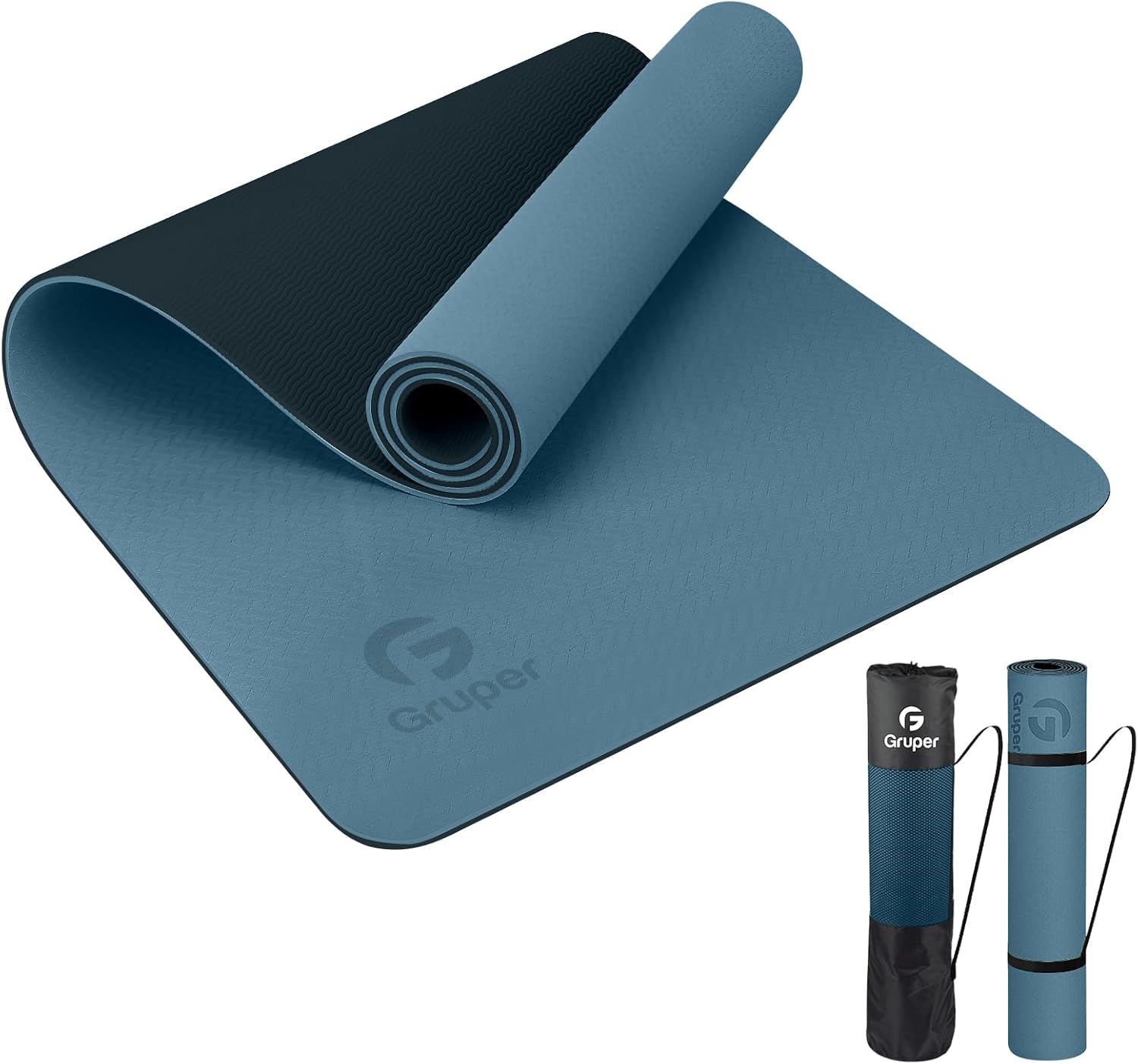
This is the mat I point a first-time student toward, and the reason is unglamorous: it is a complete kit. Mat plus carrying strap, in the standard footprint that fits studio storage racks, with a surface pitched at home practice, Pilates, and floor exercises. Nothing about it is exotic, and that is fine. Most people do not need exotic. They need a mat that does not slide and a way to carry it to class.
The listing calls it eco friendly, and I want you to interrogate that word rather than accept it. Eco friendly is a claim, not a material. It should be backed by a named material on the spec sheet, and if it is not, treat it as marketing until proven otherwise. The same goes for any mat that prints a leaf icon on the packaging. Ask what the top layer is made of, then decide whether that answer matches your priorities.
Practical notes: a standard-width mat is the right choice if you take studio classes, because wide mats do not always fit the storage racks or the space between two neighbors. If you practice at home and you have room, the wide Gruper above is the better buy. If you split your time between a living room floor and a Tuesday-night class, this one travels better.
The carrier: Manduka Breathe Easy Full Zip Yoga Mat Carrier Bag
This is not a mat, and it might be the most useful item on the page. The bag is a full zip carrier with a pocket and an adjustable strap, built to fit most yoga mats. Full zip matters more than it sounds. A stiff mat, especially a half-inch one, is awkward to feed into an open-ended sleeve, and a bag that opens flat lets you lay the mat in and close around it instead of wrestling.
The pocket holds keys, a card, and a phone, which is the difference between carrying a bag and carrying a bag plus a purse. The adjustable strap means you can wear it cross-body, which keeps your hands free on the walk from the car, and it also means the bag works for a shorter or taller person without the mat dragging on the ground.
One caution: "suitable for most yoga mats" generally means standard mats in the 24 to 26 inch range. If you buy the extra wide Gruper, measure it against the bag's listed dimensions before you assume it fits. A 32-inch mat is a wide load, and a bag that is too narrow turns a good purchase into a closet ornament. For a standard mat, though, this is the piece that decides whether your mat lives by the door or lives under the bed.
How I judge gear before it goes in the bag
I come at this from an unusual angle. I spent eight years installing sprung dance floors and gym rubber in studios and theaters before I taught full time, so I think about what a surface does under a body, not just how it photographs. The questions I ask about any mat or accessory are the same ones I would ask about a floor.
First, what happens when it gets wet? Texture sells, chemistry decides. A pebbled surface looks grippy and can still turn slick at minute 40 of a warm room. Second, how far does it compress under bodyweight? A little give is comfort. Too much and your wrists and knees pay for it in every standing pose. Third, does it stay where you put it? Corner curl and edge lift are safety issues, not cosmetic ones. Fourth, will you actually carry it? The best mat in the world is the one you roll out on a Tuesday, and a mat that stays in the car because it is a pain to lug is a mat you do not own in any meaningful sense.
Those four questions are why these four products sit together on one page. Each answers a different one.
The reference table
Same products, same order of importance: fit, thickness, and what it does best. "Check current Amazon price" links go to each product's own page.
| Product | Best for | Listed thickness | Size | What to know |
|---|---|---|---|---|
 Visit on Amazon → Visit on Amazon →Gruper Extra Wide Non Slip Exercise Mat |
Wide stances, tall frames, home practice with room | 0.32 in or 0.24 in depending on variant | 72 x 32 in | Check which thickness variant you are buying; the width is the feature |
 Visit on Amazon → Visit on Amazon →CAP Barbell 1/2-Inch High Density Exercise Yoga Mat with Strap |
Knees and hips on hard floors, stretching, floor work | 0.5 in | Multiple options | Density is the point; strap included |
 Visit on Amazon → Visit on Amazon →Gruper Yoga Mat Non Slip with Carrying Strap |
First mat, studio classes, Pilates and floor exercises | See listing | Standard footprint | Strap included; check the material behind the eco claim |
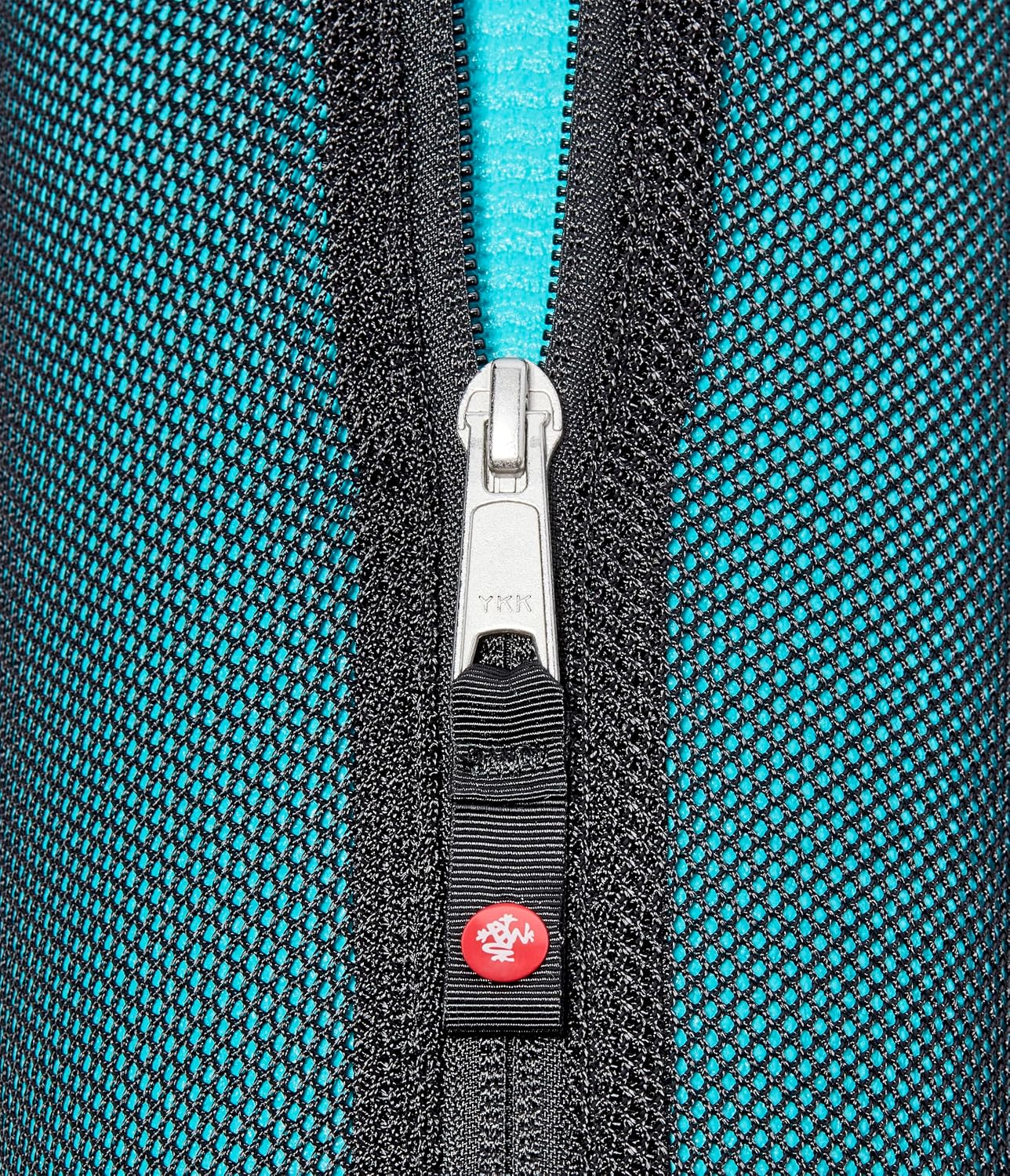 Visit on Amazon → Visit on Amazon →Manduka Breathe Easy Full Zip Yoga Mat Carrier Bag |
Carrying and storing a mat, commuting to class | Not a mat | Fits most mats | Full zip, pocket, adjustable strap; measure before pairing with a wide mat |
What the numbers actually tell you
Thickness is the number people shop by and the number most likely to mislead. A listing can carry two thicknesses under one title, which is exactly what happens with the extra wide Gruper. Read the variant. Then decide based on your floor and your joints rather than on the biggest number available. Half an inch of high density foam, like the CAP Barbell mat, is a real tool for kneeling poses on a hard floor. It is a poor tool for a balance practice, because every millimeter of compression under your palm is a millimeter of wobble at your ankle.
Width is the number people ignore and then regret. Standard mats are built for studio racks and small apartments. Thirty-two inches is built for a body that wants room. Neither is better in the abstract, and the honest answer is that a wide mat at home plus a standard mat for class is the setup most of my regular students end up with.
Grip is the number nobody prints. The useful question is not whether a mat is non slip, because every listing says it is. The useful question is what the top layer is made of, because that is what decides whether you are still planted at minute 40. Ask it of any mat before you buy, including these.
The carrier is the number people forget entirely, and it is the one that determines whether the other three purchases get used. A mat that lives rolled and strapped by the door gets rolled out. A mat that lives crumpled in a trunk does not.
Should you buy the Gruper extra wide mat?
Yes, if your feet keep leaving the mat or you are tall enough that standard mats feel like a landing pad for one. The 72 by 32 inch footprint is the reason to buy it, and the two thickness options let you match it to your knees and your floor. Just confirm which variant you are ordering, because the title lists both.
Should you buy the CAP Barbell half-inch mat?
Yes, if your practice happens on a hard floor and your knees have a vote. The half-inch cushion and the high density spec are what separate it from the pile of soft foam mats that feel lovely for a week and useless by month three. Skip it if you spend your class on one leg, because a half-inch mat makes balance harder, not easier.
Should you buy the Gruper mat with the strap?
Yes, if you are buying your first mat or you want a spare that lives in the car. It is the straightforward version of the purchase: mat, strap, standard size, no decisions required. Treat the eco friendly wording as a question to ask rather than an answer, and confirm the material on the listing before you decide it matches your priorities.
Should you buy the Manduka carrier bag?
Yes, if your mat currently lives on the floor of your car or in a pile by the front door. Full zip, a pocket, and an adjustable strap are the three things a carrier actually needs, and this one has all three. Measure your mat first if it is the extra wide one, because "most mats" is a standard-width promise.