Most people buy a yoga mat the way they buy a phone case: quickly, cheaply, and without reading anything. Then they take one hot class, slide in downward dog around minute 40, and start shopping all over again. If you are looking for the best yoga mats for a home practice you will actually keep, the decision comes down to four things you can read off a spec sheet before you spend a dollar: how wide the mat is, how thick it really is, what the top layer is made of, and whether the maker is willing to say what that surface does when it is wet.
I teach vinyasa and a Thursday recovery class in Portland, and before I taught I spent eight years installing sprung floors and gym rubber in studios and theaters across the Midwest. That job taught me that "non-slip" is a measurable claim, not a mood. This roundup covers five products: four mats and one mat-adjacent pad, each chosen because it answers a different real problem. The standard home mat. The wide mat for tall or broad bodies. The hot-room mat. The bulk order for a studio, a school, or a family. And a cushioning pad for knees and wrists that have opinions. Some links in this article are affiliate links, which means I earn a small commission if you buy through them. It does not change what made the list, and nothing here is a sponsored placement.
Related: How to Clean a Yoga Mat Without Wrecking the Grip
Quick answer
The Gaiam Yoga Mat - Premium 5mm Solid Thick Non Slip Exercise & Fitness Mat is the strongest fit for most home practices because its 68 by 24 inch footprint and 5 mm cushion sit in the middle of the range where balance, knee comfort, and portability all still work. Choose the Gruper Yoga Mat instead when you are tall, broad in the shoulders, or simply tired of your hands landing on bare floor beside your mat.
Yoga mats worth comparing
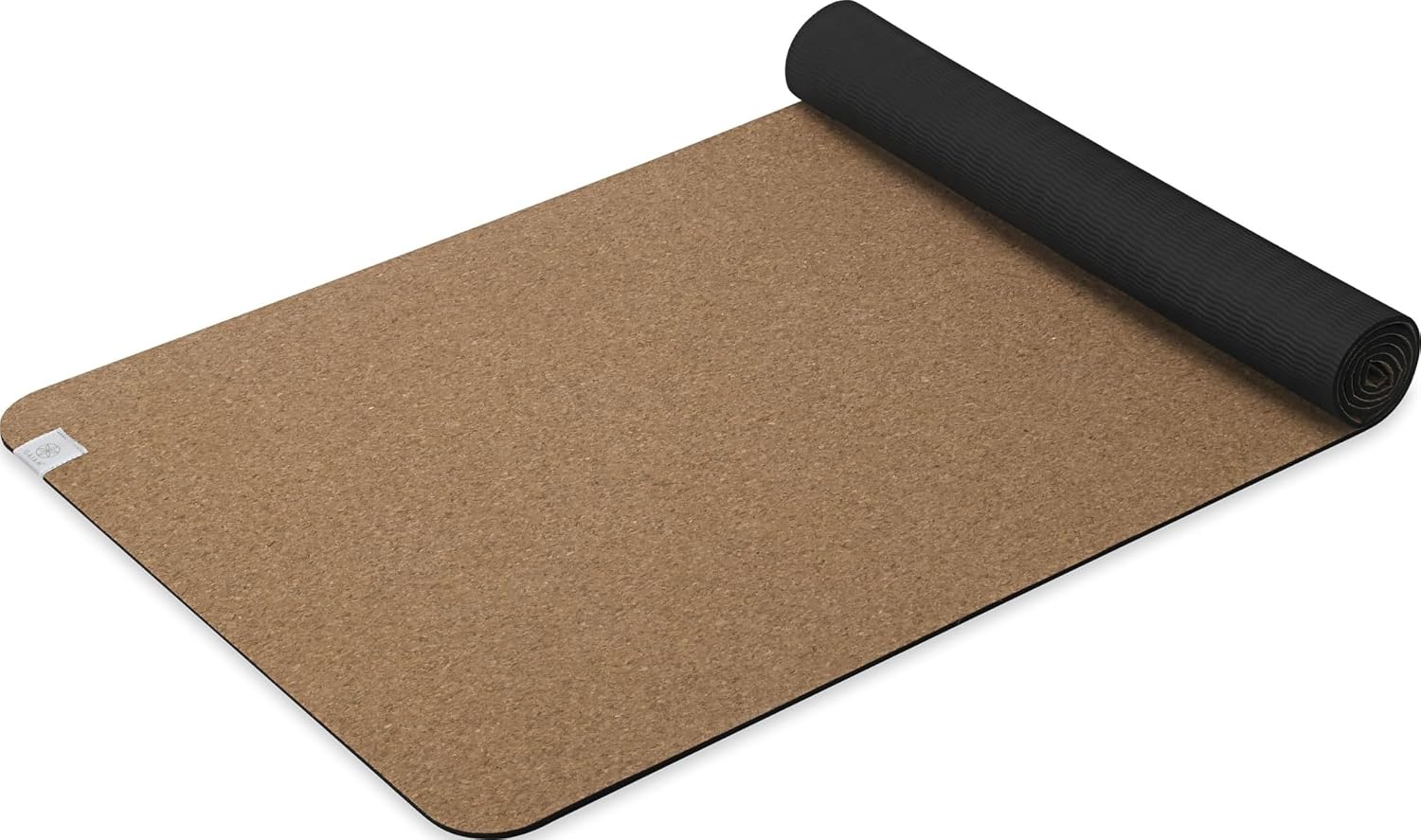
Gaiam Yoga Mat - Premium 5mm Solid Thick Non Slip Exercise & Fitness Mat for All Types of Yoga, Pilates & Floor Workouts (68" x 24" x 5mm)
A 68 by 24 inch mat listed at 5 mm thick and marketed for yoga, Pilates, and floor workouts. The solid, non-slip surface and mid-range cushion make it the easiest of these to hand to a beginner.
Visit on Amazon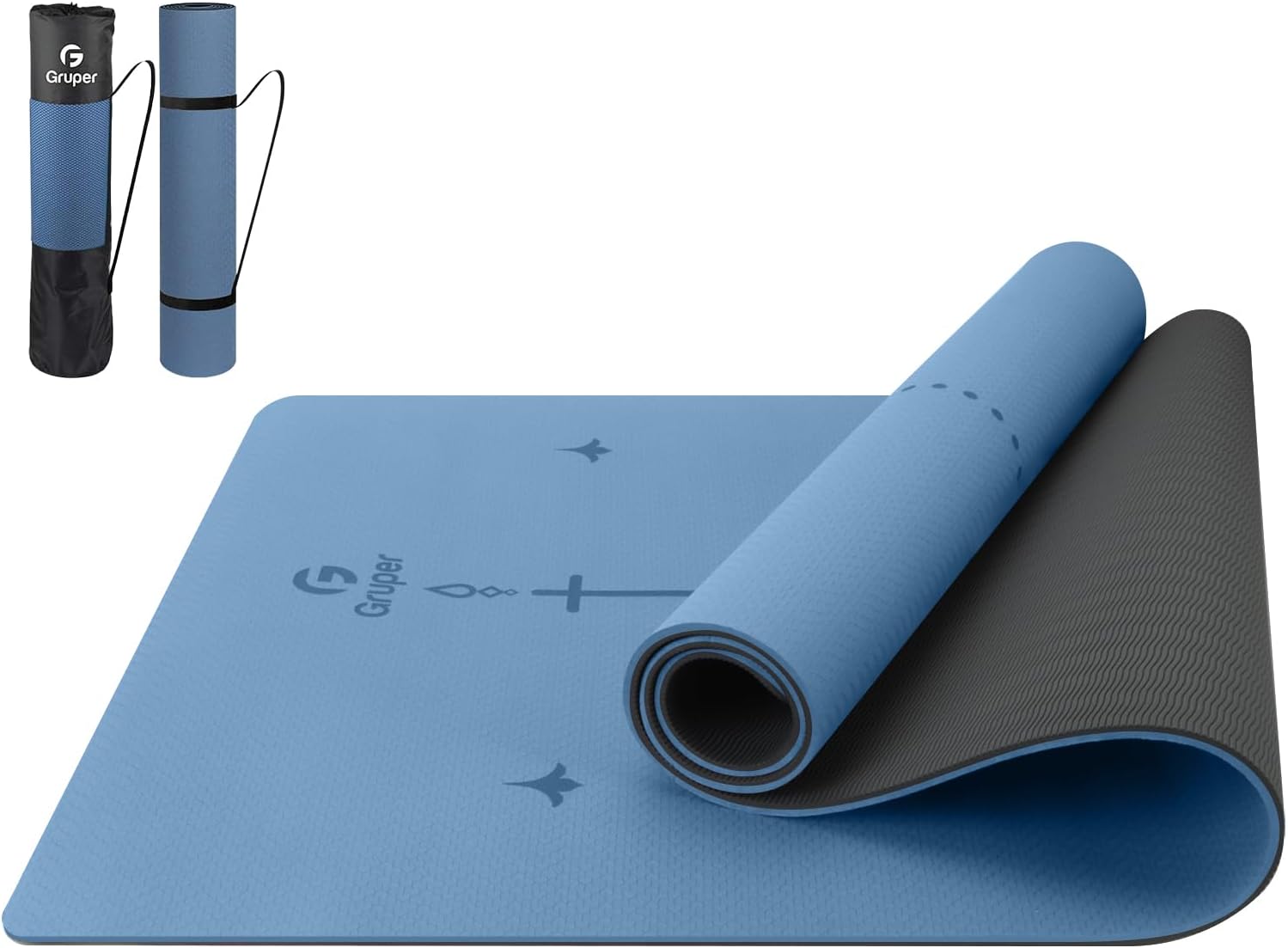
Gruper Yoga Mat, 72" x 32" x 0.32"/0.24" Extra Wide Non Slip Exercise Mats
Extra wide at 72 by 32 inches, with thickness listed at 0.32 inch and 0.24 inch, which works out to roughly 8 mm and 6 mm. The added width is the point: it keeps long arms and wide stances on the mat.
Visit on Amazon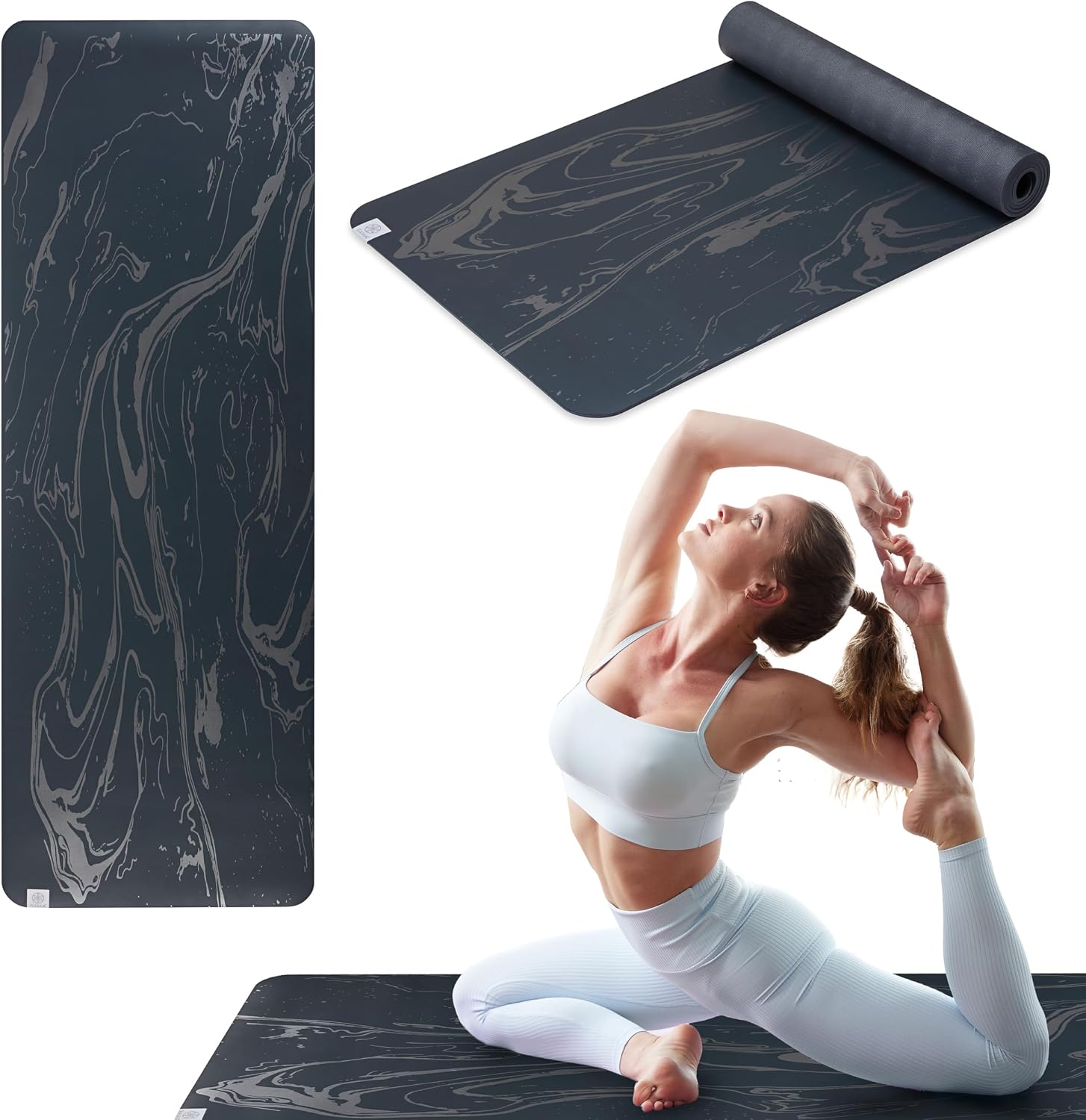
Gaiam Dry-Grip Yoga Mat, Non-Slip, Hot Yoga
A mat built around a dry-grip surface and marketed specifically for hot yoga. If your practice happens in a heated room, this is the one to weigh against the standard Gaiam.
Visit on Amazon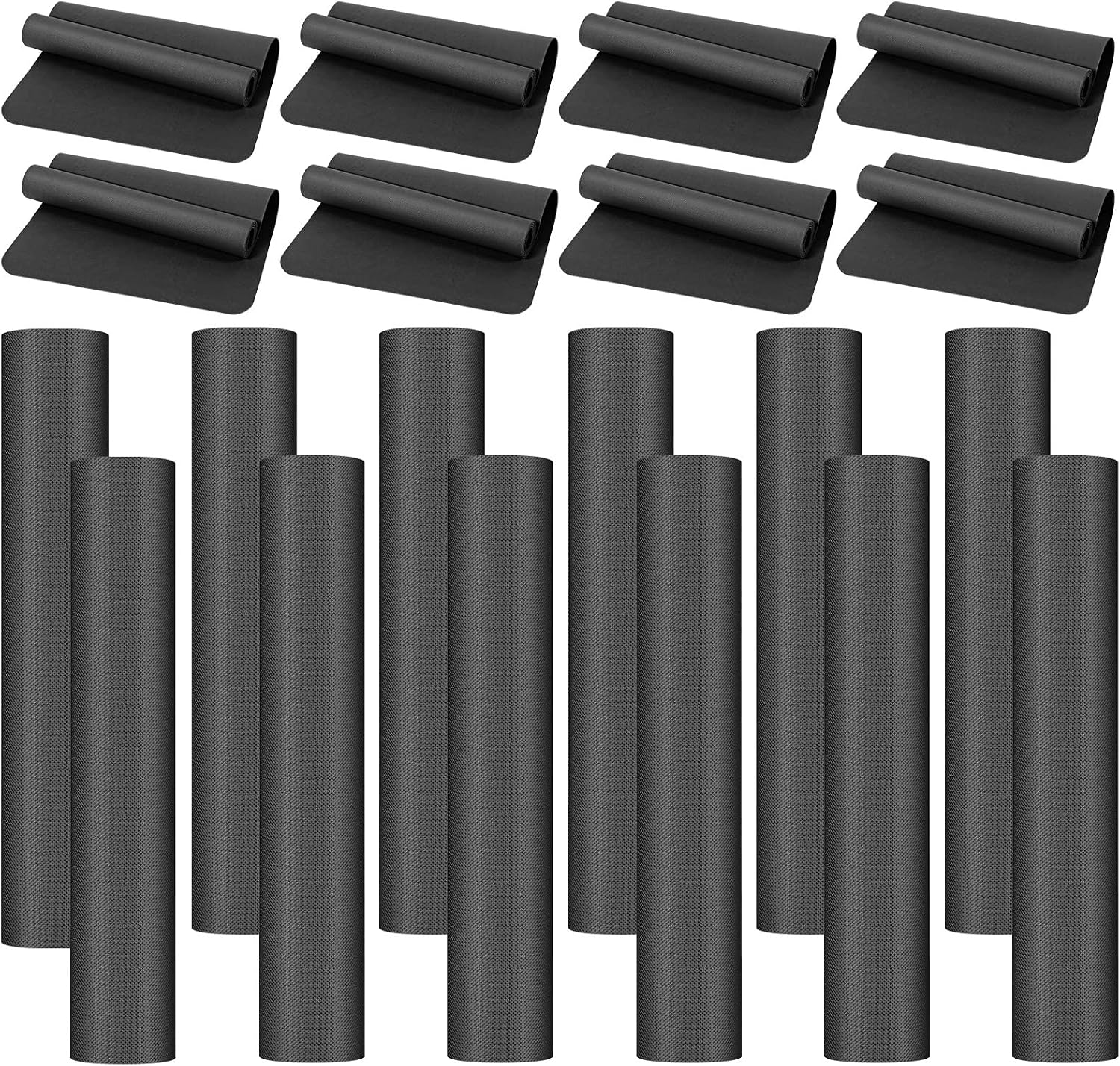
LEIFIDE 10 Pack Yoga Mat Bulk 68'' x 24'' x 4mm Thick Yoga Mat
Check current Amazon price
Ten mats at 68 by 24 inches and 4 mm thick, sold as a bulk pack. Sensible for studios, schools, and families where mats get loaned out rather than babied.
Visit on Amazon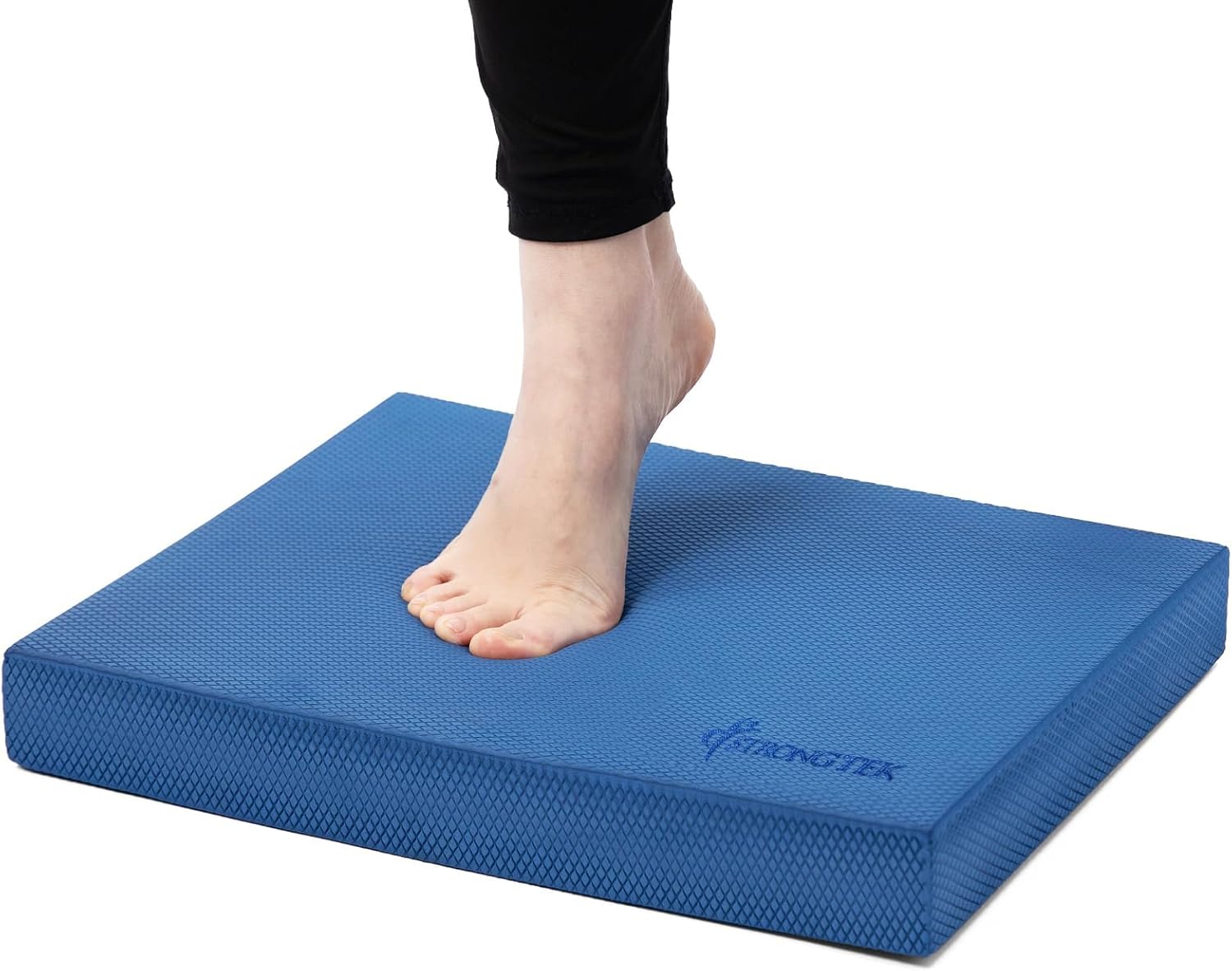
StrongTek Foam Balance Pad, High-Density TPE, 15.8 x 13 x 2 in, Non-Slip
A 15.8 by 13 by 2 inch high-density TPE pad with a non-slip surface. It is not a mat. It is a cushioning and balance tool for kneeling poses, wrist-free work, and ankle stability drills.
Visit on AmazonPrices and availability may change. Check the retailer for current details.
How these products were compared
This guide compares footprint and width, stated thickness, the surface material and how the maker describes its grip, intended use, and care requirements. Product names, images, and retailer links are matched to the exact listing so that every card points to the product shown. Everything in the cards comes from the manufacturer's own product description, and where a listing does not state something, this guide does not guess at it. Thickness figures are quoted as the seller publishes them, and where a listing gives inches, the millimeter equivalent is noted only as a conversion, not as a measurement anyone took.
How to choose the right yoga mat
Start with width, because it is the spec people ignore and then regret. A 24 inch mat is the industry default, and it is fine if your shoulders are average and your stance is narrow. If you are tall, or if your hands keep sliding off the edges during wide-legged poses, the 32 inch width of the Gruper is not a luxury, it is a correction. Measure your wingspan from fingertip to fingertip in a standing position, then compare it to the mat width. If your span is close to or wider than the mat, buy wider.
Thickness is the second decision, and it is a trade-off rather than a score. Four millimeters is thin enough that you feel the floor, which is good for balance and bad for knees. Five millimeters is the middle ground most people should start with. Six to eight millimeters adds cushion for kneeling and seated work, at the cost of stability in standing balances, because a thicker surface lets your ankles and wrists rock. The number that matters most is not the one printed on the box but the one under your palms in downward dog: if your hands sink noticeably into the surface, your wrists are working harder than they need to. Cushion is not grip, and a soft mat is not automatically a safer mat.
Then comes the surface, which is a chemistry question dressed up as a texture question. Embossing and raised patterns sell mats, but the top layer material is what decides whether you slide once you sweat. A mat marketed for hot yoga is making a specific claim about wet performance, and that claim is worth paying for if you practice in a heated room. A general-purpose mat is usually making a dry-grip claim, and there is nothing wrong with that as long as you know which one you bought. If you want the longer version of this, my notes on how to clean a yoga mat cover why harsh cleaners strip the top layer and turn a grippy mat into a slippery one.
Finally, think about lifespan instead of sticker price. A mat you keep for five years is cheaper than three mats you replace every eighteen months, even if the first one costs more up front.
Gaiam Yoga Mat - Premium 5mm Solid Thick Non Slip Exercise & Fitness Mat
The top pick here is the least dramatic product in the group, and that is the argument for it. Gaiam lists it at 68 by 24 inches and 5 mm thick, marketed for yoga, Pilates, and floor workouts, with a solid non-slip surface. Five millimeters is the thickness I would pick for a single mat that has to do everything: enough cushion for a knee down in a lunge, thin enough that you can still feel the floor in tree pose. The 68 inch length covers most practitioners, and the 24 inch width is the standard footprint, so it fits in a typical home practice space without rearranging furniture.
The trade-off is that this is a general-purpose mat, not a specialist. It is not sold as a hot yoga mat, so if you practice in a heated room and you sweat heavily, the dry-grip model below is the more honest choice. It is also not extra wide, so a tall practitioner with a broad stance will notice the floor at the edges. What it is: the mat I would hand to a beginner, a returning practitioner, or anyone who wants one mat for yoga and the occasional Pilates video.
Alternatives to consider
The Gruper Yoga Mat, 72" x 32" x 0.32"/0.24" Extra Wide Non Slip Exercise Mats is better suited to tall and broad practitioners, because 32 inches of width keeps hands and feet on the surface in wide stances, and the 72 inch length adds two inches over the standard mat. It is offered in two thicknesses, 0.32 inch and 0.24 inch, which convert to roughly 8 mm and 6 mm. The Gaiam Dry-Grip Yoga Mat, Non-Slip, Hot Yoga is a stronger fit when your practice happens in a heated room, since it is the only mat here whose listing makes grip the headline claim and names hot yoga as the use case.
The LEIFIDE 10 Pack Yoga Mat Bulk 68'' x 24'' x 4mm Thick Yoga Mat covers the opposite problem: volume. Ten mats at 68 by 24 inches and 4 mm thick is a practical purchase for a studio lending library, a school program, a church hall, or a family where four people practice and nobody wants to share. The 4 mm profile keeps them light and stackable, and it also means they are thin under kneeling poses, which is where the StrongTek Foam Balance Pad, High-Density TPE, 15.8 x 13 x 2 in, Non-Slip comes in. It is not a mat and should not be bought as one. It is a 2 inch high-density TPE pad for adding cushion under knees and forearms, for balance and ankle work, and for anyone rebuilding strength after an injury who needs a softer surface for part of a session and a firm one for the rest.
Day-to-day use and maintenance
How you store a mat decides how long it lasts. Roll it rather than folding it, because fold lines become permanent creases and creases become weak spots where the surface separates. Roll with the top surface facing out, store it away from direct sun, and do not leave it in a hot car, since heat is what makes foam layers delaminate and rubber smell. If your mat lives in a bag between classes, unroll it at home and let it breathe.
Clean according to the maker's instructions, and start gentle. Most mats only need a wipe with a damp cloth and a mild soap, followed by air drying away from sunlight. Alcohol, bleach, and heavy citrus cleaners are the usual culprits behind a mat that suddenly feels slick, because they can strip or glaze the top layer. If you sweat heavily, clean more often rather than more aggressively. A quick note on safety: a mat cannot fix a balance problem or a joint problem, and a thicker mat does not make a hard floor safe for high-impact work. If you have wrist, knee, or hip pain that shows up in class, the mat is one variable and a qualified teacher or clinician is a better source of advice than any product listing.
Buying checklist
- Measure your practice space and your fingertip-to-fingertip span, then compare both to the mat's footprint.
- Choose thickness based on your normal practice, not on the worst pose you do twice a year.
- Confirm the exact listing states the surface material and the intended use, especially if you practice hot.
- Read the cleaning and care instructions before the first use, not after the first bad smell.
- Verify the current retailer price, availability, and return terms through the product link.
Final recommendation
Choose the Gaiam Yoga Mat - Premium 5mm Solid Thick Non Slip Exercise & Fitness Mat when you want one dependable mat for a home practice and you value balance over maximum cushion. Choose the Gruper Yoga Mat when width is your limiting factor, or the Gaiam Dry-Grip Yoga Mat when you practice in a heated room and wet grip is the whole point. If you are outfitting a group rather than a person, the LEIFIDE 10 Pack is the practical buy, and the StrongTek Foam Balance Pad belongs on your list only as a companion for knees, wrists, and balance drills, not as a replacement for a mat.