I teach six classes a week in Portland, Oregon, and the least glamorous part of the job is the hauling: two mats, a pair of blocks, a strap, a blanket, a change of clothes, a water bottle and whatever a student left behind on Thursday. Do that on a bus and a walk over the Hawthorne Bridge and your shoulder starts filing complaints. So when readers kept asking me about Athletico vs Easton equipment bags, I understood the appeal immediately. These are bags designed by people who know the thing you carry is long, awkward and heavier than it looks.
Disclosure, in the first paragraph where it belongs: the links here are affiliate links, and if you buy through them I earn a small commission at no extra cost to you. I only link gear I would mention to a student standing in front of me, and no brand paid for a spot in this comparison.
One caveat before we start. I am a yoga teacher with a dancer's knee and strong opinions, not a tennis pro, and I am not going to pretend I have spent a season on court with these four bags. What I can do is read a bag the way I read a mat spec sheet: what it is built to hold, where the load sits, what the listing brags about, and what it quietly leaves out.
Related: How to Clean a Yoga Mat Without Wrecking the Grip
The four bags in this comparison
Two Athletico designs and one Easton, plus a second Athletico sling listing that reads like the same bag on a different page. That last detail matters more than it sounds, and I will come back to it.
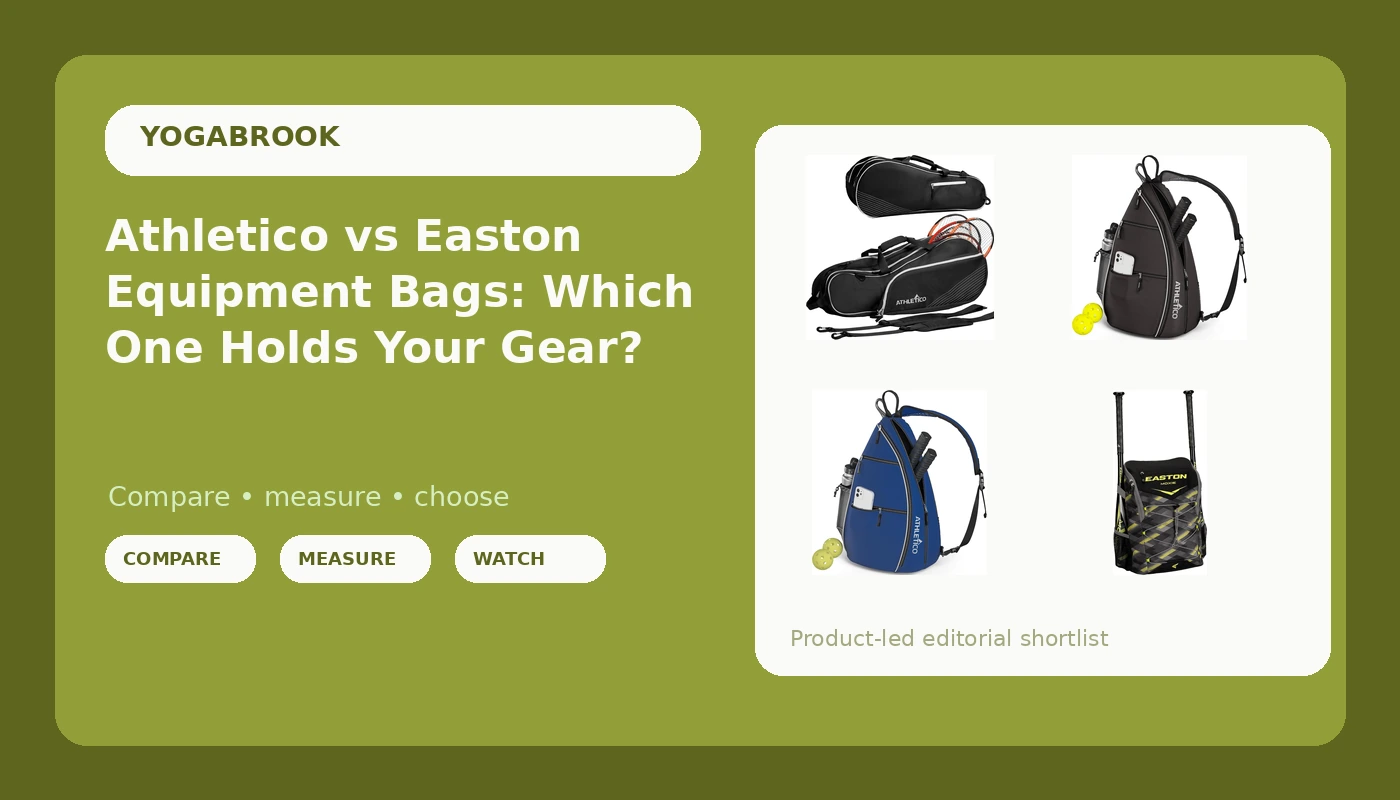
Athletico 6 Racquet Tennis Bag
Six racquets of space, padding sold as racket protection, and the only long bag here with a real chance of swallowing a rolled mat
Long and one-sided; the worst fit in this group for a bike commute or a crowded bus
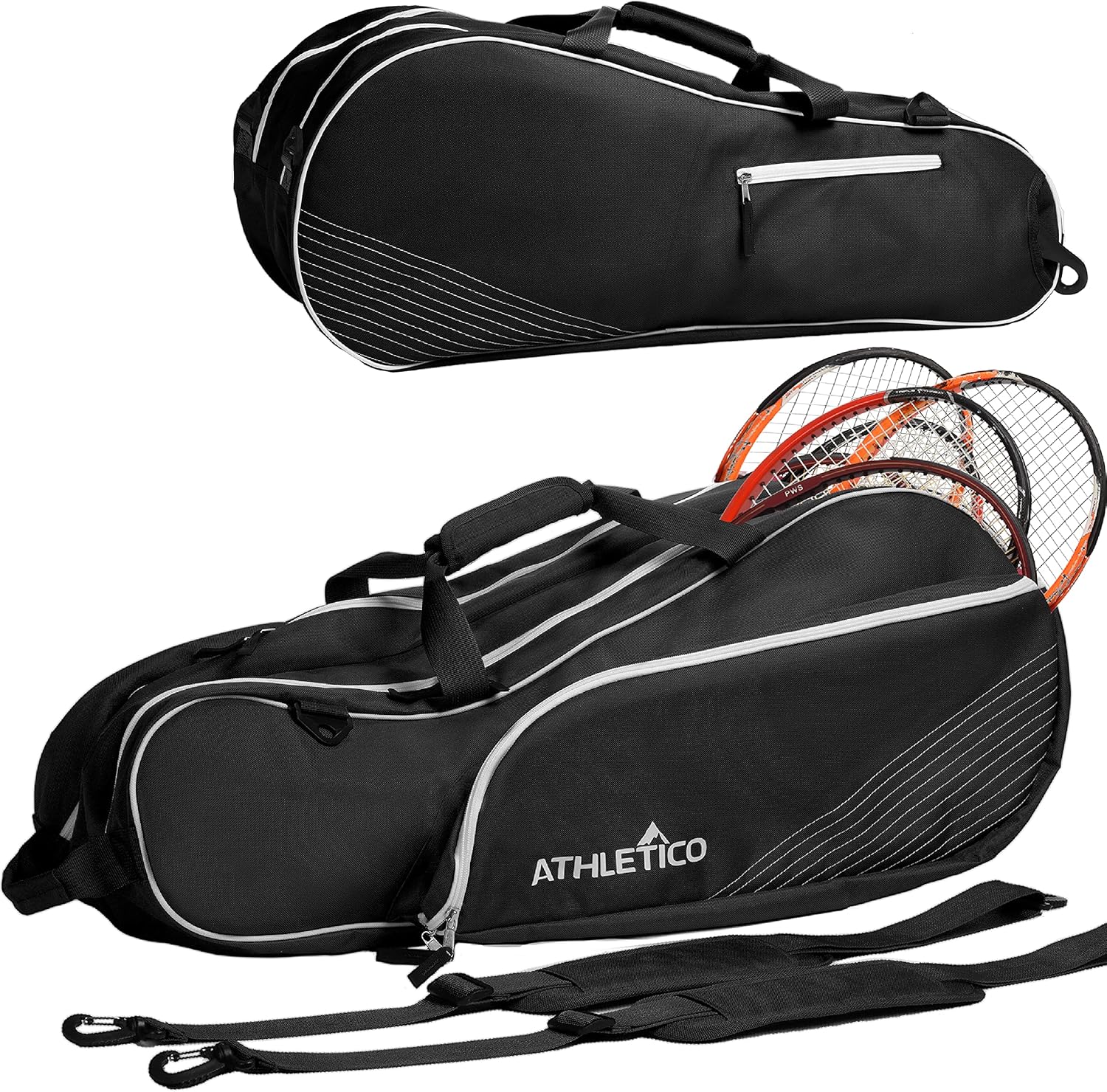
Athletico Sling Bag, crossbody backpack
Crossbody access: swing it to your chest, get a paddle or phone out, keep both hands free
One shoulder carries the whole load; nearly identical to a second Athletico sling listing
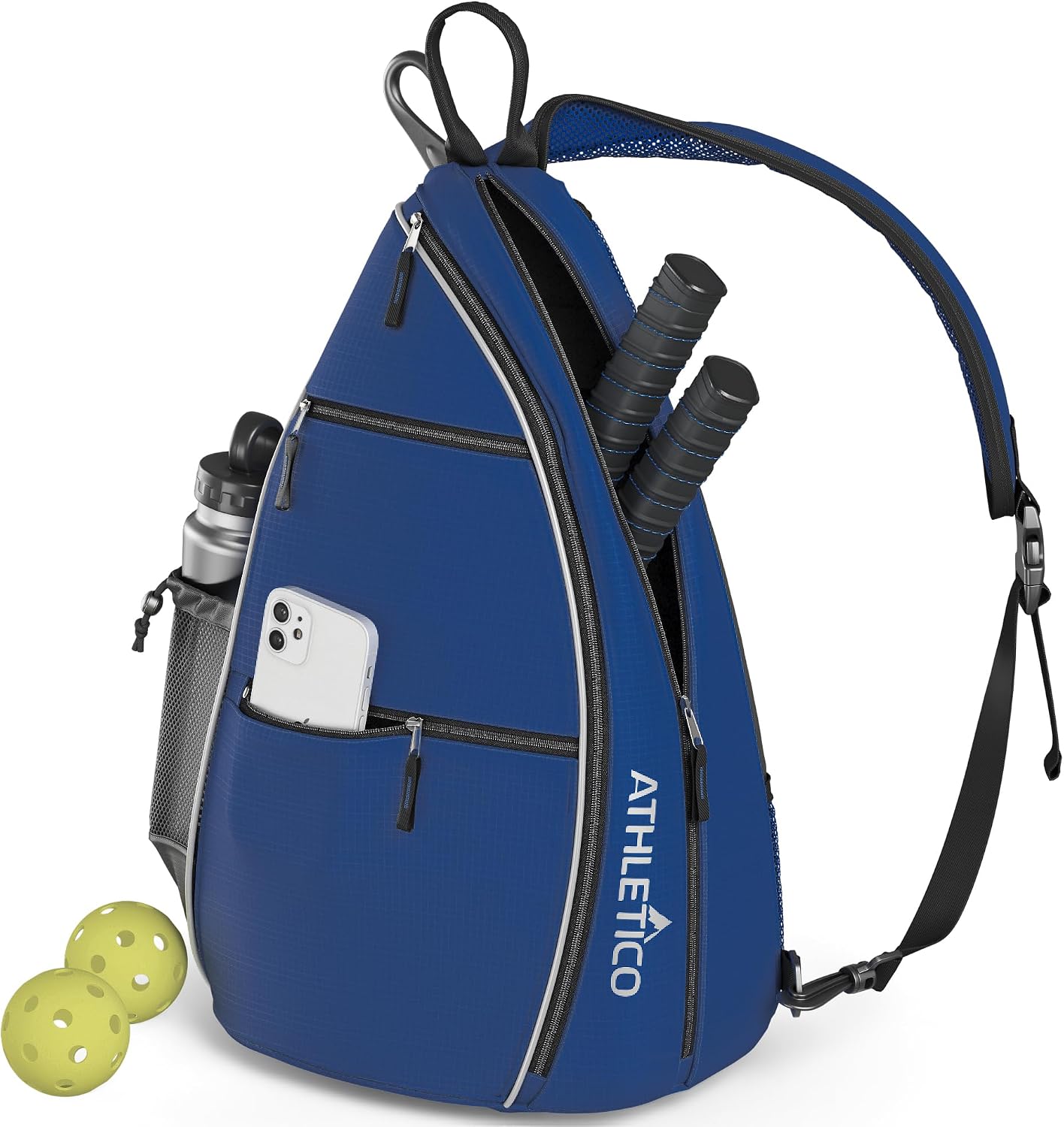
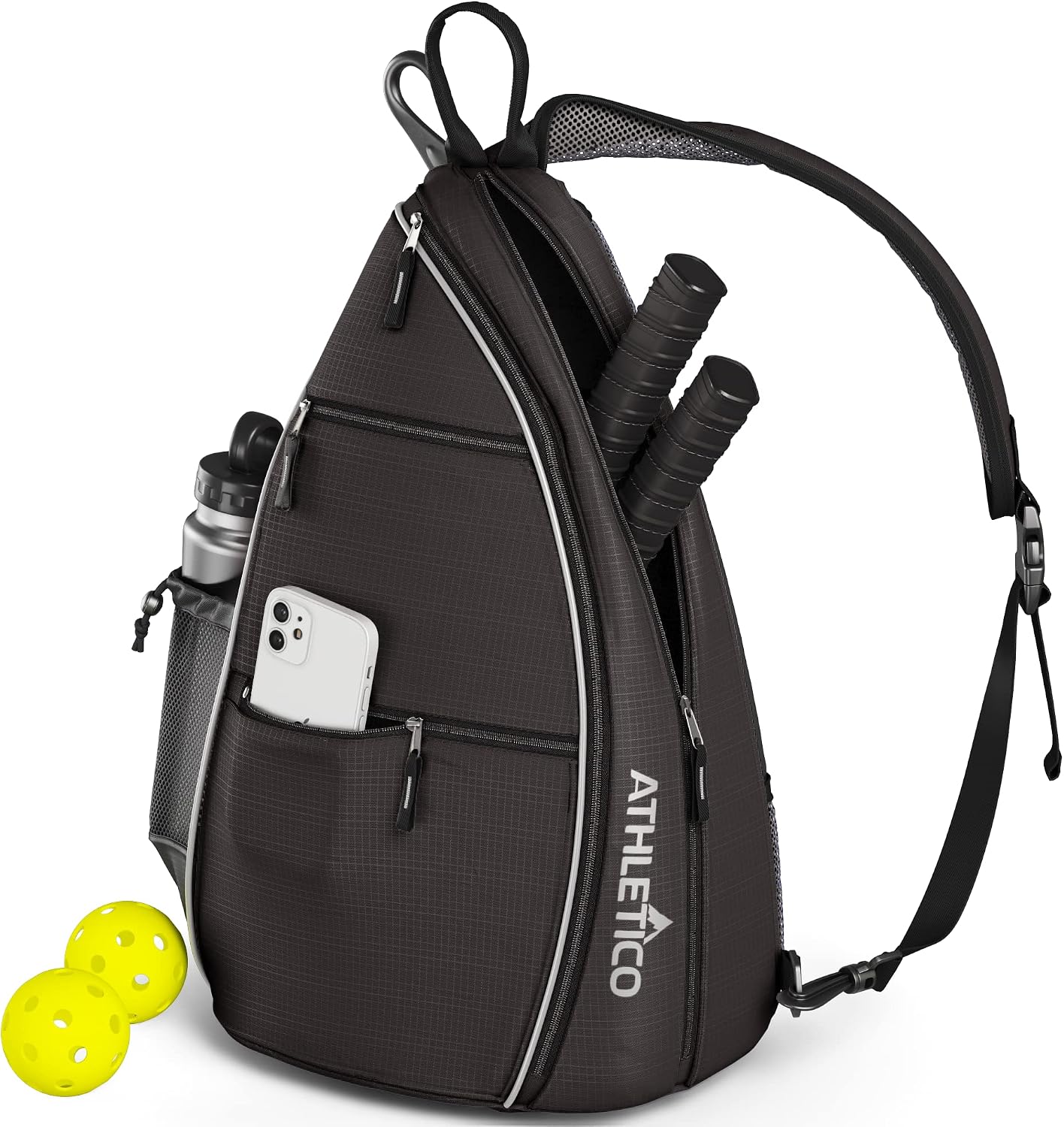
Athletico Sling Bag, crossbody backpack (second listing)
The same sling brief on a separate page, worth opening if the other listing is not what you wanted
Redundant listing: you cannot tell the difference between the two from the name alone
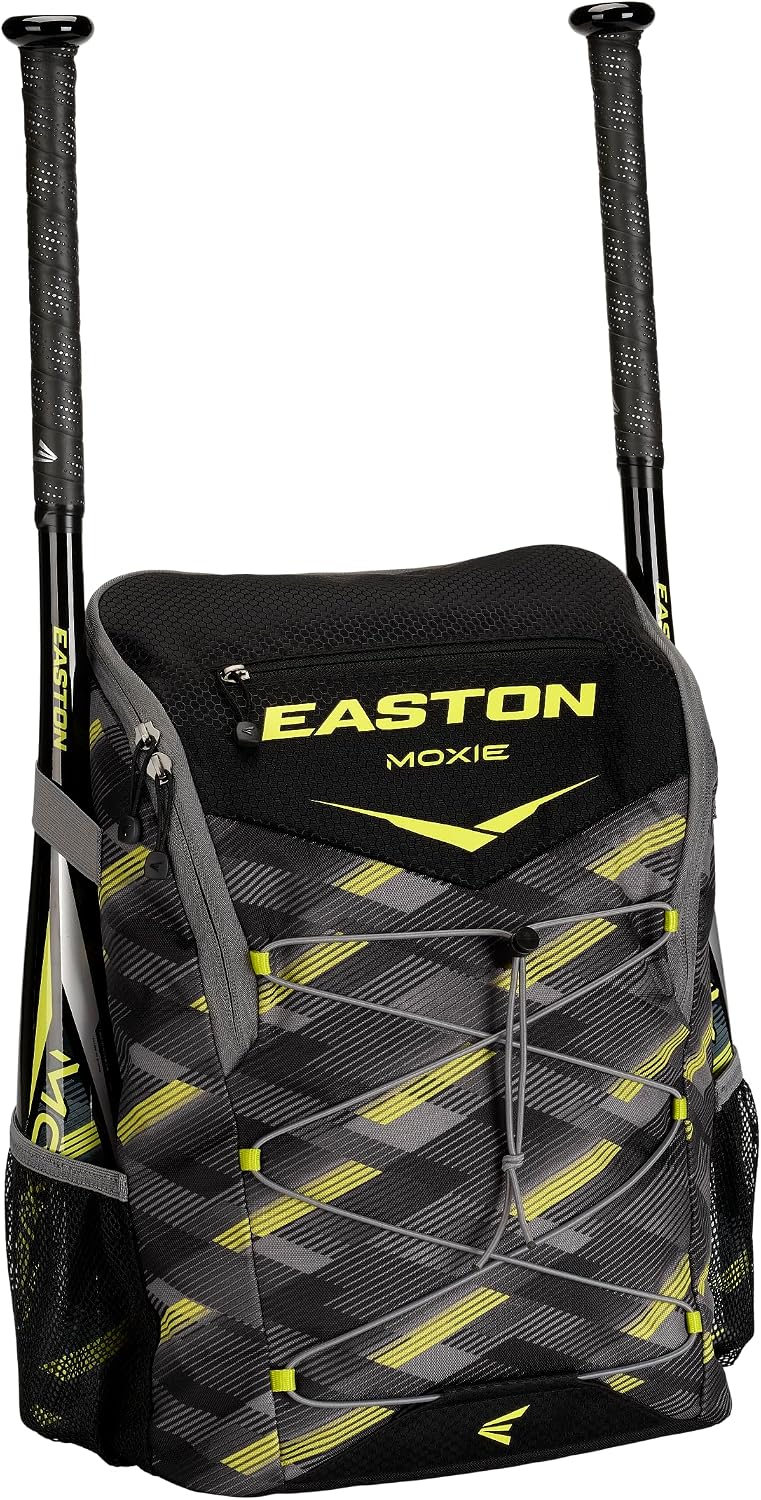
Easton MOXIE Backpack Equipment Bag
Two straps and a backpack frame, the most comfortable way to carry a heavy load here
Baseball-first interior built for a glove and a bat, not a mat or a racquet
Prices and availability were captured from Amazon Creators API and may change.
How I judge a bag I have to carry every day
My rules come from eight years installing gym floors and eleven years teaching, not from a lab. A bag earns its place by passing four tests.
The load test comes first. A rolled mat, two blocks, a strap and a full water bottle weigh more than most people guess, and where that weight sits decides whether you can carry it for twenty minutes or two. A backpack puts it on your frame. A sling puts it on one shoulder, which is fine for a paddle and a towel and miserable for everything you own.
Then the access test. Can you get a phone out while the bag is on your body, standing on a sidewalk in the rain? Anything that forces you to set it down in a puddle fails this one in Portland every week of the year.
The floor test matters more than it should. I set my bag down on studio floors and gym rubber all day. A bag that flops over and spills loses points I do not give back.
And the smell test, which no spec sheet addresses. Sweaty clothes in a closed bag is a problem you solve with a wet bag inside, not with a better zipper. Air gear out, never seal it damp.
Athletico 6 Racquet Tennis Bag: the long-gear specialist
The Athletico 6 Racquet Tennis Bag is the only product here built around objects that are long. Six racquets of space, padding the listing sells specifically as racket protection, and a unisex design aimed at men, women, youth and adults rather than at one tour demographic.
That shape is exactly why a yoga teacher has any business talking about it. A rolled mat is roughly racquet length, so a bag with room for six 27-inch objects is the one in this comparison with a realistic chance of holding a mat, a strap and a change of clothes together. It is also the bag that makes the least sense on a bicycle. Long, wide and carried on one side, it will find your hip on every pedal stroke and take more than its share of a crowded bus aisle.
Padding is the claim I would verify first, and verify at the edges. Padding in the middle of a panel is easy; padding at the seams is where brands save money. Load it, set it down, and listen for whether the frames knock together. The listing also leans on "professional or beginner," which is marketing for "we did not design it for one level," and that is genuinely fine here. Nobody needs a tour bag to carry a paddle and a towel.
Best for: someone who plays tennis or pickleball several times a week and wants one bag for racquets, a mat and a change of clothes. Also the pick if you share gear with a teenager, since the all-ages brief is the whole point.
Check the Athletico 6 Racquet Tennis Bag on Amazon
The two Athletico sling bags: same brief, two listings
Athletico sells a sling bag as a crossbody backpack for pickleball, tennis, racketball and travel, and this comparison includes two separate listings of what reads like the same product. I am not going to pretend that is not annoying.
The design brief is smart. A sling swings from your back to your chest with one hand, so you can pull out a paddle or a phone without taking it off, and it keeps both arms free for a mat, a coffee or a dog leash. For a teacher who carries small things but not a full prop kit, a sling is the most practical shape in this group. For travel it doubles as a personal item that does not look like a gym bag.
Where a sling gives up is weight. One strap, one shoulder, and the whole load lands on the side of your neck that already hates your tote bag. If your daily kit is a paddle, a towel, a bottle and a phone, a sling is perfect. If it is a mat, blocks, a blanket and a laptop, this is not the bag, no matter how good the strap is.
Between the two listings: open both, compare the version you want and the current Amazon price, then check out. Two listings of one Athletico design do not always match, and the difference is not always explained on the page.
See the first Athletico Sling Bag listing on Amazon
See the second Athletico Sling Bag listing on Amazon
Easton MOXIE backpack: built for a bat, useful in a studio
The Easton MOXIE is a backpack equipment bag sold for baseball and softball, from t-ball through rec and travel, in multiple styles. On paper it has nothing to do with yoga. In practice it is the only two-strap bag in this comparison, and two straps are the single biggest upgrade you can make to a heavy daily carry.
A backpack puts the load on your frame and leaves your hands free, which matters when you are carrying a mat under one arm and a coffee in the other. The shape suits a teacher's small gear: bands, a strap, a towel, a notebook, a change of clothes. Blocks are the open question, because two blocks are bulkier than a glove and a bottle, and this bag was designed around the latter. Check the interior against your own props before you commit.
What it is not is a racquet or mat bag. Baseball gear has different geometry from anything on a tennis court, and no amount of clever packing turns a ball bag into a six-racquet bag. If your load is long, the Athletico 6 Racquet bag is the right answer and this one is the wrong answer, even if it is the more comfortable carry.
Best for: the teacher or coach who wants a two-strap pack for soft goods and small props, or a softball parent who wants a bag that survives more than one season of t-ball.
Check the Easton MOXIE Backpack Equipment Bag on Amazon
Athletico vs Easton equipment bags: the trade-offs that decide it
Here is where Athletico vs Easton equipment bags comes down to something simple: long versus heavy. Athletico builds around long objects, which is why the 6 Racquet bag exists and why the sling works for paddle sports. Easton builds around a backpack, which is why it wins on how the load rides and loses on what fits inside.
The second trade-off is one shoulder versus two. The slings and the 6 Racquet bag all live or die by a single strap, and no padding makes a loaded one-shoulder carry feel like a backpack over a twenty-minute walk. The sling's advantage is access, not comfort. Easton's advantage is comfort, not access.
The third is specificity. A bag designed for six racquets is excellent at six racquets and clumsy at everything else. A bag designed for a glove and a bat is excellent at t-ball and awkward with a mat. Neither is a flaw; it is a design brief, and your job is to match the brief to your Tuesday.
The fourth is listing discipline. Two Athletico sling listings means you do the comparison yourself. That is not a scandal, it is how marketplace listings go, and the fix is thirty seconds of opening both tabs.
What the listings do and do not tell you
Everything I can tell you about these four comes from how they are named and sold, which is the same information you have while scrolling at 11pm. That means I can tell you capacity, intended sport, carry style and who the brand says each bag is for. I cannot tell you empty weight, seam construction, or whether the padding at the corners is as thick as the padding in the middle.
Three things worth checking before you buy any of them. Open the product photos and look at the base, because a bag that will not sit flat on a floor is a bag you fight every day. Look for a return window, since carry comfort is personal and a strap that suits my shoulder can be wrong on yours. And confirm which listing you are on, which is the specific risk with the pair of Athletico slings.
This is also where I would normally hand you numbers, and I am not going to invent them. If you want caliper-level detail on a bag, you have to put your own gear in it. That is as true of bags as it is of mats, which is why my roundup of mats for bad knees comes with a class log attached and this comparison comes with a caveat.
Who should buy which
If you carry long gear, buy the Athletico 6 Racquet Tennis Bag. It is the only one here designed around length, and the padding claim is aimed at exactly the thing you are worried about.
If you carry light gear and want your hands free, buy a sling. Open both Athletico sling listings and pick the one that matches what you actually want, because they read as the same bag on two pages.
If you want two straps and a load that rides on your frame, buy the Easton MOXIE. It is the comfortable carry in this group and the least useful for a mat.
If you carry a mat plus blocks plus a laptop every day, buy none of these. You want a dedicated mat bag plus a small daypack, and combining them is how shoulders get hurt.
Do you need a dedicated equipment bag at all?
No, not until you do. A tote works until your load gets long or wet, and then it stops working all at once. The moment you are carrying something 27 inches long and something damp in the same bag, a purpose-built bag earns its money.
What I will not do is tell you to buy all four. Pick the shape that matches the load you carried last week, not the load you plan to carry in a fantasy summer. A cheap bag you actually use beats an expensive one that lives in a closet, which is the same argument I make about mats, and I make it because I have watched students buy the wrong thing twice.
The short version
For long gear and a bag that can plausibly hold a mat, the Athletico 6 Racquet Tennis Bag is the pick. For hands-free, light-load carrying, a sling is the smarter shape, so compare both Athletico sling listings before you check out. For the most comfortable carry of soft goods and small props, the Easton MOXIE backpack wins on straps and loses on geometry. That is the honest shape of Athletico vs Easton equipment bags: one brand solves long, the other solves heavy, and nobody has solved both in a single bag at this end of the market.