Thick vs thin yoga mats is the argument I have with students almost every week, usually at minute 40 of a hot class when someone's palms start creeping toward the front edge of their mat. I have taught vinyasa and a Thursday recovery class for people with knee and hip histories for over a decade, and before that I spent eight years on a crew installing sprung dance floors and gym rubber in studios across the Midwest. That job taught me a floor is a machine, and so is a mat. Disclosure, because it belongs in the first paragraph: the links below are Amazon affiliate links, and I earn a commission if you buy through them. I only link mats I would hand to a student in my own class.
The short answer: for most people, the Gaiam Thick Yoga Mat is the sensible default. The Funtery 3 mm bulk mat is a studio and travel tool rather than a daily driver. The DALISA Organic Cotton mat is a restorative and gentle-practice mat, not a hot-room mat. That is the whole comparison in three sentences. What follows is why.
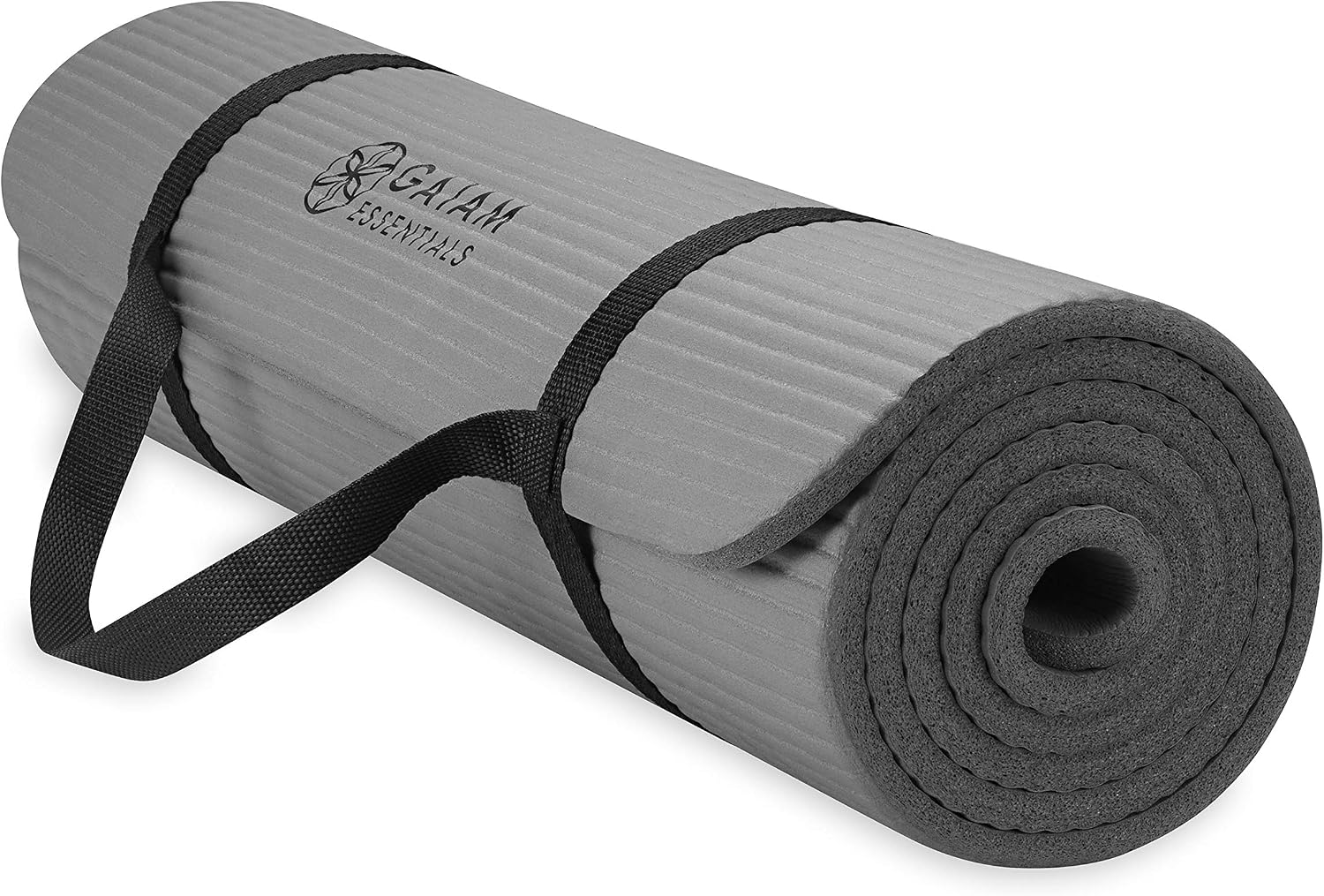
Gaiam Thick Yoga Mat, Exercise & Fitness Mat with Easy-Cinch Carrying Strap
The default beginner mat: real cushion under knees and wrists, an easy-cinch strap included, and a price that makes replacing it painless
Foam compresses under standing balances, and PVC foam is the least planet-friendly material in this group
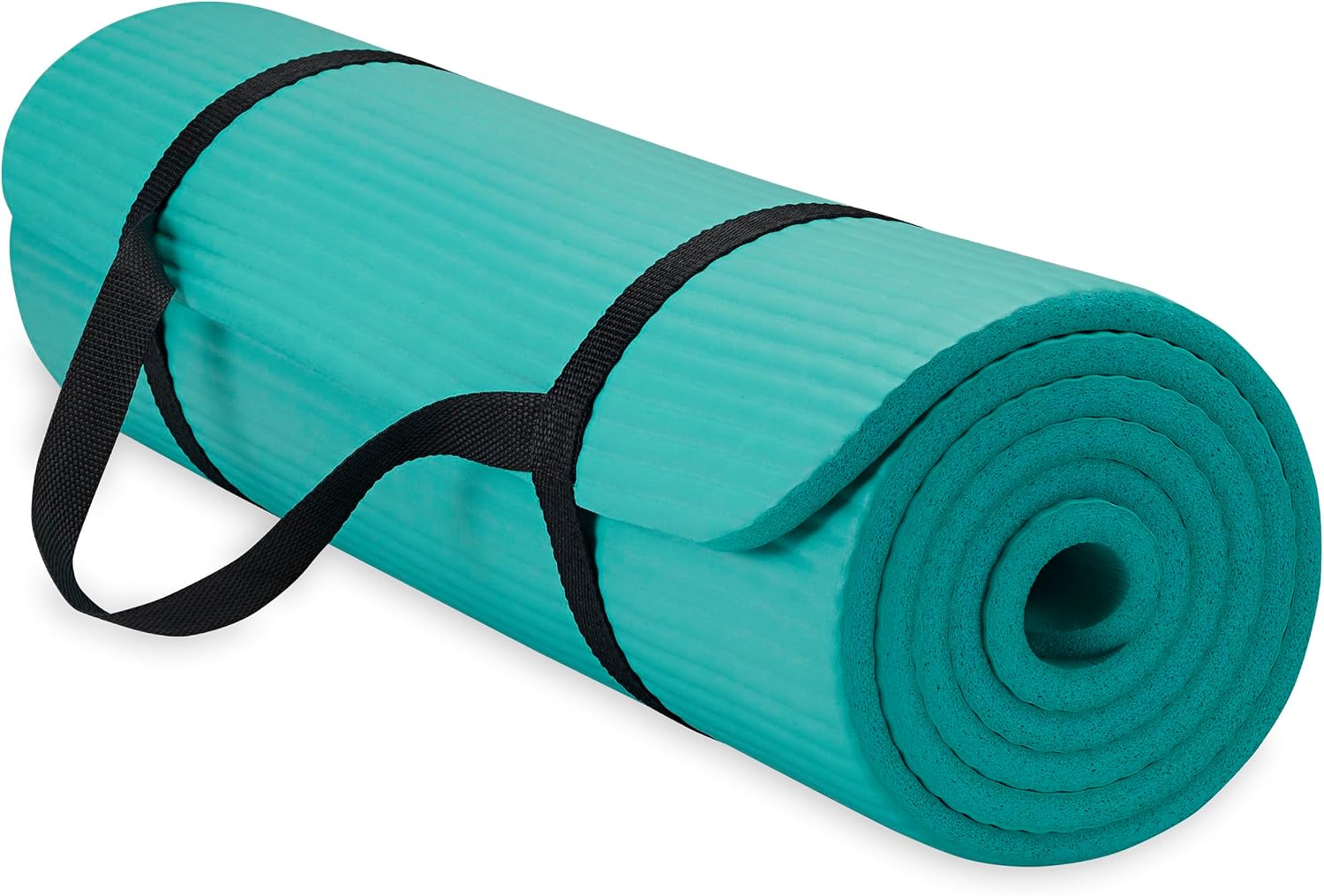
Gaiam Thick Yoga Mat, Exercise & Fitness Mat with Easy-Cinch Carrying Strap
The same mat on a second listing, useful when the other one is out of stock or harder to get
Two near-identical listings is a shopper's headache, and nothing here improves on the first
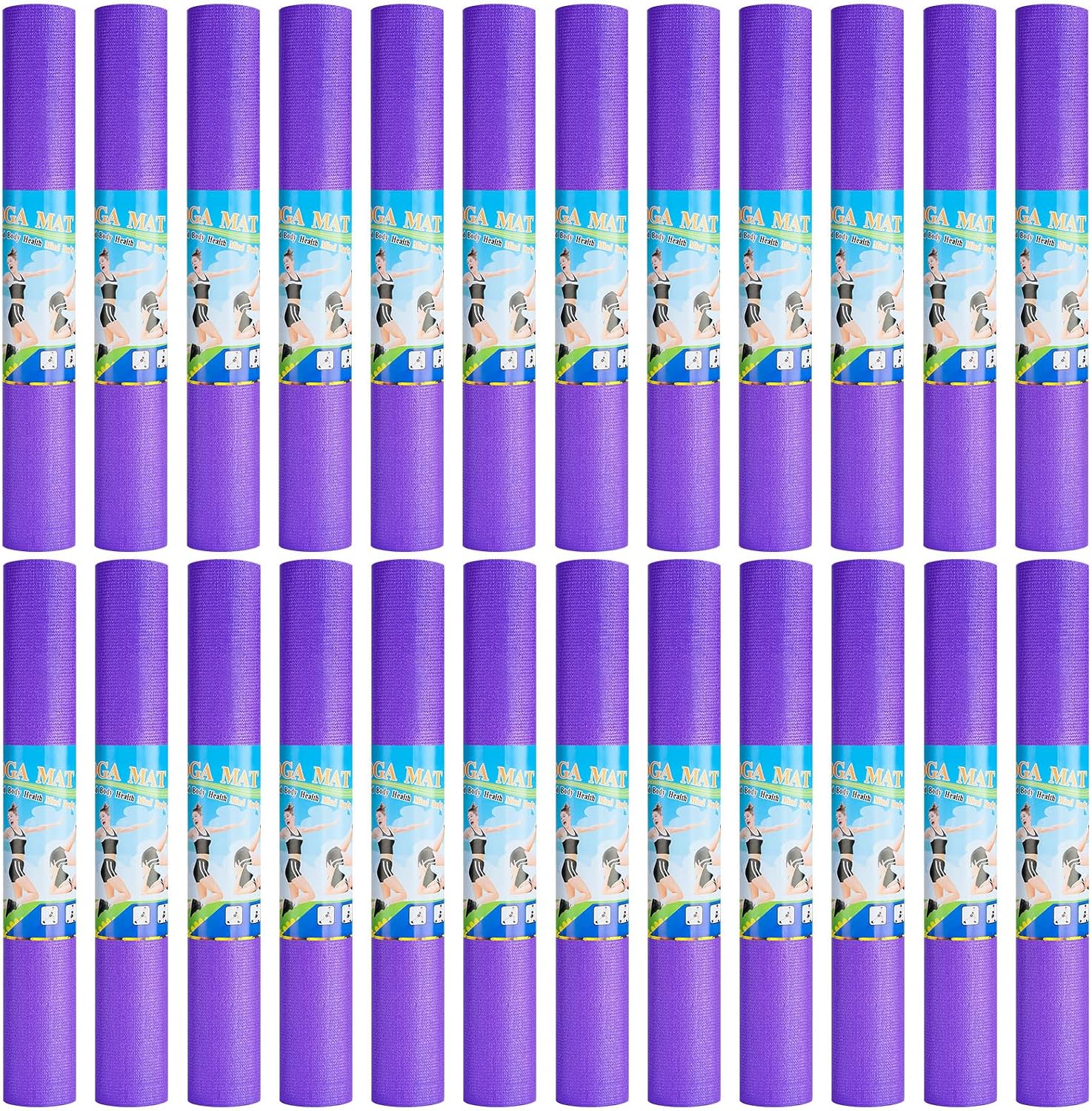
Funtery 3 mm Thin Yoga Mats Bulk, 68 x 24 in
Thin, wide, and sold as a bulk listing, which makes it the practical pick for studios, stacked classes, and travel
At 3 mm there is almost no cushion, and hard floors will find your knees
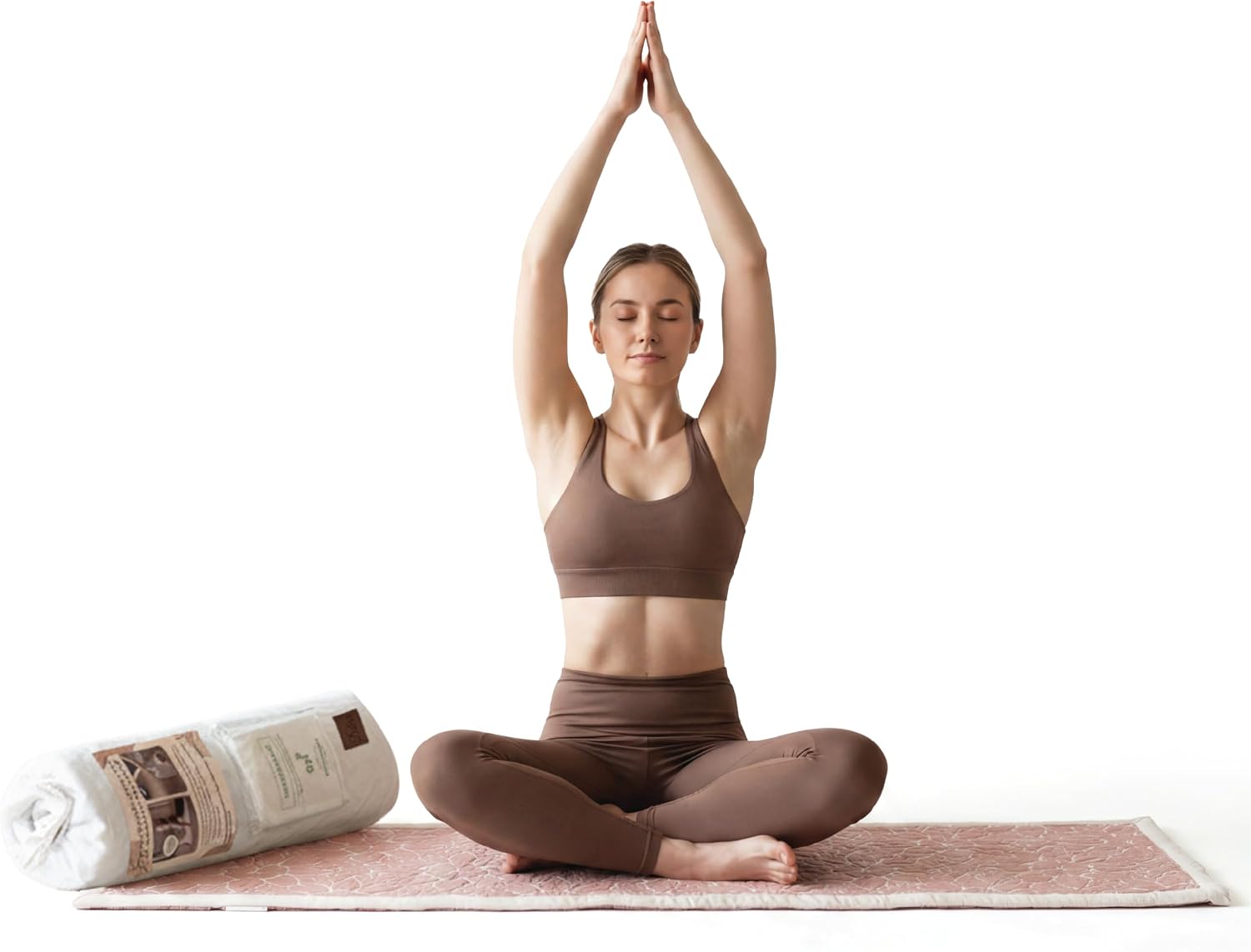
DALISA Organic Cotton Yoga Mat 24x67, Reversible & Seamless, Super Soft Sustainable Exercise Mat with Non-Slip Support, Includes Cotton Carry Bag
Organic cotton, reversible, seamless, and it ships with a cotton carry bag; the nicest surface here for restorative work
Cotton is not a hot-room surface and gives you next to no padding, so it is a specialist mat rather than a first mat
Prices and availability were captured from Amazon Creators API and may change.
How I judge a mat before I recommend it
I come at mats from the floor up. Before I care how a mat looks, I want to know what it does under load: how much it compresses when my palms press into a downdog, whether the corners curl up on a studio's sprung floor, and how the top surface behaves once it is wet. Grip is a chemistry question, not a texture question. Texture sells mats. Chemistry decides whether you slide.
So when I compare a thick foam mat against a 3 mm mat against cotton, I am comparing three different engineering answers to the same problem. Foam answers it with cushion. Thin mats answer it with ground feel and stability. Cotton answers it with a natural surface and a clear conscience. None of those answers is wrong. They are just answers to different questions, and the mistake most people make is buying for the wrong question.
The other thing I check is smell. A mat lives in your car, your closet, and your living room. If it smells like a tire for a month, you will use it less, and a mat you avoid is a mat you wasted money on.
Cushion is not grip
Here is the tension that runs through this entire comparison. Every millimeter of foam makes a mat more comfortable on your knees and more forgiving on a hardwood floor. That same millimeter also lets your hands and feet sink, which makes standing balances harder and makes warrior poses wobblier.
If you have bad knees, you want cushion. If you are working on balance, you want a firm surface. Those are genuinely opposed goals, and no single mat solves both. That is why the honest recommendation is usually two mats: a thick one for floor work, restorative poses, and knee-heavy days, and a thin one for standing flows, travel, and balance practice. This is the trade-off the packaging never mentions, and it is the one that matters most.
The Gaiam Thick Yoga Mat: the sensible default
The Gaiam Thick Yoga Mat is the mat I point beginners toward, and it has been for years. The reasoning is boring and that is the point. It is thick enough that kneeling poses do not send you hunting for a blanket. It comes with an easy-cinch carrying strap, which sounds trivial until you have watched a new student wrestle a naked mat through a crowded lobby. And it is the kind of purchase you can make without a research project.
Where it struggles is exactly where you would expect. Cushion compresses. In standing poses you sink slightly, and in a hot room a foam surface can get slick once your hands are wet, because foam is not a wet-grip material no matter what the box says. It is also PVC, which is the least eco-friendly mat material there is. I will say that plainly, because "eco-friendly" printed on a PVC mat is a lie with a leaf icon on it.
What you get in return is a mat that does ninety percent of what a premium mat does for a beginner, and a price that makes replacing it painless. If you are three classes into a practice and not sure you will still be here in six months, that trade is correct.
Two Gaiam listings, one mat
You will notice two Gaiam Thick Yoga Mats in the table above. Same product name, same easy-cinch strap, two different listings. This happens constantly on Amazon: a manufacturer keeps an old listing alive alongside a newer one, or sells the same mat under more than one identifier, sometimes with different colorways attached.
My advice is unromantic. Treat them as the same mat, pick whichever listing is in stock and easiest to get, and do not pay more for one because a photo looks slightly nicer. If you end up on the second listing, you have not bought a different or lesser product.
Funtery 3 mm Thin Yoga Mats Bulk: the studio workhorse
A 3 mm mat at 68 by 24 inches is a specific tool, and the people who need it usually already know why. Thin mats are what studios stack by the dozen for classes, what travelers roll into a carry-on, and what hot-yoga regulars lay down when they want the floor to feel like a floor. Ground feel is not a marketing phrase; it is the feedback your feet use to find balance, and a thin mat delivers it better than any cushion can.
The bulk listing is the interesting part here. Buying mats in quantity is how a small studio, a school program, or a household of three practitioners stops paying boutique prices per mat. If you are outfitting a class, that math is the whole argument. Check the quantity on the listing before you order, since bulk listings change what is included.
The cost is cushion, and there is no way around it. On a hard floor, a 3 mm mat is a whisper away from bare wood. Knees, wrists, and anyone recovering from an injury will want something under it or a different mat entirely. I would not hand this to a student with a knee history and call it solved. I would hand it to a student who travels, sweats, and wants to feel the floor.
DALISA Organic Cotton: the natural-fiber specialist
The DALISA Organic Cotton Yoga Mat is the one I would buy for a restorative practice. It is 24 by 67 inches, reversible and seamless, and it comes with a cotton carry bag, which tells you the brand understands who this mat is for. Cotton is a lovely surface for yin, meditation, gentle flows, and anyone who cannot stand the smell of PVC foam. It breathes, it does not offgas, and it feels like fabric rather than like a gym.
Cotton behaves differently from every foam mat in this comparison, and that cuts both ways. A cotton surface tends to get more traction as it takes on a little moisture, which is the opposite of how foam behaves. But cotton is also thin, with almost no padding, and a cotton mat on a polished floor can slide as a unit in a way a rubber-backed mat will not. If your studio has a smooth floor, that matters. On carpet or over another mat, it is a non-issue.
This is a specialist mat, not a first mat. Buy it because you want cotton against your skin, not because you want the most versatile mat in the room.
Matching the mat to the student
If you are new to yoga and your knees are fine, the Gaiam Thick Yoga Mat is where I would start. It is the least risky purchase in this group, and if you hate it you have lost very little.
If you teach, run a program, or travel constantly, the Funtery 3 mm bulk mats are the practical answer. Thin, wide, stackable, and sold in quantity. Just be honest with yourself about the floor you practice on.
If your practice is restorative, yin, or slow flow, and you want a natural fiber surface, the DALISA Organic Cotton mat is the one here built for you. Pair it with a thicker mat underneath if your knees need the padding.
And if you are a hot-yoga regular, understand that none of these four is a purpose-built sweat mat. Foam goes slick, cotton is not designed for a soaked room, and thin mats are only as grippy as the surface beneath them. The fix in that case is a towel over the mat, not a different mat.
What I would buy, and what I would skip
I would buy the Gaiam Thick Yoga Mat for a beginner without hesitating, and I would buy the second Gaiam listing without caring which one I landed on. I would buy the Funtery bulk mats for a studio or a frequent traveler, and I would skip them for anyone with knee pain on a hard floor. I would buy the DALISA cotton mat for restorative work and recommend it to students who ask me why their foam mat smells like a chemical factory.
What I would not do is buy a thick mat and expect it to grip like a thin one, or buy a thin mat and expect it to cushion like a thick one. The mat is a tool. Pick the tool for the job you actually do on a Tuesday, not the job you imagine doing in a retreat brochure. That is the whole test, and it beats every spec sheet on the internet.