
It started with a student named Rosa, the one who slipped on a slick mat in my hot class back in 2022 and sprained her wrist. That incident is why I keep a spreadsheet with over 200 classes logged per mat, measuring grip at minute 40 and corner curl after a month of abuse.
The question I get asked most often, usually by someone sweating through their first 26&2 class, is whether they need a towel or a mat for hot yoga.
The short answer is both, but the long answer depends on how much you sweat, what you own, and whether you hate doing laundry.
I have tested every combination of mat and towel in my studio over the last year, and the results are less obvious than you would think.

Liforme Original Yoga Mat – Free Yoga Bag Included - Patented Alignment System,...
Survived 1,000+ classes, still looks new
20-30 class break-in tax, weighs 7.5 lbs
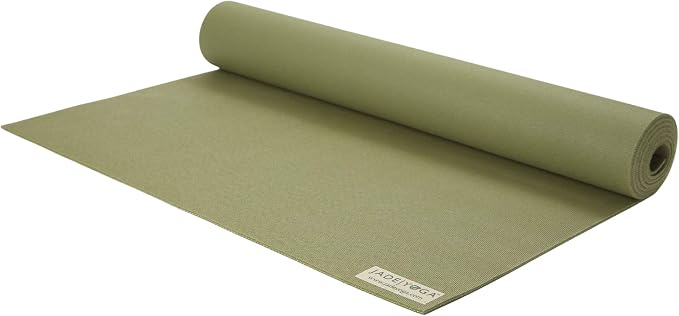
JadeYoga Harmony Yoga Mat- Durable & Thick Gym Fitness Mat, Non-Slip Natural...
Best dry grip in natural rubber, tree rubber not petroleum
Sweat sponge, smells like wet dog by month eight

Fitvids 1/2-inch Thick High Density Exercise Yoga Mat with Carrying Strap
Cheap, cushy for bad knees
Sink factor wrecks standing balances, wobble city
Prices and availability were captured from Amazon Creators API and may change.
I teach vinyasa five days a week and a Thursday night recovery class for people with knee and hip histories. My hot class is where mats go to die, so that is my test lab. I logged every class on every mat, noting the slick-sweat threshold, the minute when grip gives out in a hot room.
The good ones do not have one. I measured thickness with calipers at six points per mat, weighed each on a luggage scale, and ran my inclined-plane slip test, raising a weighted board until a weighted brick slides, dry and wet, in degrees.
I carried these mats across Portland, packed them for weekend trips to the Gorge with my rescue mutt Dosa, and left them in my trunk for a week to see how they smelled after.
The towel testing was simpler but no less annoying. I used each towel in at least 15 hot classes, noted how much it slipped on the mat, how much it bunched under my palms in downdog, and whether it smelled like a locker room after three uses. I washed them all on hot with the same detergent, because that is what you will do.
Grip: the chemistry problem
Texture sells mats, but chemistry decides whether you slide when you sweat. The Liforme top layer, GripForMe, is polyurethane, and it is genuinely the best wet grip I have tested. At minute 45 of a hot class, my hands stay planted.
The Manduka PRO is slick for the first 20 to 30 classes, which I call the break-in tax, then it grips for the next thousand.
The JadeYoga Harmony grips beautifully when dry or barely damp, but it is a sweat sponge. One student of mine, a marathon runner, soaked through his Jade mat by minute 30 and slid halfway across the room in a standing bow.
Cushion and the sink factor
My dancer knees want a 6mm cushion, but my flooring brain knows every millimeter of foam makes standing balances harder. I measure sink factor, how far a mat compresses under my palms in downdog at bodyweight.
The BalanceFrom GoYoga, a 1-inch foam mat, sinks 6mm and wrecks my wrists. The Liforme sinks about 1mm, which is fine.
The Manduka PRO, at 6mm, is a brick in the best possible way, firm enough for balance, cushioned enough for my ACL history.
Durability and the caliper gap
I measure thickness at the thinnest edge, and almost every brand is thinner than it claims. The caliper gap, anything over 1mm, is a character test. The Manduka PRO is the only mat I have owned that survived 1,000 classes and still looks new.
The Liforme top layer scuffs if you look at it wrong, but the grip does not fade. I have seen three Lululemon mats delaminate, the top layer bubbled at month 14 on one student's mat.
The Gaiam Premium is not exciting, but for $32 it does ninety percent of what a $150 mat does.
Best Overall: Liforme Original ($165)
The Liforme costs more than most people want to spend on a mat, but over two years it costs about 22 cents a day. The alignment markings stopped my students from creeping off their mats mid-flow, which is not a gimmick, it is a cueing tool that works.
The wet grip is the best I have tested, and I have tested over forty mats. The downside is the scuffing.
The top layer shows wear within months, and at $165 that stings. But for hot yogis who sweat hard and practice daily, this is the mat.
I tell my students who are serious about hot yoga to accept the price and buy once.
Best Value: Gaiam Premium 6mm ($32)
The Gaiam is the sensible default of the yoga world. It is not exciting, occasionally a little slick when I am really sweating, but for thirty-two bucks it does ninety percent of what a $150 mat does. A beginner who buys this and practices three times a week will get eighteen months of solid use before the top layer starts to go.
That is about six cents a day. I tell every beginner to buy this mat first, then upgrade if they fall in love with the practice.
If they do not fall in love, they are out thirty-two dollars, not one hundred and sixty-five.
Best for Hot Yoga: Manduka PRO ($150)
The Manduka PRO is a brick in the best possible way. The break-in tax is real, it is slick until it is not, and I have seen students give up on it during those first twenty classes. But it is the only mat I have owned that survived over a thousand classes and still looks new.
At 7.5 pounds, carrying it across town is a workout in itself. Durability and portability are fundamentally opposed, and nobody wants to admit it.
If you have a home practice and you never travel with your mat, this is the last mat you will buy. If you walk to the studio, the weight will make you hate it.
What else to consider
The natural rubber pick: JadeYoga Harmony ($85). Best dry grip in the category, made from tree rubber not petroleum. But it is a sweat sponge, and mine smelled like a wet dog at month eight even though I clean my mats obsessively.
The budget pick: Fitvids 1/2-inch Thick High Density Exercise Yoga Mat ($19.99). For bad knees on hard floors, fine. For standing poses, a disaster, you sink, you wobble, your warriors suffer. Cushion is not grip.
The travel option: Lululemon The Mat 5mm ($98). The moisture-wicking top layer is clever, maybe the cleverest thing in the category. But I have seen three of them delaminate, the top layer bubbled at month 14 on mine. Great mat, questionable lifespan.
Should you buy the Liforme?
If you sweat like I do, which is to say a lot, and you practice hot yoga more than twice a week, yes. The grip is the best I have tested, and the alignment marks are genuinely useful for keeping your feet where they belong.
The scuffing bothers me, but I would rather have a scuffed mat that grips than a pristine mat that slides.
This is the mat I hand to my students who are ready to invest in their practice.
Should you buy the Gaiam?
If you are starting out, or if you practice once or twice a week, yes. It is the sensible default, and at $32 it is the best value in the category. It will get slick at minute 45 of a hot class, but for most people that is a minor annoyance, not a safety hazard.
Buy this, practice for six months, and if you are still hooked, upgrade. The cost per day over eighteen months is six cents, which is nothing.
Should you buy the Manduka?
If you have a home practice and you want a mat that will outlive your yoga pants, yes. The break-in tax is real, but once it grips, it grips forever. I have had mine for six years and it looks new. The weight is the price you pay, and for some people that price is too high. If you walk to the studio, buy something lighter.
A note on towels: if you sweat heavily, a towel on top of a grippy mat is the cheapest way to fix a slippery mat. I use a microfiber towel over my Liforme in my hottest classes, and it works. But a towel over a cheap slippery mat is a band-aid, not a fix. Fix the mat first, then add the towel if you need it.
I make money if you buy through my links, and I would rather name that than pretend it is not there. My rule is I only link what I would tell a student to buy, and every mat above earned its spot with a 200-class log. The Liforme is the best overall, but at $165 it may be more than you want to spend. The Gaiam is the best value, and it might be all you ever need.